
Ever since I discovered knitting many years ago, the joy of working with my hands has never ceased to amaze me. There is something deeply soothing about feeling the yarn glide through your fingers and watching the stitches form in time with the needles. But behind this apparent simplicity, the choice of yarn and needles is critical to the success of every project. Choosing the right yarn, the correct needle size, and the right material transforms a simple idea into a durable and comfortable piece. If you want to deepen your knowledge of the basics, I recommend exploring our complete guide to wool, which details the different types of fibers and their specific properties.
Choosing the Right Yarn for Your Project
Yarn Types and Their Characteristics
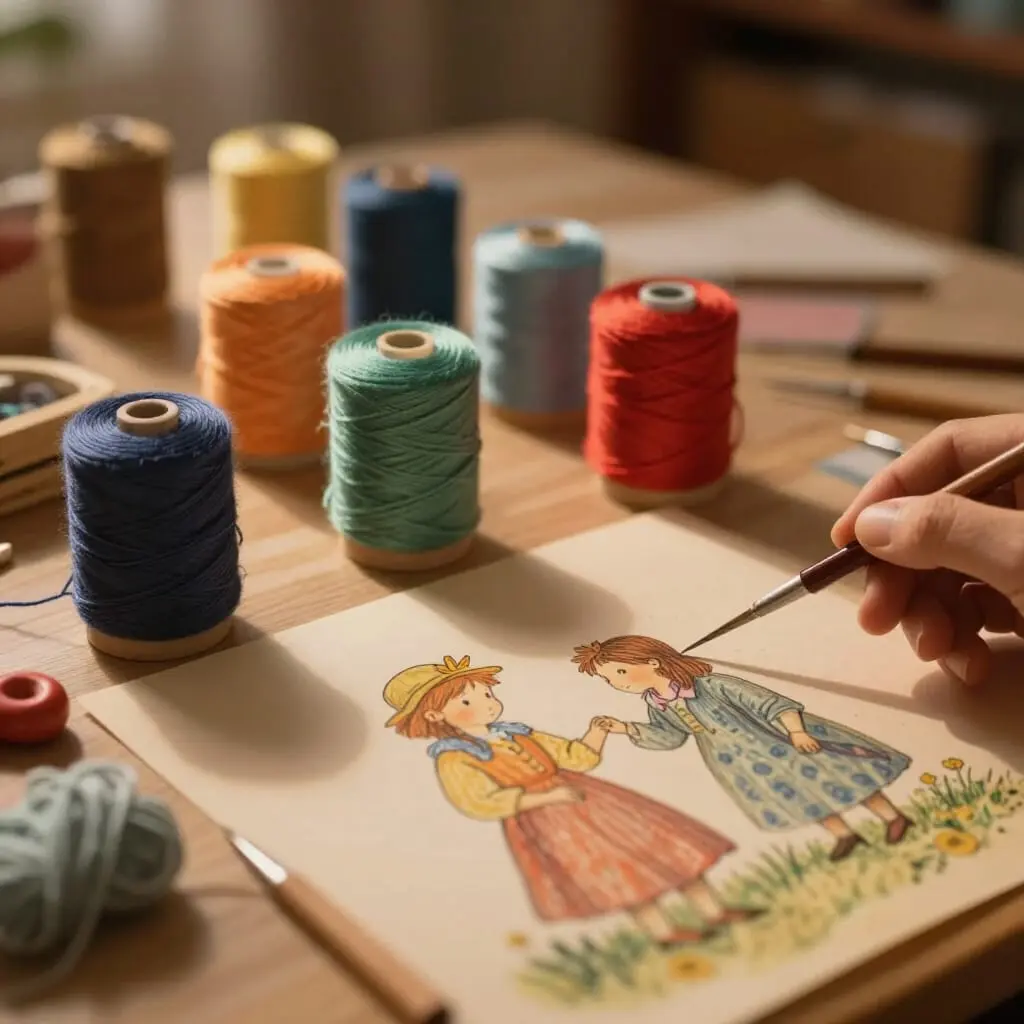
Yarn is much more than just a material. Every fiber tells a story and possesses unique properties. Wool, for example, is soft, warm, and breathable. Alpaca adds a touch of lightness and softness, while cotton is ideal for summer garments or accessories that require more structure. Synthetic fibers, such as acrylic or nylon, are practical, easy to care for, and often more affordable, but they don’t always offer the same warmth or comfort as natural fibers.
Blends allow you to combine the best of both worlds, adding durability, loft, or a particular aesthetic effect. Personally, I love experimenting with slightly fuzzy mohair yarn to add texture to my projects, or metallic threads for a subtle shimmer. For very fine work like socks or delicate shawls, I often use fingering weight yarn, which is incredibly thin and supple—perfect for intricate details.
How to Choose Yarn Based on the Project
The choice of yarn depends heavily on what you want to create. For a soft, enveloping scarf, I prefer a fluffy wool that isn’t too heavy. For a sweater intended for daily wear, durability and ease of care become the priorities. For a blanket, you can go with a thicker yarn that knits up quickly and holds its shape well.
Over the years, I’ve learned to “listen” to my projects. A tight stitch requires a supple yarn to avoid pulling, while a cable pattern benefits from a yarn with more definition and structure. The joy of knitting also lies in the satisfaction of seeing the final project match exactly what you imagined. Choosing the right yarn is therefore the first step toward a successful creation.
Needles: The Allies of Your Creativity
Types of Needles and Their Uses
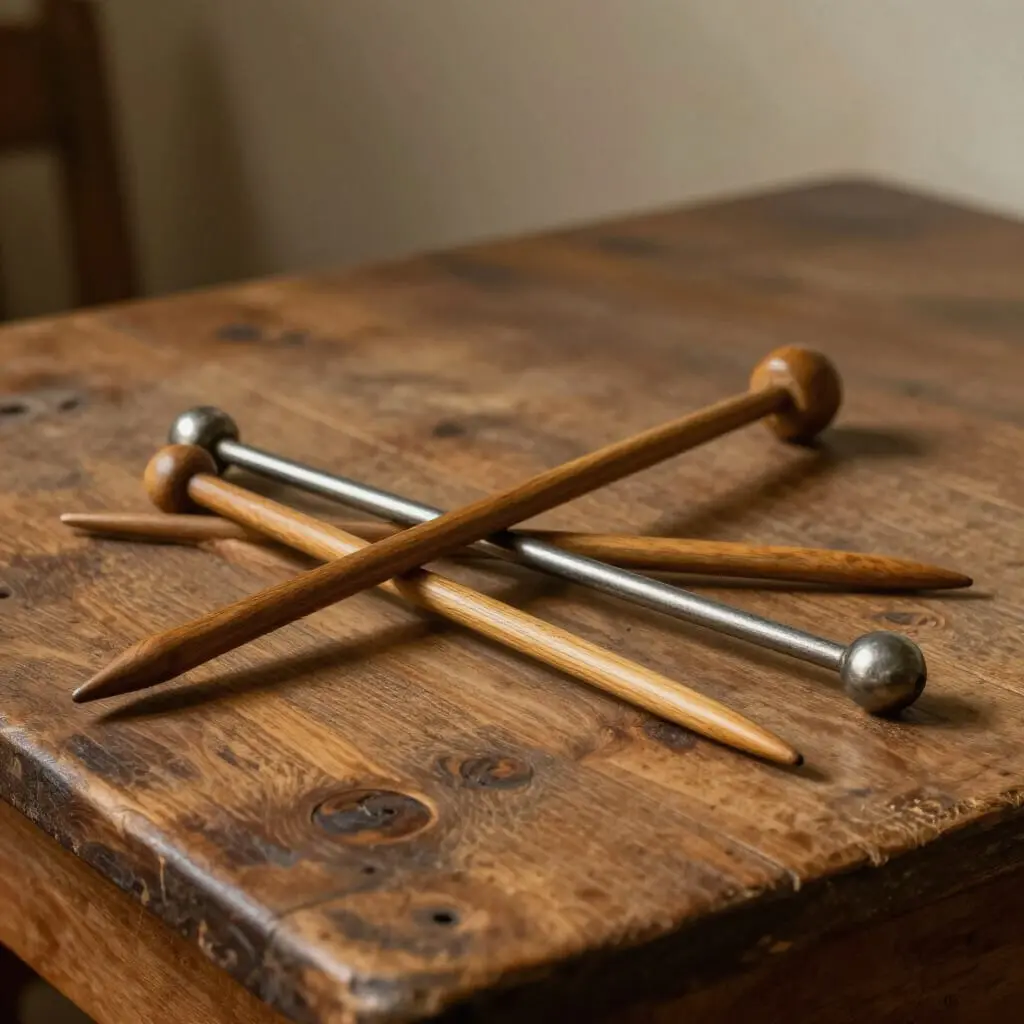
Needles are the instruments that bring the yarn to life. There are several types: classic straight needles, ideal for simple and linear projects; circular needles, perfect for knitting in the round or for heavier projects; and double-pointed needles (DPNs), indispensable for small circular work like socks or sleeves.
The material of the needles also plays a major role. Wood or bamboo needles offer a comfortable, warm feel that is gentle on tired hands, while metal needles allow for faster knitting due to their smoothness. Plastic, being lightweight and economical, can be a great choice for beginners. I like to vary my needles based on my mood, the project, and the specific feel I want.
Choosing the Right Size and Material
Needle size is closely linked to the yarn weight. A fine yarn requires smaller needles for a tight, precise finish, while a thick yarn may require large needles so the fabric doesn’t become too dense. Over the years, I’ve learned to adapt my technique to each yarn-needle combination, and I always knit a small gauge swatch before starting a major project.
Hand comfort is also crucial. Wood or bamboo needles, for instance, are warmer to the touch and reduce fatigue during long knitting sessions. Metal needles, on the other hand, promote a fast and consistent rhythm. Finding the right balance between size, material, and comfort is an essential step in ensuring every knitting session is a true pleasure.
Techniques and Tips for Pairing Yarn and Needles
Matching Yarn and Needles for a Perfect Result
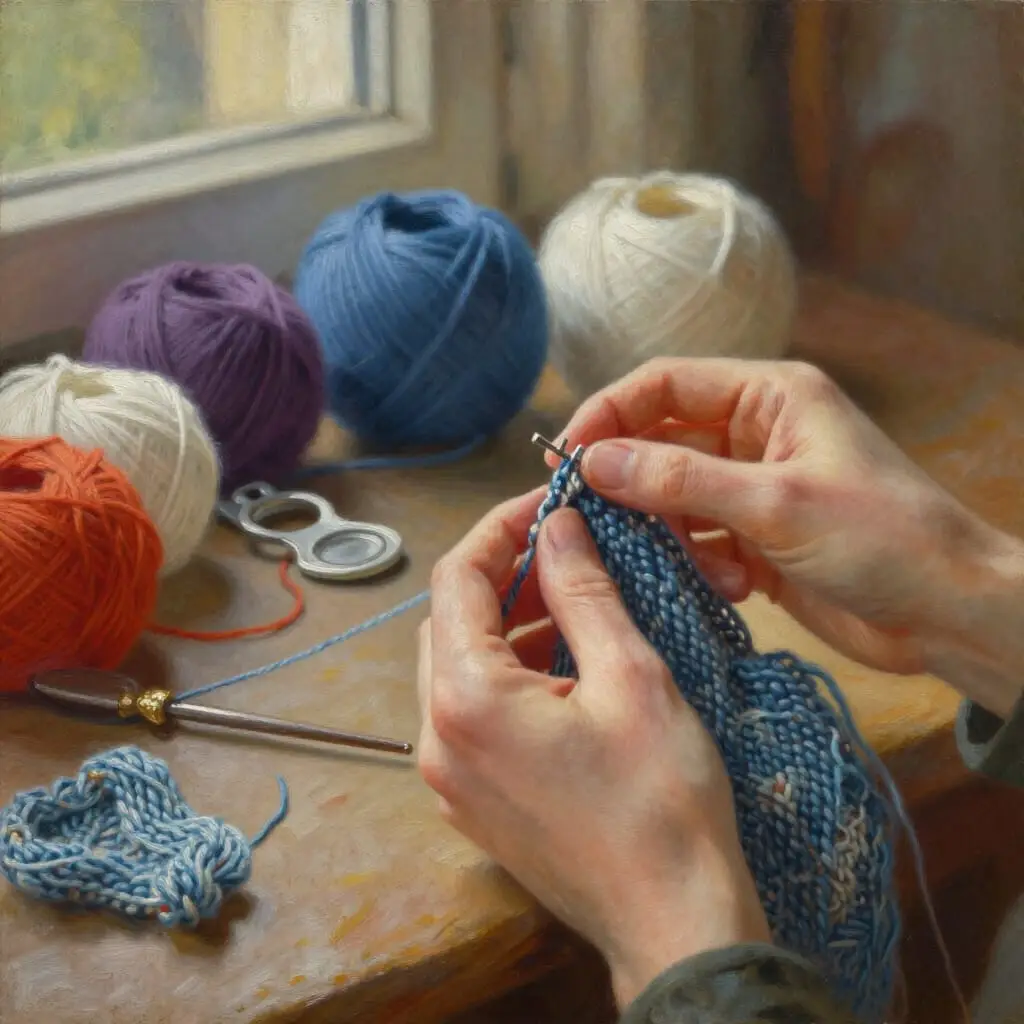
The pairing of yarn and needles determines the texture, drape, and overall appearance of the piece. Knitting a fine yarn with large needles will create an airy but fragile fabric, while a thick yarn with small needles can result in a dense, stiff fabric. For my favorite projects, I play with these combinations to create relief effects, such as pronounced cables or delicate lace patterns.
With time, I discovered that patience and observation are a knitter’s best allies. Adjusting your tension, testing different combinations, and listening to your hands allow you to create a piece that is not only beautiful but also comfortable and durable.
Care and Storage
Taking care of your needles and yarns is just as important as choosing them correctly. Wooden needles should be stored away from humidity to prevent warping, and yarns should be kept in breathable bags to avoid dust and moths. Washing instructions vary by fiber: some wools must be hand-washed in lukewarm water, while others are machine-washable. These small steps prolong the life of your creations and ensure they retain their softness and shape for years to come.
Rich Content Block 1: Yarn and Needle Comparison Table
| Yarn Type | Needle Size | Recommended Project |
|---|---|---|
| Fingering Alpaca | 2.5–3 mm | Light scarf or shawl |
| Merino Wool | 4–5 mm | Soft, cozy sweater |
| Sport Weight Cotton | 3–4 mm | Tank top or summer accessory |
| Chunky Wool | 8–10 mm | Cocooning sweater or blanket |
This table provides a quick visual guide for yarn and needle associations. I often refer to it before starting a new piece, especially for projects where stitch precision is essential.
Common Mistakes and How to Avoid Them
Even experienced knitters can make mistakes. The most frequent errors often stem from a poor yarn-needle pairing, uneven tension, or skipping the gauge swatch. It’s tempting to dive straight into a large project, but taking the time to test and adjust prevents a lot of frustration. A stitch that is too loose or too tight can completely change the look of a sweater or a blanket. To learn how to anticipate these issues, I recommend reading our complete guide to wool, which explains in detail the interactions between yarn and stitch.
FAQ – Yarn and Needles
How do I choose the needle size based on the yarn?
The general rule is that the thinner the yarn, the smaller the needle should be to achieve a consistent fabric. Yarn labels usually indicate a recommended size, but it is always helpful to knit a gauge swatch.
Which yarns are best for beginners?
To start, I recommend soft wool or cotton yarns, as they are easy to handle and durable. Avoid very fine or fuzzy yarns (like mohair), which require more patience.
Can I mix different types of yarn in one project?
Yes, but you must consider their texture and elasticity. Mixing a fine yarn with a thicker one can create an original effect, but be mindful of your tension.
How should I maintain my needles and skeins?
Store wooden needles in a dry place and keep your yarns away from dust. Wash your finished pieces according to the specific fiber recommendations.
What is the difference between fingering and bulky weight yarn?
Fingering weight is very thin and delicate, perfect for detailed projects, while bulky weight is thick, ideal for quickly knitting voluminous sweaters or blankets.
Are wooden needles better than metal ones?
It depends on your preference. Wooden needles are comfortable and warm, while metal needles allow for faster, smoother knitting.
Conclusion: The Joy of Creating with Yarn and Needles
Knitting is, above all, a sensory and creative pleasure. Choosing the right yarn and needles, pairing them with care, and learning how to maintain them transforms every project into a joyful and rewarding experience. Every stitch tells a story, and every piece reflects a moment of patience, passion, and sharing. To go further and deepen your knowledge, feel free to consult **our complete guide to wool**, where you will discover everything about fibers, their properties, and their uses.
See Also
