
If you’ve been knitting for a while, you’ve definitely experienced this. You fall in love with a skein at the yarn shop—the wool is gorgeous, the color is perfect… and then, once the sweater is finished, you get that unpleasant prickly sensation on your neck or wrists. The big question then arises: itchy or soft yarn, how can you tell before spending hours knitting?
Over time, between my travel projects, knitting for my children, and pieces I wear directly against my skin, I’ve learned how to spot the warning signs. There is no magic formula, but rather a lot of observation, testing… and a few memorable mistakes. In this article, I’m sharing everything I wish I had known sooner to choose a yarn that is truly comfortable to wear.
Why some yarns itch (and others don’t at all)
We often tend to say that wool itches “because it’s wool.” In reality, it’s much more subtle than that, and far more interesting to understand when you knit regularly.
Fiber fineness: the #1 often-ignored criterion
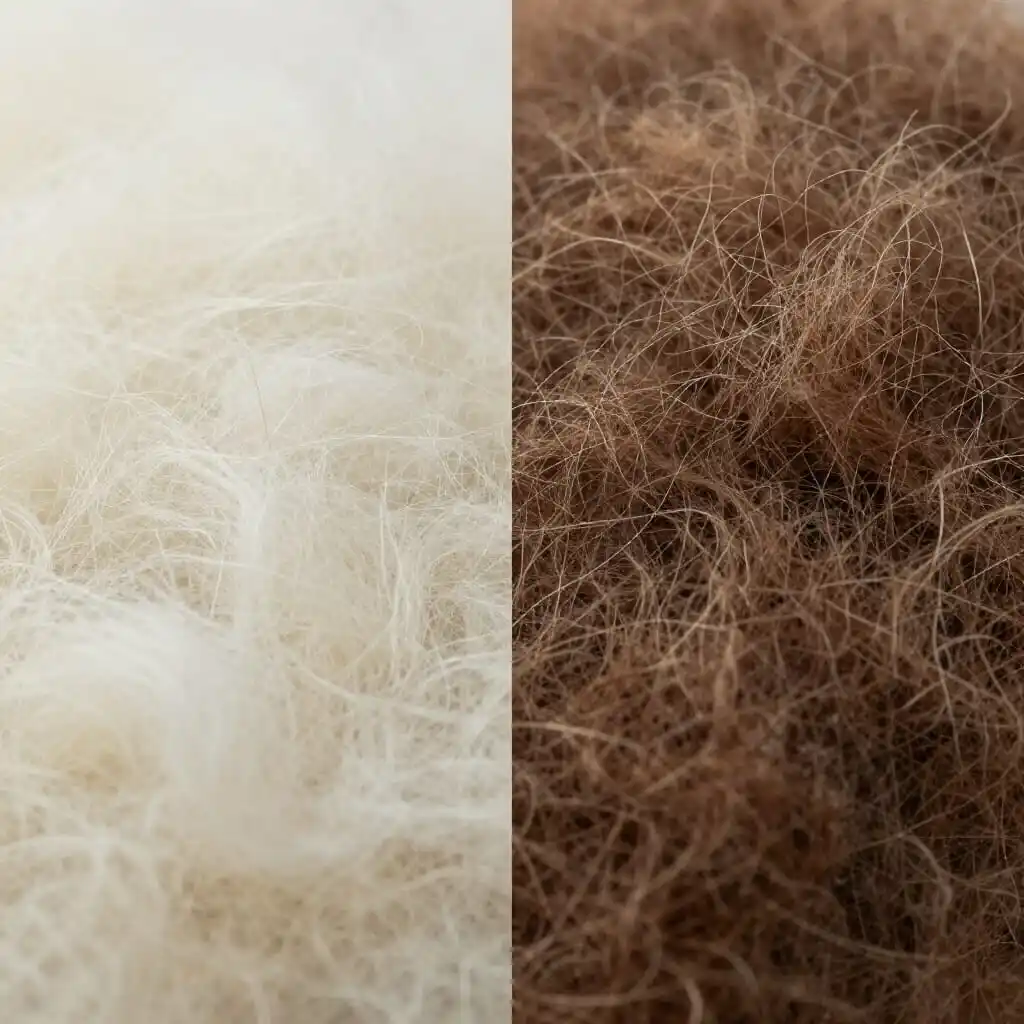
Whether a yarn is soft or itchy isn’t about where it comes from or how much it costs, but primarily the fineness of its fibers. The thinner a fiber is, the more it will bend when it touches the skin without causing that prickling sensation.
When we talk about microns, we are talking about the actual diameter of the fiber. A very fine wool will glide over the skin, whereas a thicker fiber will catch slightly, and it is this resistance that our skin interprets as “itching.” This is why two 100% natural wools can feel completely opposite.
Fiber structure and scales: what the skin actually feels
Beyond fineness, the structure of the fiber itself plays a huge role. Wool is covered in tiny scales invisible to the naked eye. The more pronounced these scales are, the more they can irritate sensitive skin, especially in fragile areas like the neck or neckline.
Some fibers have very tight and regular scales, while others are much more open. As a result, even at the same thickness, two yarns can behave very differently against the skin.
Soft vs. Itchy: How animal breeds make a difference
We often hear that some wools are inherently soft and others are doomed to itch. The reality is a bit more nuanced, but there are definite trends that confirm themselves project after project.
Merino, alpaca, cashmere: why they are usually well-tolerated
Merino has a reputation for being soft, and for good reason. The fibers are fine, consistent, and naturally elastic. However, be careful—not all Merinos are created equal. A poorly processed Merino or one made from thicker fibers can still cause itching.
Alpaca is often a revelation for sensitive skin. Its fibers have fewer scales, which explains that almost silky softness. As for cashmere, it is the ultimate “cocooning” fiber… provided it is high quality and twisted enough to be durable over time.
Rustic wools: when it itches… and when it’s okay
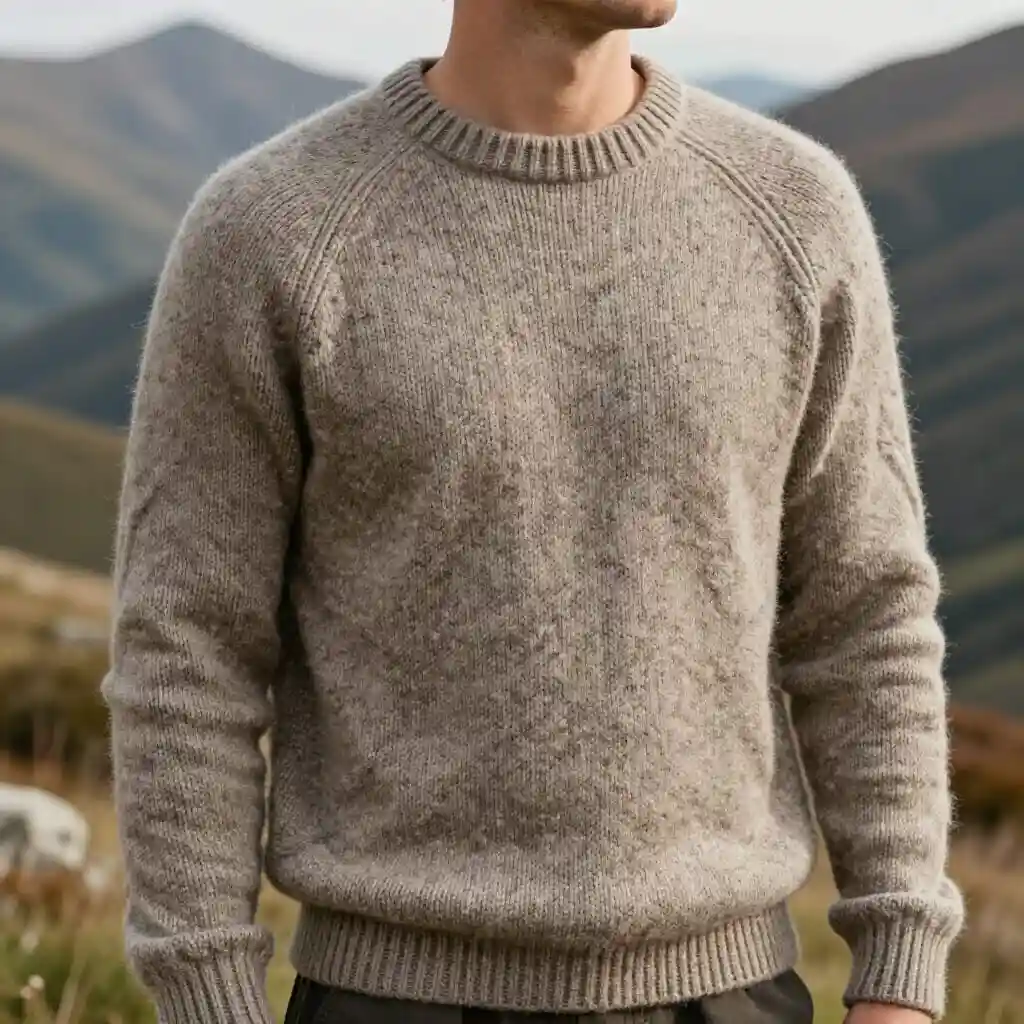
So-called “rustic” wools, such as Shetland or certain local heritage wools, have a strong character. They can be itchy against the skin, but they are incredible for projects worn over a base layer or for outdoor gear.
I love them for jackets, hiking sweaters, or travel knits because they are breathable, durable, and full of personality. The key is knowing when and for whom to use them.
To better understand the differences between fibers and their uses, I invite you to check out this complete guide to yarns.
What increases or decreases the “itch factor” (beyond the wool)
Even with a good fiber, certain details can turn a pleasant yarn into a sensory ordeal.
Spinning and processing: more important than you think
Carded wool, with its airy fibers, may feel softer to the first touch, but it can sometimes be more irritating over time. Conversely, combed (worsted) wool, which is denser, often glides better over the skin.
Mechanical treatments, such as washing, brushing, or light felting, also play a huge role. These are steps you don’t always see on the label, but they make all the difference once the garment is worn.
Washing, softening, and time
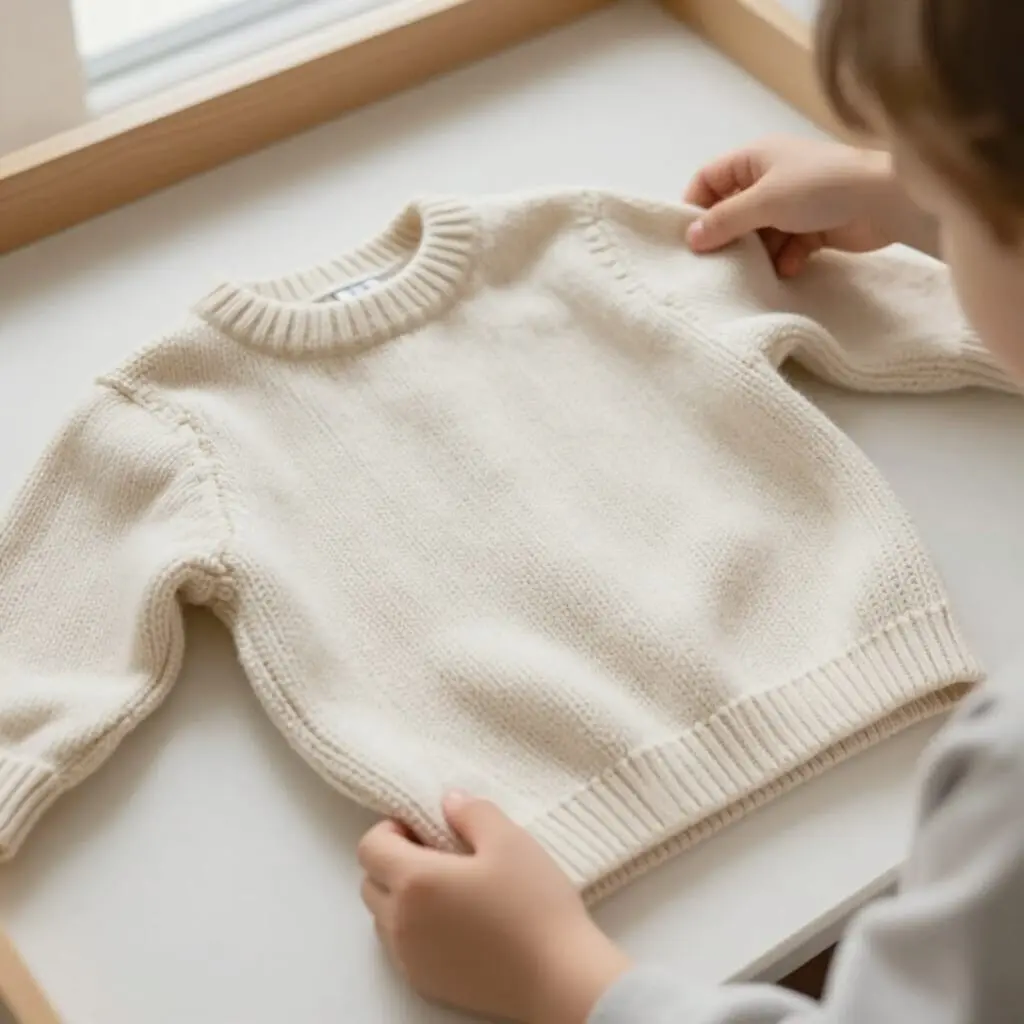
This is something I learned by knitting for my children: a yarn that itches a little at first can become much softer over time. Successive washes, especially gentle ones, allow the fibers to soften naturally.
Yarns designed for easy care are often more pleasant for daily wear. If this interests you, I’ve detailed this topic in a dedicated article on machine-washable wool, which is particularly useful when knitting for an active family.
Quick Knitter’s Tip
| Situation | What I do |
|---|---|
| Yarn itches slightly | Gentle wash + dry flat |
| Project worn against skin | Neck test before knitting |
| Doubt about softness | Knit a mini swatch and wear it for 1 hour |
Choosing a soft yarn based on the project (and the wearer)
Not all soft yarns are suitable for every project. Conversely, some rustier wools are perfect in the right context.
For sensitive skin and children
When I knit for children or for myself, I pay close attention to contact zones. The neck, wrists, and face are unforgiving. A yarn that itches just a little on the hand can become unbearable when worn all day.
In these cases, I always prioritize a yarn tested directly on the skin, even if it requires a bit more care in maintenance.
For sweaters, accessories, and on-the-go projects
For accessories like scarves or hats, softness is non-negotiable. However, for a sweater worn over a t-shirt or a shirt, I sometimes allow myself more “characterful” wools, especially if they provide a better structure to the knit.
How to tell if a yarn will itch before knitting (reliable methods)
With experience, I’ve adopted a few simple habits that save me from many disappointments.
The neck and wrist test (and why it works)
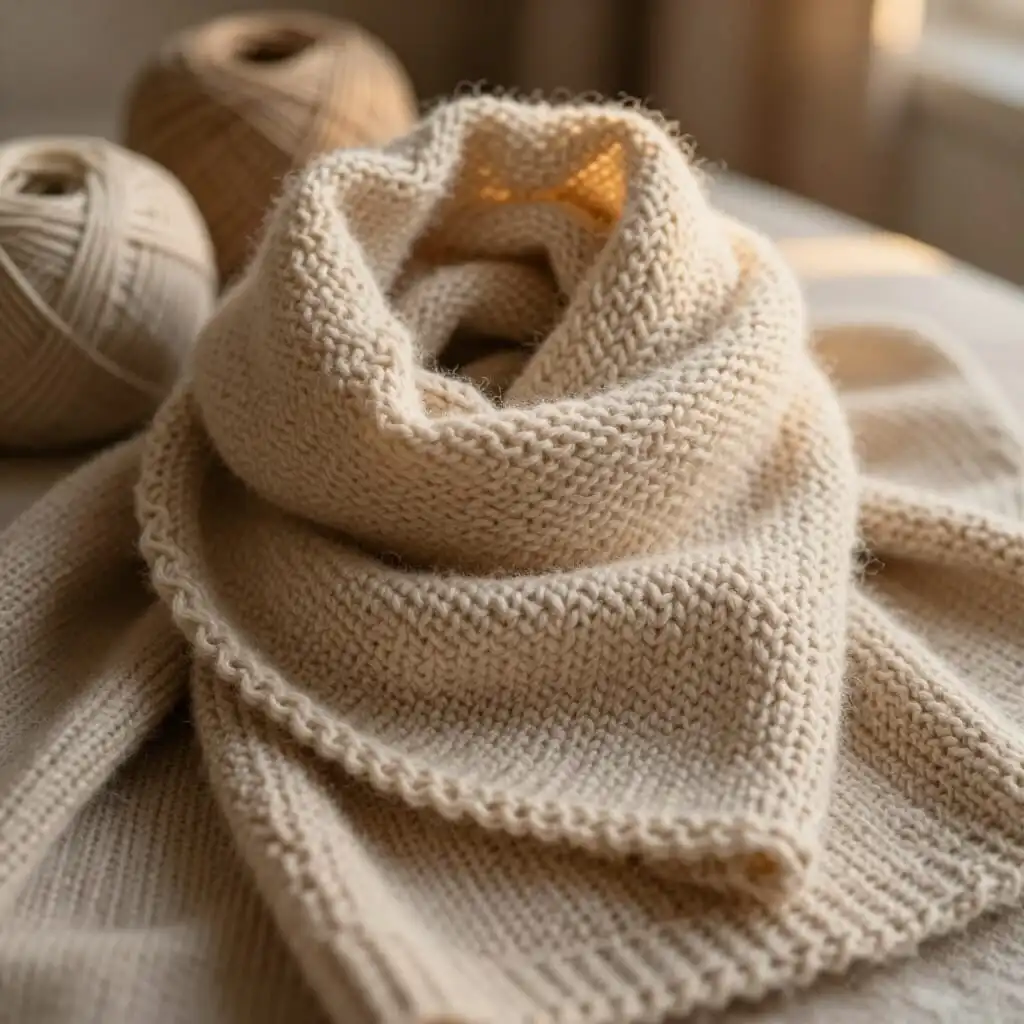
The best test remains the simplest: place the yarn directly on your neck or the inside of your wrist. These are highly sensitive areas that never lie. If it prickles after a few minutes, it will be even worse once the project is finished.
Reading a label without getting tricked
Marketing terms can be misleading. “Ultra soft,” “extra fine,” or “comfort” don’t guarantee anything. I look primarily at the exact composition, the type of fiber, and, when indicated, the fineness in microns.
Visual Checklist
| Before buying | I check |
|---|---|
| Fiber type | Merino, alpaca, blend |
| Intended use | Neck, sweater, accessory |
| Care | Washable or delicate |
| Real feel | Essential skin test |
FAQ – Soft vs. Itchy Yarn: Questions I get all the time
Can natural wool actually be truly soft?
Yes, absolutely. Some natural wools are incredibly soft, provided the fiber is fine and well-processed.
Does Merino sometimes itch despite its reputation?
It happens. Not all Merinos are equal, and the quality of the spinning matters as much as the breed of the animal.
Can a yarn that itches at first soften up?
Often, yes. Gentle washing and regular wear can transform a slightly coarse wool into a much more comfortable material.
Is washable wool less soft?
Not necessarily. Some washable (superwash) wools are even more pleasant due to treatments that soften the fibers.
Which wool should I absolutely avoid for a scarf?
Very rustic wools or those with thick fibers, especially if you are sensitive around your neck.
See also
