
There are some materials that you get to know over time, almost like lifelong companions. For me, alpaca yarn is one of them. I didn’t embrace it right away. At first, I saw it as a bit of an “outlier”—precious, almost intimidating. Then one day, between two train commutes and a sweater project to brave the winter, I took the plunge. Since then, it has become a regular guest on my needles.
On Metro-Boulot-Tricot, I like to talk about fibers the way one talks about people: focusing on their strengths, their quirks, and what they bring to our busy lives. This article is part of my cozy series on materials, complementing the complete yarn guide, where I take a broader look at essential fibers like merino wool and their uses in knitting. Here, I’m zooming in specifically on alpaca yarn, from the perspective of a passionate knitter rooted in the daily grind, travel, and parenthood.
Alpaca Yarn: A Fiber Like No Other
Where Alpaca Comes From and How the Yarn is Produced
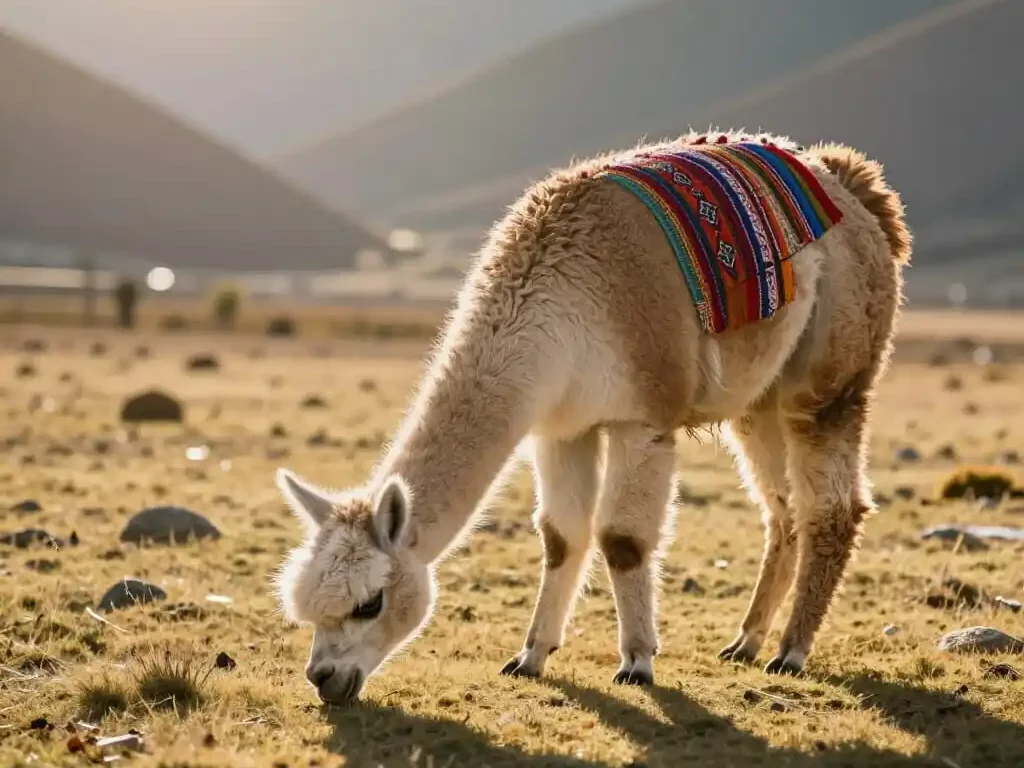
When you knit with alpaca, you are working with a fiber deeply connected to its environment. Alpacas are native to the Andes, raised for centuries in regions with extreme temperature swings. This climatic reality shaped a naturally insulating fiber, capable of protecting against both biting cold and sudden shifts in weather.
Alpaca production begins with an annual shearing, which is painless for the animal. The fiber is then sorted, cleaned, and spun. This relatively gentle process preserves the natural qualities of the fleece: softness, fineness, and strength. As a knitter, I appreciate this raw, authentic dimension. Knitting with alpaca is a way to reconnect with a material that has meaning, far removed from mass-produced, standardized yarns.
The Practical Properties of Alpaca in Knitting
On the needles, alpaca stands out immediately. The first thing you notice is the softness. It’s often compared to other animal fibers, but it has a distinct, silky, almost enveloping feel. For those who find rustic wools too scratchy, it’s often a revelation.
Alpaca yarn is also incredibly warm without being heavy. It traps air very efficiently, allowing you to knit lightweight pieces that are genuinely insulating. This is a quality I value immensely for traveling or city living: a fine alpaca shawl is often enough where a bulky sweater in another material would be required.
Finally, it is naturally low in lanolin, making it more tolerable for sensitive skin. When knitting for children or as a gift, this is a crucial criterion.
Why I Use Alpaca Yarn in My Personal Projects
Projects Where Alpaca Truly Makes a Difference
Over time, I’ve learned to reserve alpaca yarn for specific projects. Shawls and wraps are the first that come to mind. The fluidity of the yarn, its natural drape, and its heat-retaining ability make them ideal for chilly mornings, train platforms, or overly air-conditioned offices.
I also love using it for “comfort” sweaters—the ones you throw on during the weekend, on vacation, or while working from home. Alpaca provides an immediate, almost soothing comfort. For baby or children’s clothing, I often prefer alpaca blends, as they combine softness and warmth without irritating the skin.
In a life paced by commutes, work, and supervising homework, these knitted pieces become true textile sanctuaries.
Pure Alpaca vs. Blends: A Knitter’s Perspective
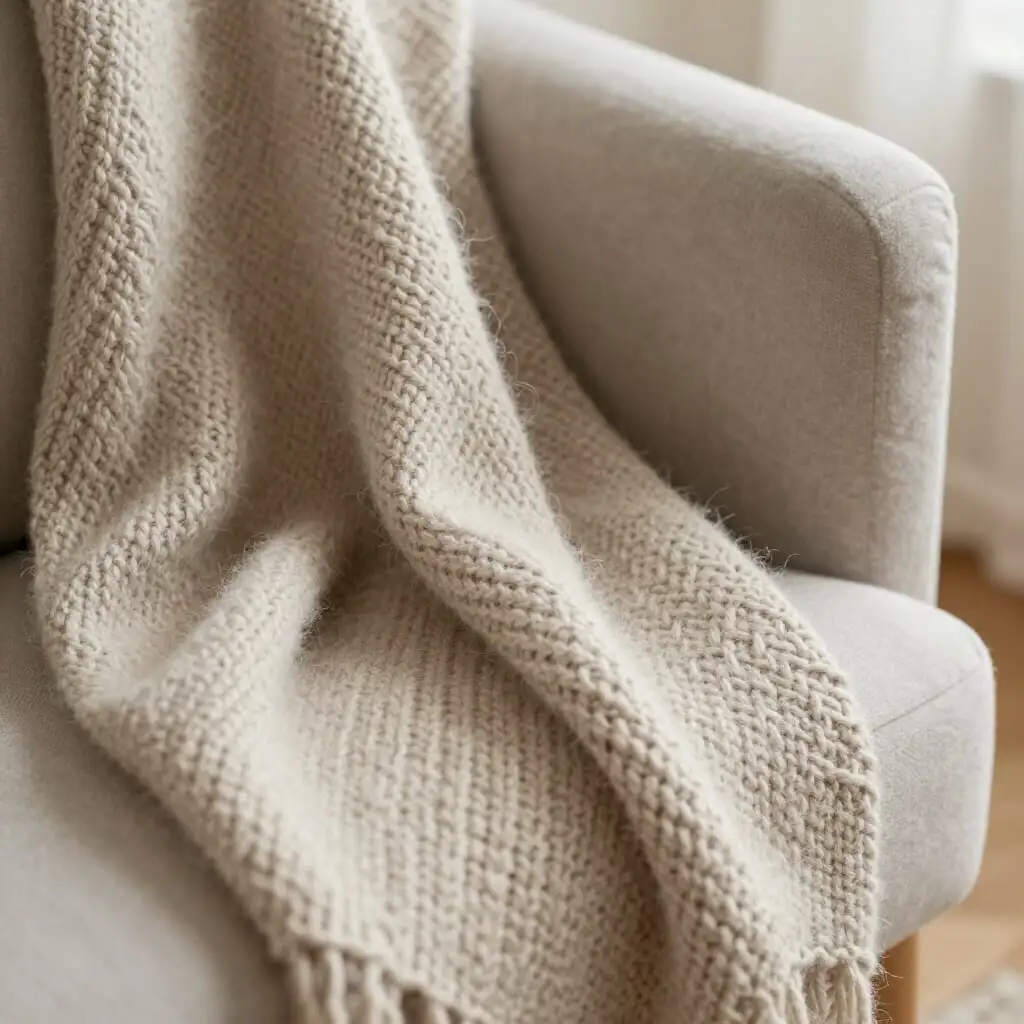
Alpaca yarn comes in many forms, and not all are equal depending on the project. Pure alpaca is gorgeous, but it can lack elasticity. On a very fitted sweater or tight ribbing, this can be an issue. I’ve learned to use it for looser silhouettes, where its suppleness becomes an asset.
Blends, on the other hand, often offer an excellent compromise. Alpaca and sheep’s wool, alpaca and silk, or even alpaca and technical fibers: these combinations provide more structure while maintaining the characteristic softness of alpaca. These are the yarns I usually turn to for everyday projects, especially when I know they’ll be worn frequently.
How to Knit Alpaca Yarn: Practical Tips
Needles, Tension, and Recommended Stitches
Knitting with alpaca requires a bit of attention, especially at the start. I’ve developed the habit of using needles slightly larger than those suggested on the label to avoid compressing the fiber too much. Alpaca truly reveals its beauty in simple stitches that let the yarn breathe.
Stockinette, garter stitch, or airy lace patterns are particularly well-suited. Conversely, very structured or tight stitches can result in a rigid fabric that doesn’t do the material justice. A gauge swatch is essential, especially if you’re knitting on the go, between commutes, or in the evening after a long day.
Daily Care for Alpaca Yarn
Caring for alpaca often seems intimidating, but it’s actually quite simple. I hand-wash my pieces in cold or lukewarm water with a gentle wool detergent. I always dry them flat to prevent any stretching or deformation.
Over time, I’ve found that well-maintained alpaca pieces age beautifully. They retain their softness and appearance even after several seasons. It’s an investment, certainly, but a sustainable one.
Comparison Table: Alpaca Yarn, Standard Wool, and Cotton
| Feature | Alpaca Yarn | Standard Sheep’s Wool | Cotton |
|---|---|---|---|
| Touch/Softness | Very soft, silky, ideal for sensitive skin | Varies by breed and treatment | Soft but drier |
| Warmth | Excellent, highly insulating even when thin | Good to very good | Low |
| Weight of Fabric | Lightweight despite the warmth | Medium to heavy depending on yarn | Rather heavy |
| Thermoregulation | Very good, comfortable indoors and out | Good | Low |
| Elasticity | Low, little “bounce” | Good natural elasticity | Very low |
| Durability | Good if well-maintained | Excellent | Can stretch out over time |
| Care | Delicate, gentle wash recommended | Varies by wool type | Easy |
| Ideal Projects | Shawls, cozy sweaters, baby clothes | Structured sweaters, everyday accessories | Summer clothes, transitional pieces |
| Wearing Feel | Enveloping, warm | Protective, robust | Fresh, breathable |
Alpaca vs. Other Natural Fibers
Alpaca or Classic Wool: How I Choose
Between alpaca and sheep’s wool, the choice is rarely random. For structured garments intended for heavy wear, classic wool remains a safe bet. It’s more elastic and generally more resistant to wear and tear.
Alpaca is my go-to when I’m seeking comfort and softness above all else. It’s the fiber I choose to treat myself, creating a piece that feels like a cocoon.
Why I Don’t Always Use Alpaca
Despite its qualities, alpaca isn’t universal. The price can be a barrier for large projects, and its low elasticity limits certain uses. In those cases, I happily turn to other natural fibers, like cotton, which is particularly pleasant for transitional or summer projects. I discuss this in more detail in my article dedicated to knitting cotton.
Every fiber has its place, and it’s this diversity that makes knitting so rich.
Buying Alpaca Yarn Without Mistakes
What I Always Check on the Label
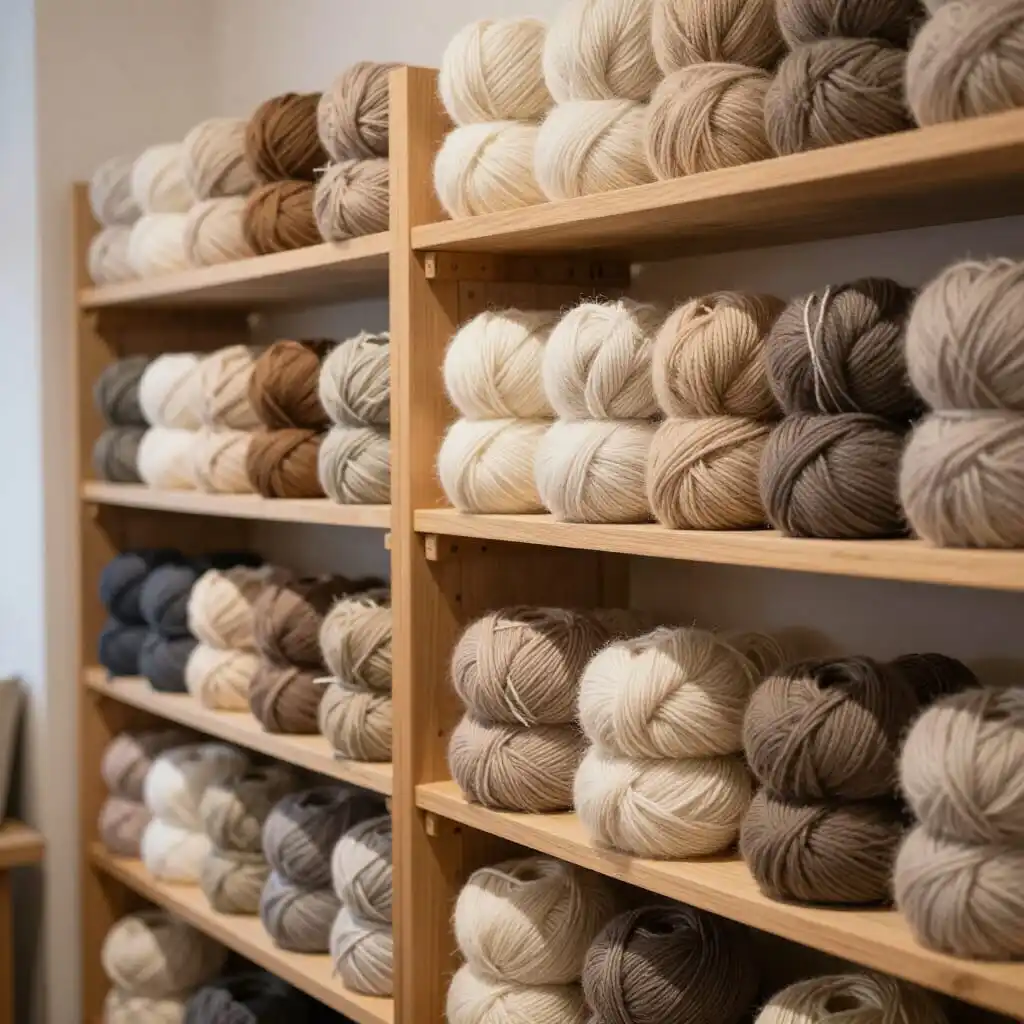
Before buying alpaca yarn, I always take the time to read the label. The alpaca percentage is essential, but I also look at the yardage, origin, and needle recommendations. Some yarns use the word “alpaca” when it’s only a small percentage of the blend.
These details make all the difference once the project starts, especially if you’re knitting a gift or a piece for a specific purpose.
Where to Buy Quality Alpaca Yarn
I alternate between local yarn stores, specialized online shops, and occasionally small producers. You can often feel the quality from the first touch. A good alpaca yarn is smooth, consistent, and a pleasure to work with. It transforms the knitting experience as much as the final result.
👉 Alpaca Yarn: 5 Things to Do Before You Buy
1. Check the alpaca percentage
The higher the percentage, the more softness and warmth you’ll get. A yarn may be marketed as “alpaca” while containing only a small amount. Always verify the exact composition.
2. Identify the intended use
Pure alpaca is perfect for a shawl or an oversized sweater but less suited for very fitted garments. For everyday wear, alpaca/wool blends often offer a better balance.
3. Verify yardage and weight
Two skeins of the same weight can have very different yardages. This is essential for estimating how much you need and avoiding surprises mid-project.
4. Read the care instructions
Alpaca requires gentleness. If the indicated care doesn’t fit your lifestyle (kids, travel, limited time), it’s better to choose a more low-maintenance blend.
5. Feel the yarn… if possible
Nothing beats direct contact. A good alpaca yarn is consistent, soft, and doesn’t “squeak” between your fingers. When shopping online, prioritize brands that are transparent about origin and composition.
FAQ: Everything I’m Asked About Alpaca Yarn
Is alpaca yarn actually scratchy?
In the vast majority of cases, no. It is often specifically chosen by people who find classic wool irritating.
Can you knit alpaca yarn for a baby?
Yes, especially in a blend. Its softness and lack of lanolin make it a great option.
Does alpaca yarn pill?
A little, especially at the beginning. Over time and with proper care, the pilling usually stabilizes.
Is it a warm wool for winter?
Absolutely. It is highly insulating, even in thin layers.
Is alpaca yarn suitable for beginners?
Yes, provided you choose a yarn that isn’t too fine and maintain a relaxed tension.
Alpaca yarn now holds a special place in my knitting practice. It accompanies me in moments when I need softness, warmth, and a bit of slowness. It’s a fiber that invites you to take your time, to savor every stitch, and fits perfectly into a life made of commutes, projects, and shared moments.
See also
