
There are some materials that immediately spark heated debates in the knitting world. Acrylic yarn is definitely one of them. For a long time, I looked down on it too. Too “chemical,” not noble enough, not authentic enough… and yet. By knitting on the train, between helping the kids with homework, or from the bottom of a suitcase, I’ve come to see it differently. No dogma, no marketing speak—just my needles and a lot of hours of practice.
Today, I wanted to share an honest account of my experience, far from the common misconceptions, to help you decide if acrylic yarn has a place—or not—in your knitting projects.
Why acrylic yarn is such a talking point for knitters
Between prejudice and daily reality
In knitting circles, acrylic yarn has a stubborn reputation. It’s often called cold, scratchy, bad for the skin, and unworthy of a “real” handmade knit. I repeated these arguments for years without questioning them. Until one day, out of necessity rather than conviction, I bought a skein of acrylic for a child’s beanie that needed to survive constant washing.
And I was surprised. The yarn glided beautifully over the needles, the stitches were clean and regular, and above all… the beanie survived school, the washing machine, and being forgotten in a backpack. That day, I realized that many of the criticisms stem from a misunderstanding of its actual use, rather than its intrinsic qualities.
Who is acrylic yarn actually for?
Acrylic yarn isn’t for everyone or every project, but it can be a valuable ally in very specific contexts. Beginners often love it for its consistency and affordable price, which removes the fear of “wasting” an expensive luxury fiber. Parents find it a practical solution for durable, easy-to-maintain children’s clothing. And for those who knit on the go—on the train, plane, or in a waiting room—it offers a welcome peace of mind.
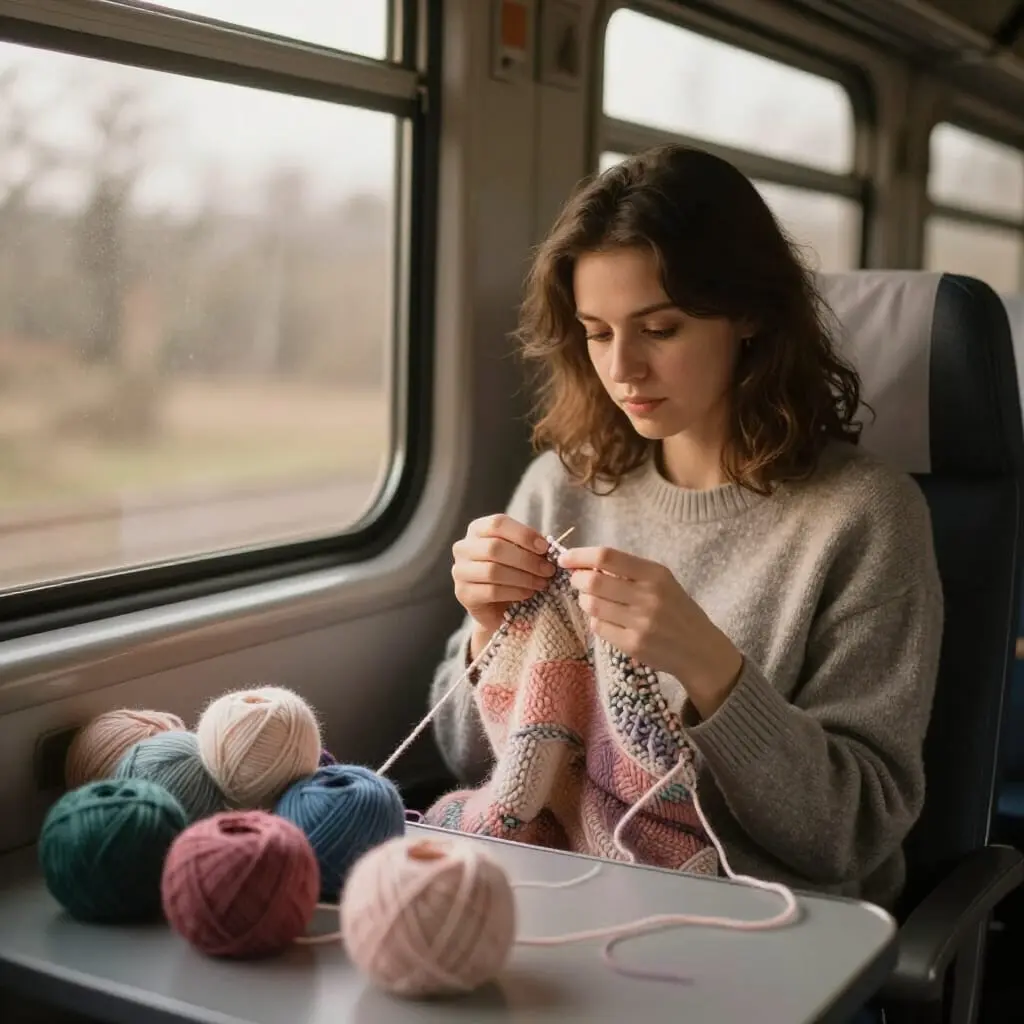
Acrylic yarn in daily life: what I learned by actually knitting with it
Feel, drape, and durability
In terms of feel, acrylic yarn can vary wildly depending on the brand and range. Some budget skeins are indeed stiff and unpleasant, but newer ones offer a surprising softness. On the needles, it creates a crisp, regular, almost graphic stitch, making it ideal for simple patterns or structured knits.
Over time, I’ve noticed that it holds its shape well, without felting or stretching out excessively. Pilling does happen, of course, but it mostly appears in areas of high friction. It’s not a dealbreaker if you choose your projects wisely.
Warmth, breathability, and real comfort
This is where acrylic yarn is most often criticized. It doesn’t breathe like a natural fiber, and it would be dishonest to claim otherwise. However, it retains heat well, especially when used for accessories or layering.
For a sweater worn all day, I prefer other fibers. But for a scarf, a hat, or a blanket, it does its job perfectly. If you’re still undecided on which fiber to choose for your project, I recommend checking out this complete guide to acrylic yarn and other fibers.
Ideal knitting projects for acrylic yarn
Children’s and baby knits: a practical choice
When knitting for kids, the beauty of the yarn often comes second to durability and ease of care. Acrylic yarn withstands frequent washing, doesn’t felt, and dries quickly. For overwhelmed parents (myself included), this is a huge selling point.
For babies, I remain more cautious and choose very soft qualities without harsh treatments. But for school sweaters, cardigans, or beanies, it has proven to be a reliable and stress-free solution.
Accessories and home decor: where it excels
Accessories are probably where acrylic yarn truly shines. Throws, cushions, stuffed toys, hats, or mittens… it allows you to play with colors, textures, and volume without fearing premature wear and tear. For home decor, it holds its shape and keeps its colors, even when exposed to light.
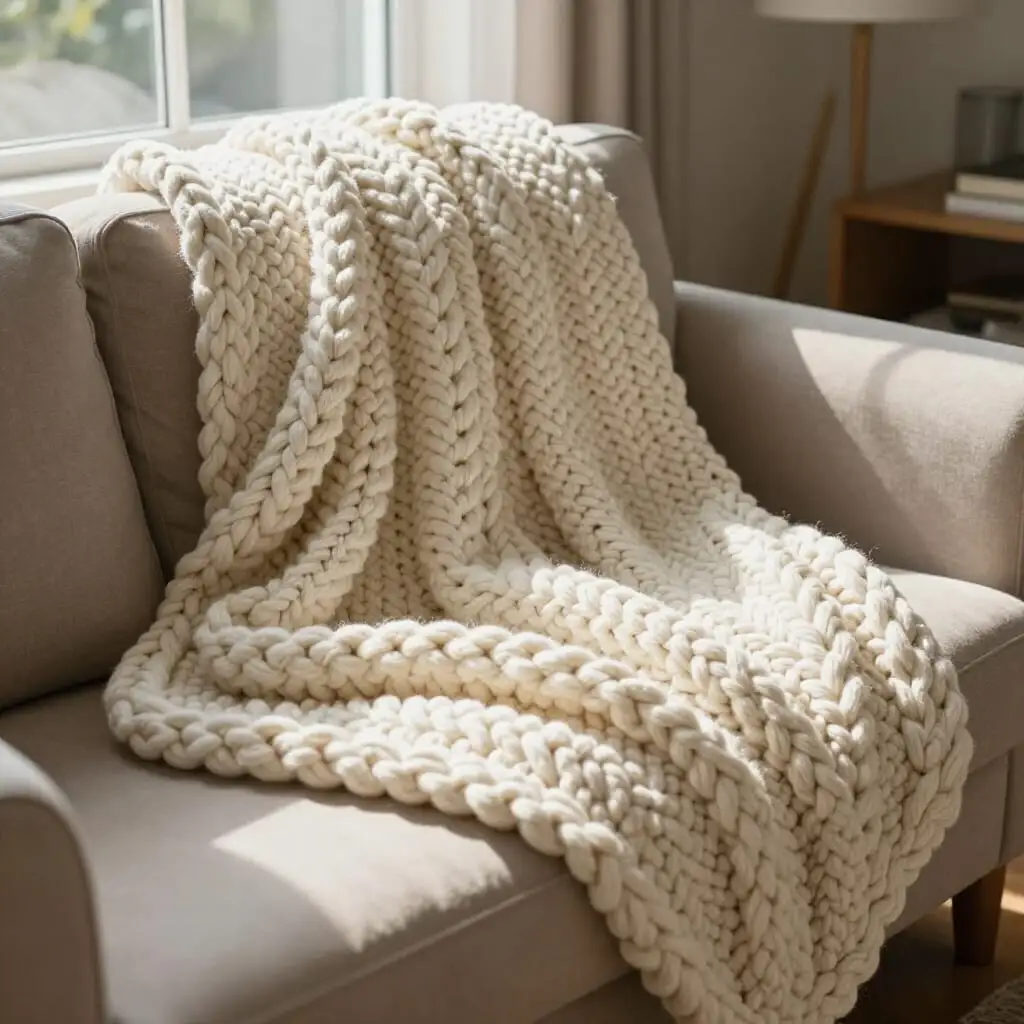
Acrylic Yarn vs. Natural Wool (Daily Use)
| Criterion | Acrylic Yarn | Natural Wool |
|---|---|---|
| Care | Very easy | More delicate |
| Durability | Excellent | Variable |
| Breathability | Low to Medium | High |
| Price | Affordable | Higher |
| Best Use | Kids, accessories, decor | Garments worn long-term |
Acrylic vs. other fibers: an unbiased perspective
Acrylic or natural wool: it all depends on the use
Over time, I stopped classifying fibers as “good” or “bad.” There are only uses that make sense or those that don’t. Acrylic yarn isn’t meant to replace natural wool, but to complement it. It offers a simple answer to concrete needs: budget, maintenance, and durability.
When I prefer an alternative like mohair…
For cozy projects worn close to the skin, I happily turn to more breathable and enveloping fibers. Mohair, for example, brings an incomparable lightness and warmth.
Care and common mistakes with acrylic yarn
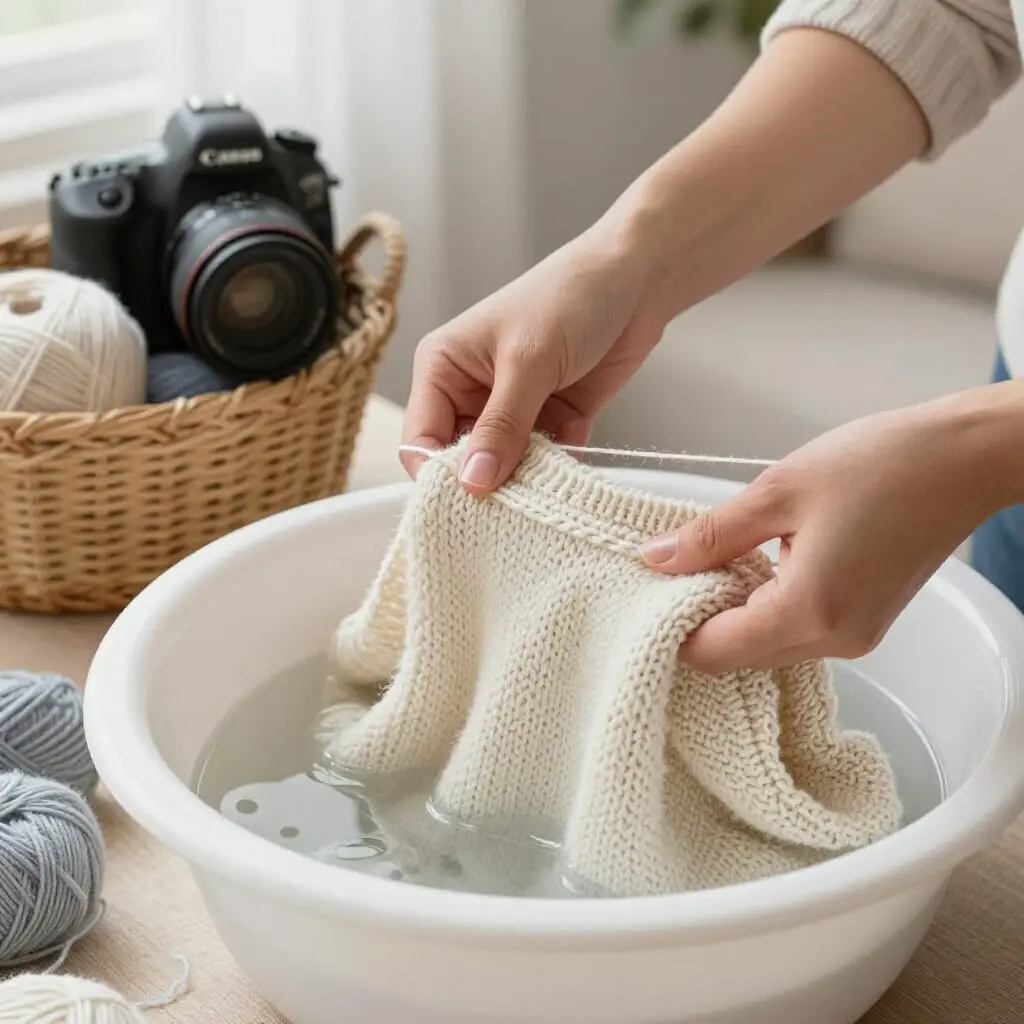
Washing, drying, and storage
Acrylic yarn generally does well in the machine at low temperatures. This is one of its greatest assets. However, I recommend washing it inside out and avoiding overly hot cycles. Air drying remains the ideal way to preserve the shape of the knit.
Mistakes I’ve made (so you don’t have to)
I learned the hard way that excessive heat is the number one enemy of acrylic. An unfortunate ironing mishap can literally “melt” the fibers. Another trap: mixing acrylic and natural wool in the same project without thinking can lead to very different reactions during washing.
FAQ: Everything you’ve asked about acrylic yarn
Does acrylic yarn keep you warm in winter?
Yes, especially for accessories. It retains heat well, even if it’s less breathable than natural wool.
Is it suitable for sensitive skin?
It depends heavily on the quality of the yarn. Some ranges are very soft, while others are much coarser.
Can you mix acrylic and natural wool?
Yes, but you must plan for the maintenance and the different behaviors of the fibers.
Is it a good choice for learning to knit?
Absolutely. Its price and consistency make it a reassuring fiber for beginners.
Does it age poorly over time?
If well-maintained, it keeps its shape and colors for a long time.
Personal conclusion: why I still knit with acrylic yarn
I don’t knit with acrylic by default, but by informed choice. It will never replace the pleasure of a beautiful natural wool, but it has earned its place in my project baskets. Because it adapts to real life—the life where we knit between subway stops, between packing a school bag and starting a load of laundry.
See also
