
Since I first picked up my knitting needles, mohair has always fascinated me. There is something magical about the delicate shimmer of its fibers—a weightless, airy softness that transforms every skein into a true cloud waiting to be knitted. Knitting with mohair isn’t just a choice of material; it’s a sensory experience that awakens the hands and the heart. Each project becomes a journey, a soft sanctuary away from the hustle and bustle of the daily grind. For those who wish to explore the wider world of yarns, I invite you to visit our complete guide to wool, a valuable resource for discovering all the available fibers.
What is Mohair Yarn?
Origin and Characteristics of Mohair
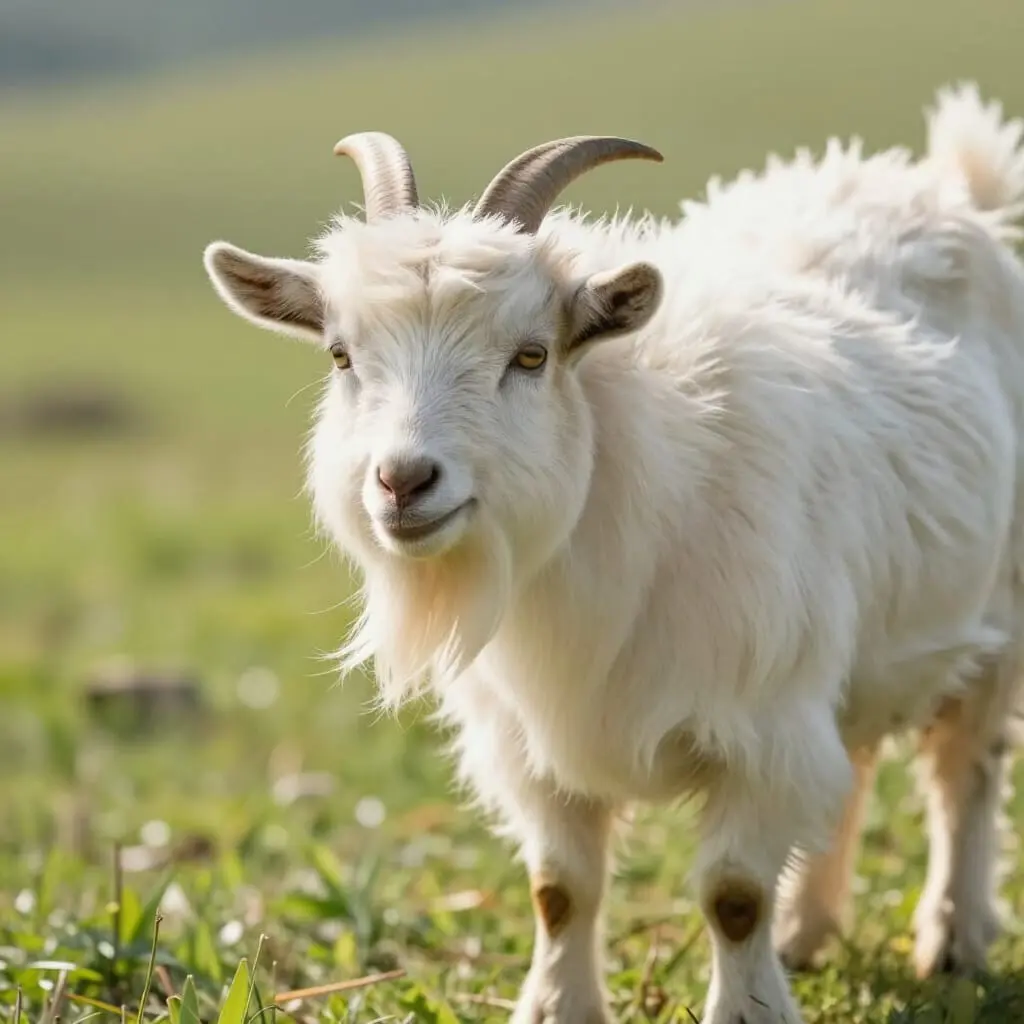
Mohair comes from the Angora goat, a breed originating from Turkey, renowned for the fineness and luster of its coat. What sets mohair apart from other wools is its ability to be simultaneously lightweight and warm, soft and shiny. Unlike some wools that can feel scratchy or heavy, mohair feels like a caress against the fingers with every stitch, offering an incomparable tactile experience. It is also durable and elastic, allowing you to knit fine pieces without worrying about them losing their shape or breaking easily.
Over the years, I’ve learned to recognize the subtleties of this fiber. Mohair hanks capture light differently depending on their origin and processing, and every pastel or natural hue reveals a unique depth. These characteristics make it particularly suited for delicate projects like shawls or lightweight sweaters.
Different Grades of Mohair
Not all mohair is created equal. There are generally several grades, ranging from the finest to the thickest. “Super kid” is the softest and lightest, ideal for delicate pieces worn directly against the skin. “Kid mohair,” which is slightly thicker, offers more structure and volume, making it perfect for enveloping shawls or cozy sweaters. Finally, adult mohair is more robust and often used in blends or for knits requiring more definition.
Understanding these nuances is essential for choosing the right yarn for your project. A yarn that is too fine for an everyday sweater might stretch out too quickly, while a mohair that is too thick could weigh down a light scarf. Through my own projects, I’ve learned that the key is to let the fiber speak for itself and adapt your needle size and tension to its personality.
Knitting with Mohair Yarn
Key Tips to Keep in Mind
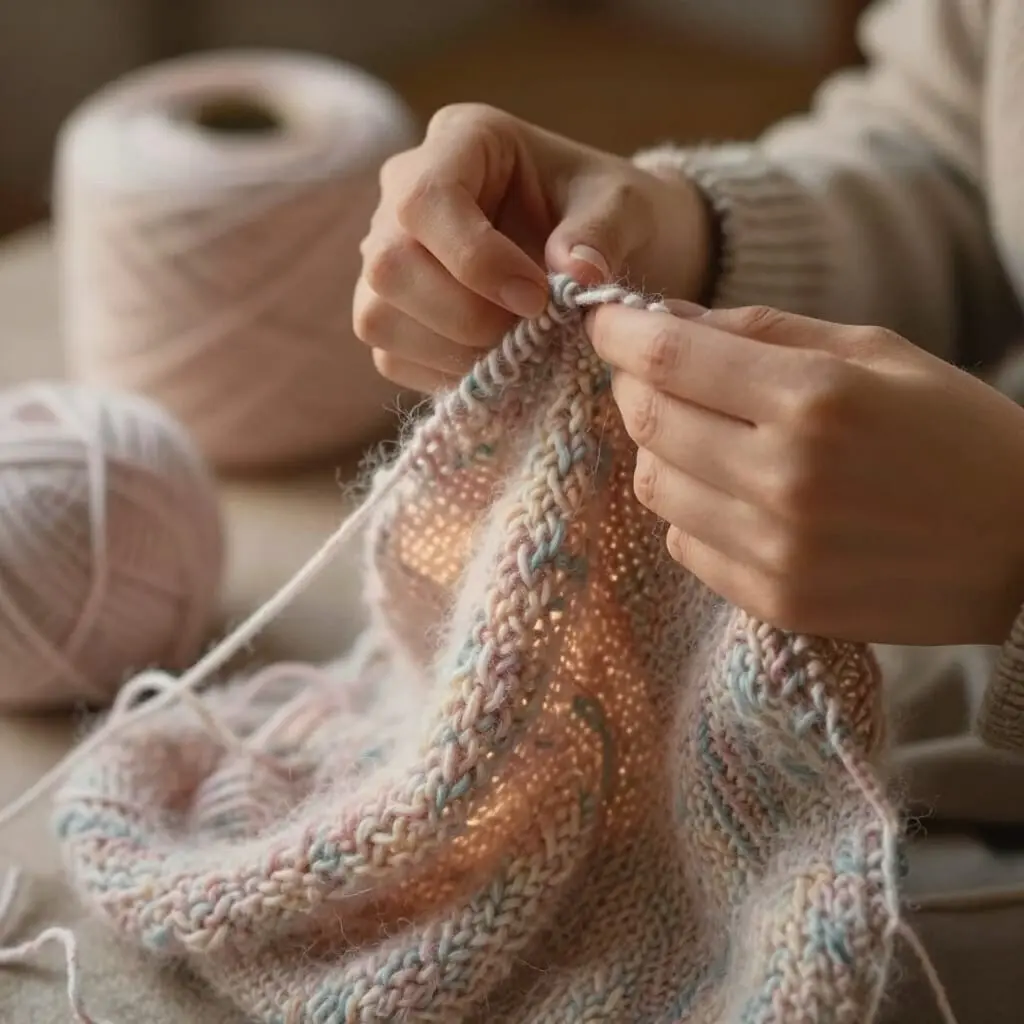
Knitting with mohair requires a bit of attention and experience. The fiber is fine and slippery, which can make stitches tricky for beginners. However, with the right needles and a little patience, the result is always rewarding. I recommend using needles slightly larger than you would for a standard wool to preserve the loft and prevent the fabric from becoming too dense. Your tension should be consistent, gentle, and almost airy, so as not to crush the natural beauty of the yarn.
What I love most is the sensation of the yarn gliding through my fingers. Each stitch seems to form almost on its own, while the mohair maintains a lightness that transforms a simple sweater into an exceptional piece.
Ideal Projects for Mohair Yarn
Mohair truly shines in lightweight and elegant projects. Delicate shawls become wearable clouds, fine sweaters take on an aura of sophistication, and enveloping scarves provide warmth and comfort without the bulk. To add more structure or increase the durability of a project, I often pair mohair with Merino wool, combining softness with stability. It is the perfect blend for creating pieces that are both ethereal and resistant—ideal for long winter evenings.
Care and Durability of Mohair
Washing and Drying
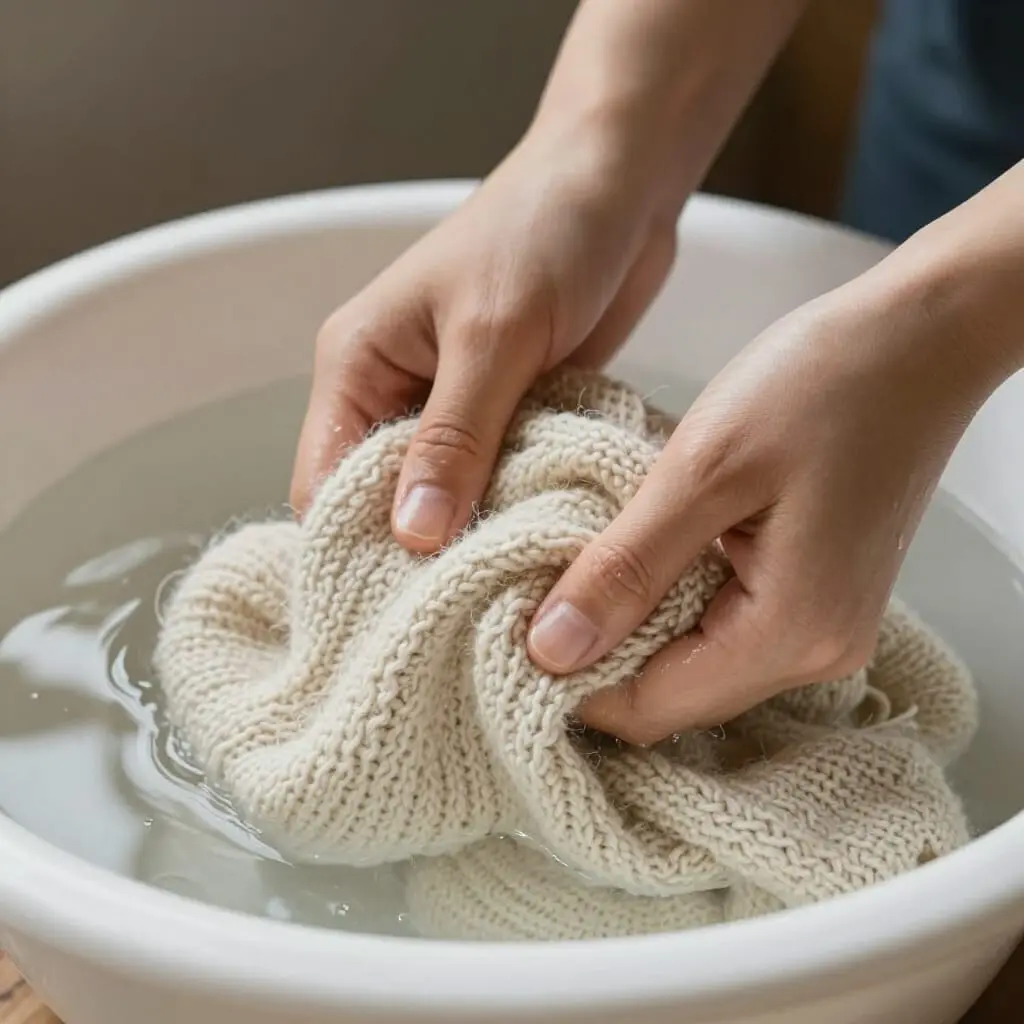
Mohair deserves as much care in its maintenance as it does in its creation. Hand washing is always recommended, using lukewarm water and a mild detergent, without rubbing or twisting the fibers. A mohair sweater or shawl should be dried flat, ideally on a clean towel, away from direct heat sources. This gentle care preserves the luster and fluffiness of the fiber.
Storage and Preventing Pilling
To keep your creations in perfect condition, it is essential to protect them from moisture and moths. Mohair has a tendency to pill, especially when worn against rough surfaces. These pills can be gently removed using a special pill comb or by lightly rubbing them with your fingers. With a little precaution, your knits will remain as soft and luminous as the day they were finished.
Mohair Yarn and Sustainability
Ecological Impact
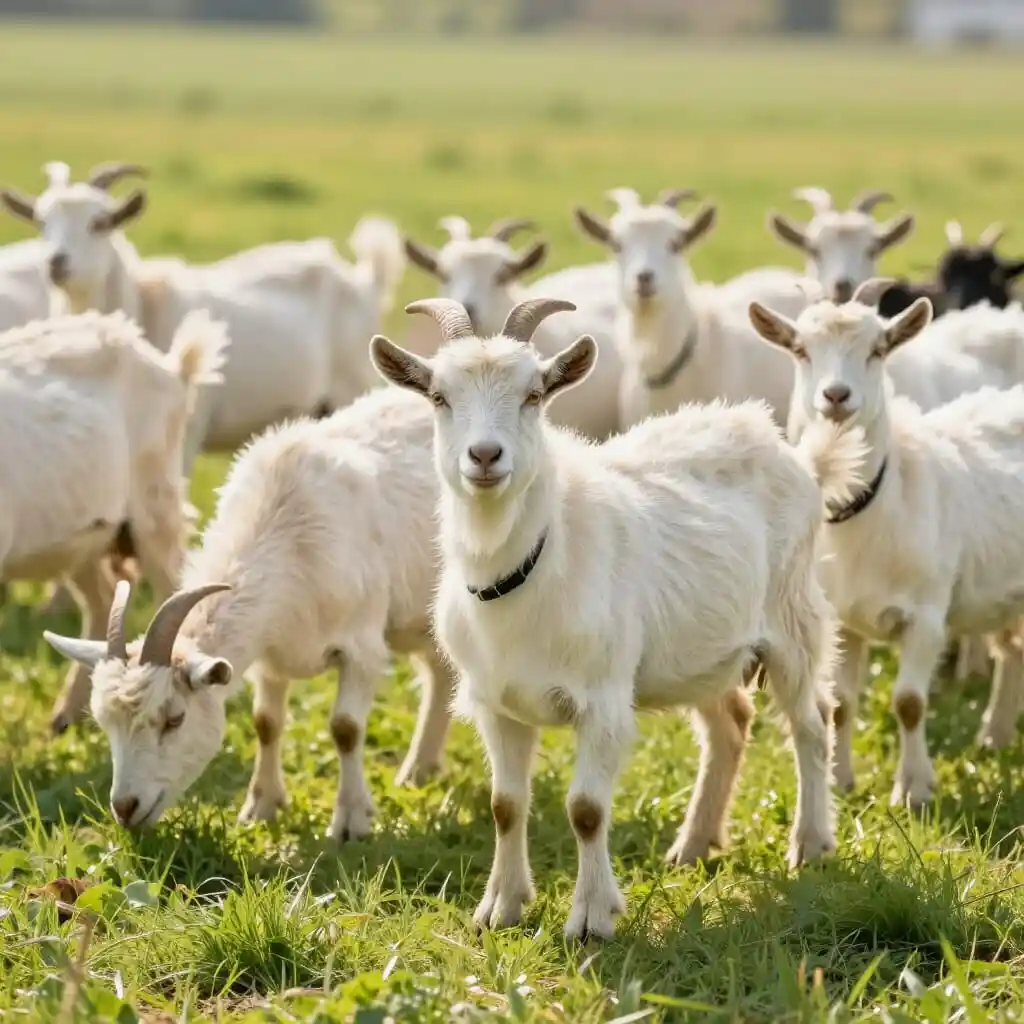
Mohair is a natural fiber that, when produced responsibly, is far more sustainable than many synthetic fibers. Responsible production respects the biological cycle of the Angora goats, limiting animal stress and chemical treatments. In comparison, some synthetic fibers generate significant plastic pollution and have a higher carbon footprint.
Choosing Ethical Mohair
When shopping, it is important to prioritize certified spinning mills and labels that guarantee animal welfare. Some farms ensure that goats are sheared gently and without suffering, and that agricultural practices respect the environment. This ethical approach allows you to knit with a light heart, knowing that every stitch contributes to responsible production.
To better visualize the differences between fibers, here is a comparison table between mohair, merino, and alpaca, summarizing their softness, warmth, and durability.
| Fiber | Softness | Warmth | Durability | Ideal for |
|---|---|---|---|---|
| Mohair | Very soft, airy | Light but warm | Durable, can pill | Shawls, fine sweaters, scarves |
| Merino | Very soft, supple | Warm | Durable, stretchy | Sweaters, accessories, baby clothes |
| Alpaca | Soft, silky | Very warm | Highly durable, low pilling | Coats, scarves, chunky sweaters |
FAQ – Mohair Yarn
Is mohair yarn scratchy?
Not at all, especially if you choose super kid or kid mohair. The fiber is extremely soft and perfect for sensitive skin.
Can I machine wash a mohair sweater?
I always recommend hand washing. Some machines have a delicate “wool” cycle, but mohair remains fragile, so it is better to be cautious.
What is the difference between mohair and merino?
Merino is more stretchy and warm, perfect for classic sweaters, while mohair is airier and shinier, ideal for light and elegant pieces.
Which projects are best suited for mohair?
Shawls, scarves, and lightweight sweaters. Mohair adds lightness and softness, but it can be combined with other yarns for more structure.
Is mohair yarn warm enough for winter?
Yes, despite its lightness, it retains heat very well and can be worn alone or as a layering piece.
See Also
