
If I had to summarize my relationship with machine-washable wool, I’d say it was born out of a very practical need: the desire to keep knitting without every single sweater becoming a source of anxiety on laundry day. Between the daily commute, work, kids, weekend getaways, and an endless cycle of laundry, I quickly realized that not all yarns fit into a real-life daily routine.
For a long time, I looked at this type of wool with suspicion. I thought it was too “industrial” and lacked the nobility of traditional wool. But then, I tried it. More importantly, I wore it, washed it, forgot it at the bottom of a bag, put it back on, and washed it again. Since then, it has found a permanent place in my stash… and in my projects.
What exactly is machine-washable wool?
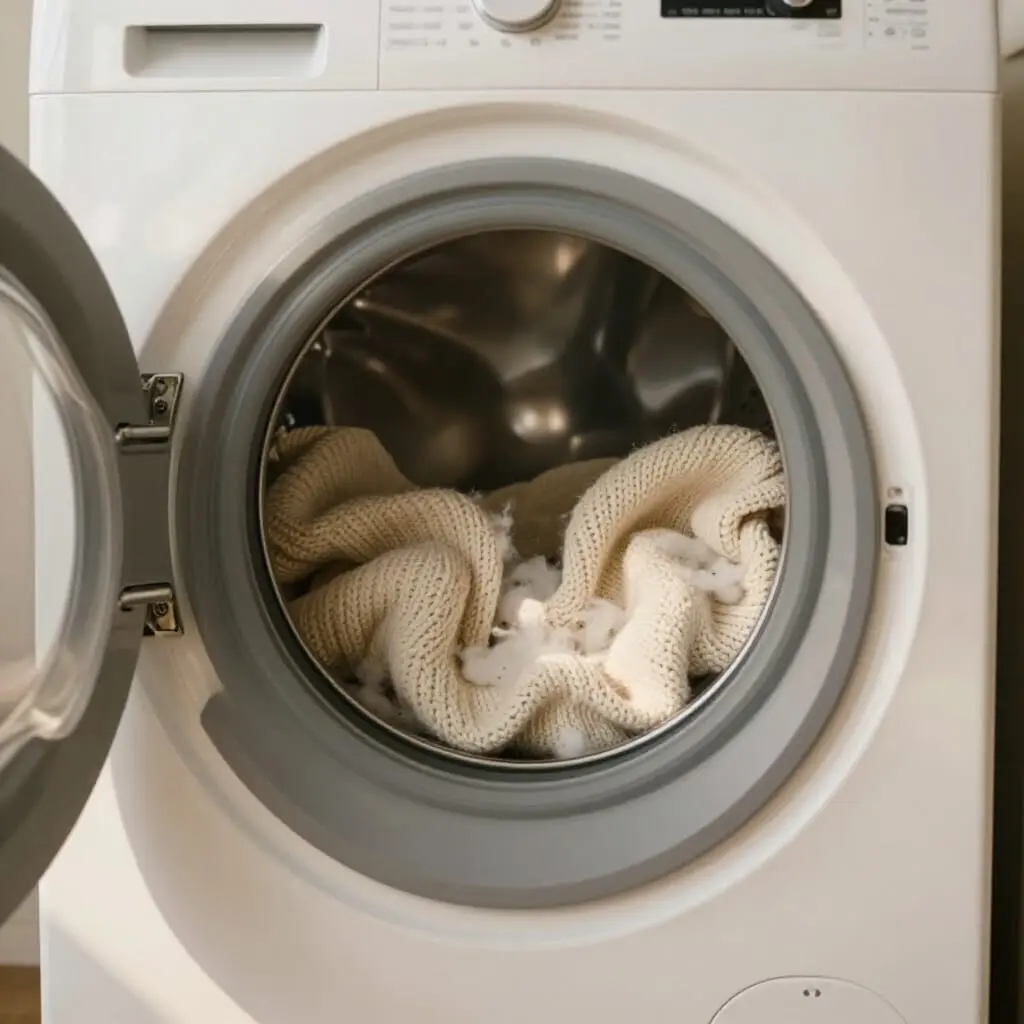
Before deciding whether we love it or not, we need to understand what is actually happening behind this seemingly magical label.
Superwash treatment explained simply
Machine-washable wool has undergone a treatment, most commonly known as superwash. Without getting too technical, this process modifies the surface of the wool fibers to prevent felting. The natural scales—which are responsible for shrinkage—are either smoothed down or coated.
In practical terms, this means a sweater knitted with this wool can go through the wash without turning into a doll-sized version of itself. It’s a huge relief, especially when knitting for others, or when you know the care label will inevitably be ignored one day.
Machine-washable $\neq$ indestructible
This is a point I always emphasize: machine-washable does not mean indestructible. Wool remains a natural fiber that is sensitive to high heat, excessive friction, and harsh cycles. The difference is that it is more forgiving. It handles mistakes, forgetfulness, and busy lives much better.
Why choose machine-washable wool for your knitting?
If I keep buying it, it’s not by accident. It’s because it suits very specific needs in my life as a knitter.
Everyday knitting: children, babies, and busy families
When I knit for children, it’s a no-brainer. A yarn that requires hand-washing is a yarn that will rarely be worn. Kids’ sweaters go through sandboxes, school cafeterias, puddles, and occasionally permanent markers. Machine-washable wool allows me to focus on the joy of knitting rather than the fear of maintenance.
For babies, it’s also a matter of hygiene and frequency of washing. Accidents happen quickly, and being able to wash a garment without stress is a true relief.
Stress-free travel with your knits
I love taking my knitting on trips—on trains, planes, or in rentals where the washing machine is shared with other vacationers. Machine-washable wool provides peace of mind in these contexts. I know that if a sweater picks up a scent or a stain, I can wash it easily, even far from home.
Time-saving and peace of mind for active knitters
We often underestimate the mental load associated with garment care. Choosing machine-washable wool is choosing peace of mind. Knitting becomes a simple pleasure integrated into daily life, rather than a precious object that you hesitate to wear.
Pros and Cons of machine-washable wool
Like any material choice, this one involves a few trade-offs.
The real-world advantages
The primary advantage is, obviously, the maintenance. A wool cycle, a controlled temperature, and the garment comes out intact. Over time, I’ve found that some machine-washable yarns hold up very well, without pilling more than other types of wool.
There is also a consistency to the yarn that makes knitting easier, especially for beginners or repetitive projects.
The limitations to know before you knit
On the other hand, the feel can be slightly different. Some superwash wools are smoother and sometimes feel a bit less “alive” than untreated wools. The elasticity may also be lower, which can affect the drape of the garment.
Finally, there is the environmental question. The superwash process has an impact, and it’s important to be aware of it. If this is a concern for you, I invite you to read this article on more eco-friendly alternatives.
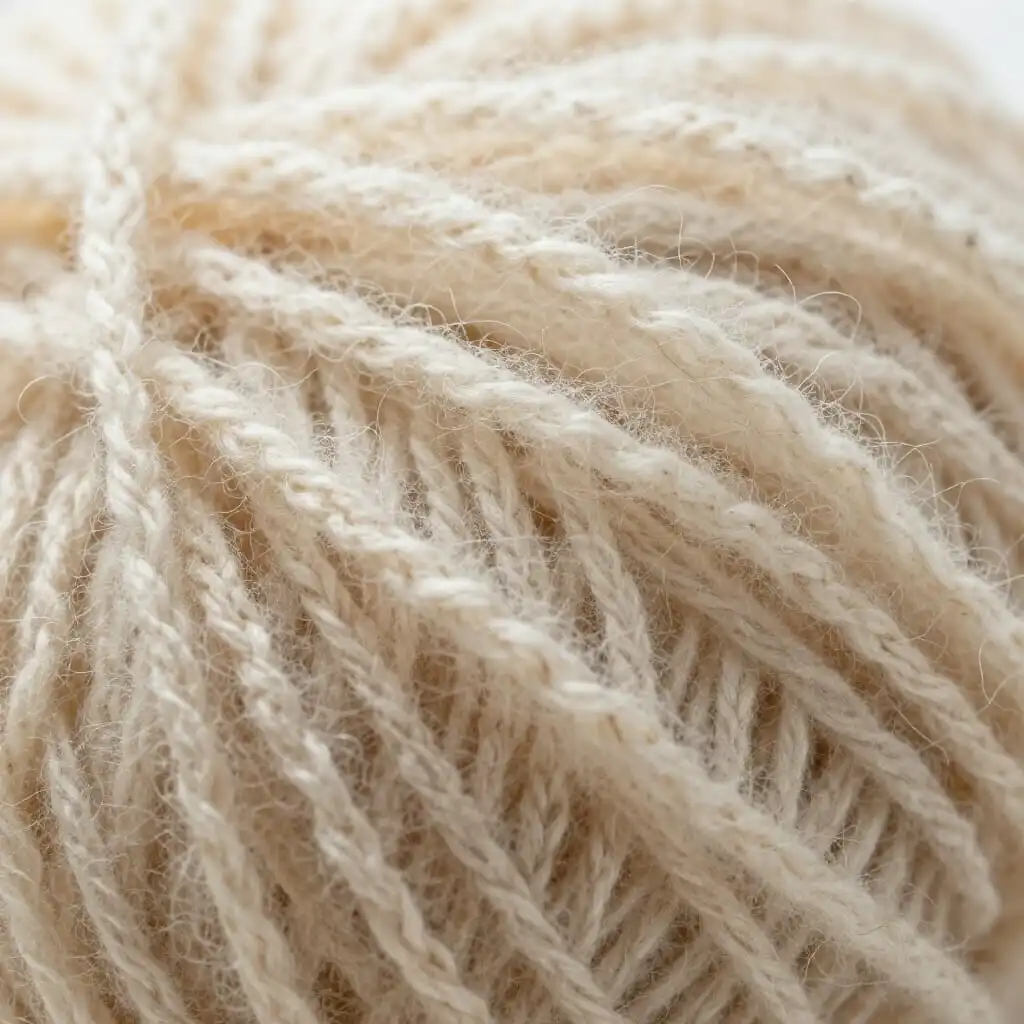
Which projects are best for machine-washable wool?
Over time, I’ve learned to reserve this type of wool for very specific projects.
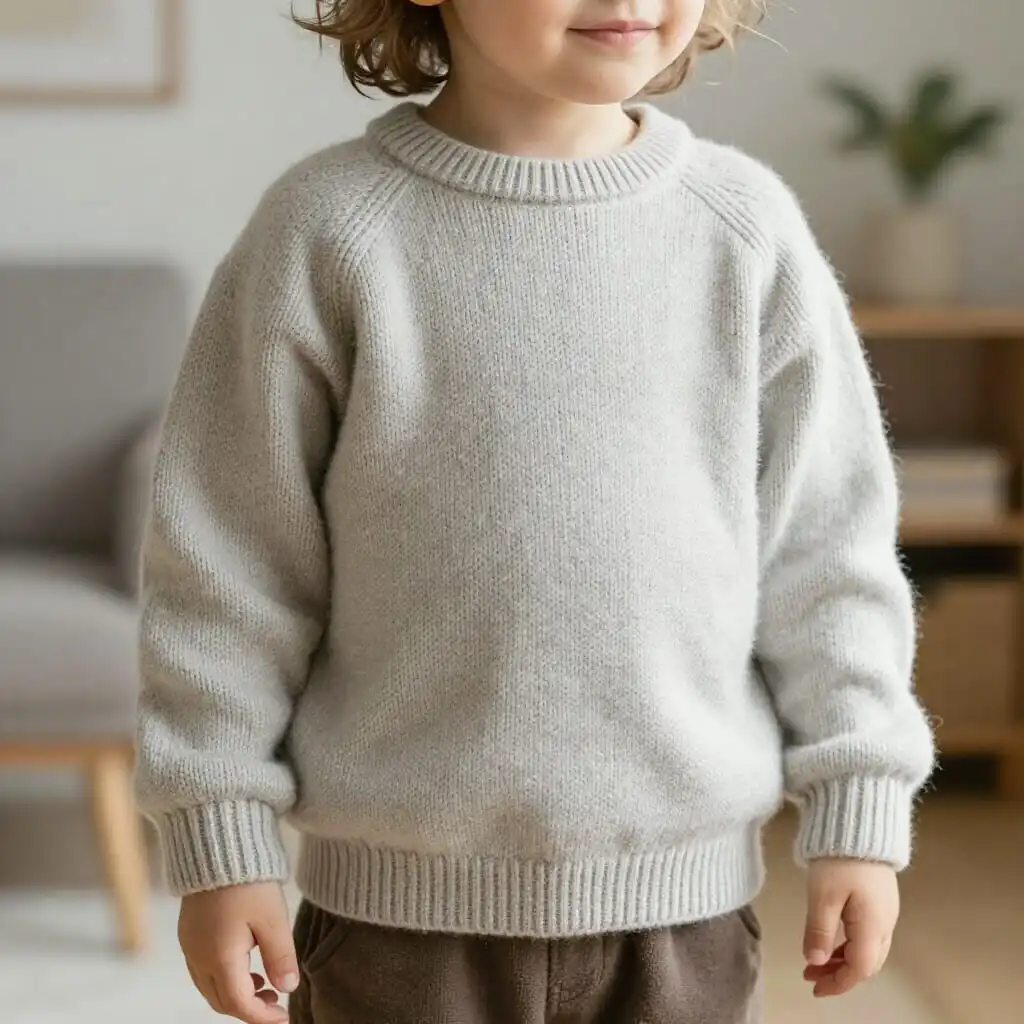
Sweaters, cardigans, and frequently worn clothing
These are my favorite projects for this material. Everyday sweaters that you grab without thinking in the morning. They live, they wear down a bit, but they fulfill their purpose.
Frequently washed accessories
Children’s beanies, scarves, booties… anything that goes through the wash often benefits from being knitted in a washable wool. This avoids the frustration of thinking, “I won’t wear this anymore because I’m afraid of ruining it.”
Projects to avoid with this type of wool
For very fine lace or pieces where the natural bounce of the wool is essential, I prefer untreated wool. Machine-washable wool has its strengths, but it isn’t right for everything.
How to properly wash and care for machine-washable wool?
Even though it is more tolerant, this wool still deserves a minimum of attention.
Recommended cycle, temperature, and detergent
I always prioritize a wool or delicate cycle, at a low temperature, using a mild detergent. The goal isn’t to beat it up, but to take advantage of its increased resistance.
Common mistakes to avoid absolutely
Excessive heat remains its worst enemy. Similarly, cycles that are too long or too aggressive can wear out the fibers prematurely.
Knitter’s tips to extend garment life
I always turn my knits inside out before washing and dry them flat. These are simple steps, but they make a real difference in the long run.
Practical Checklist: Before you put your knit in the machine
Before starting the wool cycle, I always ask myself a few simple but crucial questions:
Is the program appropriate?
I always choose the “wool” or “delicate” setting. Even though my wool is machine-washable, I never risk a cycle that is too aggressive.
Is the temperature gentle?
Heat is enemy number one for wool fibers. 30°C (86°F) is generally perfect; never go higher.
Did I use a mild detergent?
A specialized wool wash or a gentle liquid detergent preserves the softness and flexibility of the yarn.
Is my garment prepared?
I turn the sweater inside out and check for any pockets or fragile threads. I also fasten the buttons to prevent them from snagging.
Is the drying plan ready?
Washable wool loves the open air. I prepare a flat surface, away from direct heat, so my knit can dry slowly and maintain its shape.
Is machine-washable wool compatible with a sustainable approach?
This is a question I ask myself often, and I don’t have a definitive answer.
What the treatment actually involves
The superwash process consumes water and energy. That is a fact. However, the impact of a garment is also measured by its lifespan and how often it is actually used.
When and why to make a compromise
A sweater worn and washed for years sometimes makes more sense than a fragile piece forgotten in a closet. To choose the most suitable material for your project, I recommend consulting this guide to machine-washable wool and other types of yarns.
Comparison Table
| Criterion | Machine-Washable Wool | Untreated Wool |
|---|---|---|
| Care | Easy, machine possible | Hand wash only |
| Daily Use | Highly suitable | More delicate |
| Feel | Smoother | More authentic |
| Impact | Depends on treatment | Often lower |
FAQ – Machine-Washable Wool in Practice
Does machine-washable wool actually shrink?
Under normal conditions, no. However, temperatures that are too high can still cause damage.
Can I put it in the tumble dryer?
I personally avoid it. Even when washable, wool prefers the open air.
Is it suitable for babies?
Yes, especially for garments that are washed frequently, provided you choose a soft and certified wool.
Does it lose its softness over time?
This depends heavily on the quality of the yarn and the care provided. Some hold up very well.
Is it a good choice for beginners?
Absolutely. It’s forgiving of mistakes and simplifies maintenance.
My take as a passionate knitter
Today, I no longer see machine-washable wool as a default compromise, but as a thoughtful choice. I use it when I know the knit needs to live—to be worn, washed, and loved without excessive precaution. I set it aside for the more delicate projects, the ones I savor differently.
For me, knitting is about creating objects that accompany life. And sometimes, the best wool is simply the one that removes a little bit of stress from our day.
See also
