
Knitting a sweater is more than just a technical skill; it is a creative journey. It is a moment where, stitch by stitch, you choose the warmth and comfort you want to give to yourself or those you love. I still remember knitting the first sweater for my eldest son—hesitating in front of all the skeins in the store, my fingers grazing every fiber, wondering which yarn would be best for the project. In this article, I am sharing my experience as a passionate knitter to help you answer that key question: which yarn should I choose for a sweater?
Essential Criteria for Choosing Your Yarn
Choosing the right yarn is about more than just picking a color or a price point. Several factors determine the success of your future garment. As a knitter, I’ve learned that feel, comfort, and care are the three essential pillars. If you want to learn more about different types of yarns and their characteristics, you can check out our complete guide to knitting yarns, which explores every fiber in detail.
Texture and Hand-Feel
The texture of the yarn directly influences how comfortable your sweater will be. Some fibers, like merino or alpaca, are incredibly soft—almost a caress against the skin—while others can be slightly scratchy. For a sweater that will be worn all day, I’ve found it’s best to prioritize soft yarns, especially for children and those with sensitive skin. The “hand” of the yarn also reveals its quality: a supple, consistent thread is often easier to knit with and results in a more uniform fabric.
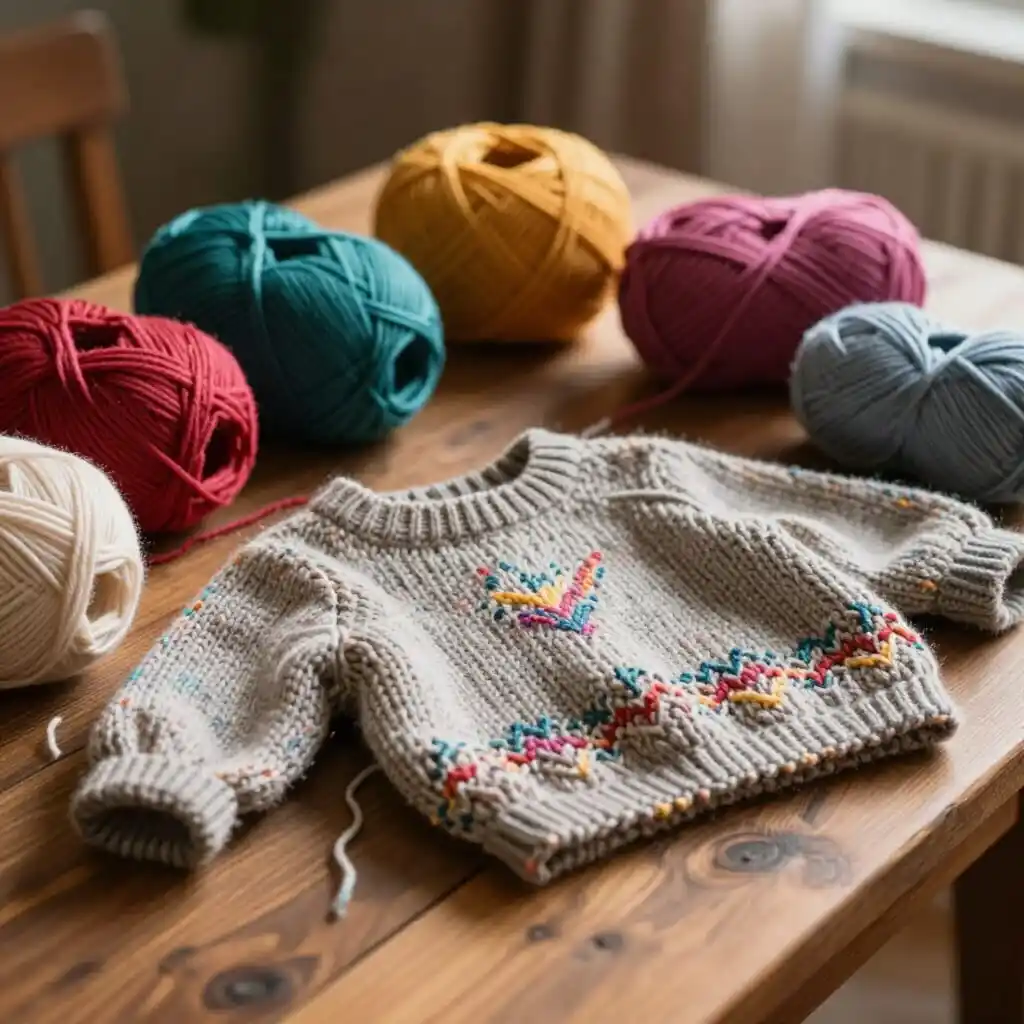
Warmth and Insulation
Your choice of yarn also depends on how the sweater will be used. Chunky yarns or high-quality fibers like alpaca and extra-fine merino provide excellent insulation, perfect for harsh winters or for a sweater worn over other layers. Lighter yarns, on the other hand, allow you to create thin, breathable sweaters—ideal for autumn or cool evenings while traveling. Personally, I always match the yarn to the intended use: a loungewear sweater for the home requires a different choice than a piece you can slip into a suitcase for a mountain trip.
Care and Durability
Yarn can be temperamental. Some fibers require a delicate hand wash and lying flat to dry to prevent shrinking, while others—often blended with acrylic—are machine-washable and hold their shape for a long time. I learned the hard way that a beautiful sweater can quickly turn into a tiny shrunken cardigan if care instructions aren’t followed. Therefore, your choice should include a practical reflection: durability and ease of maintenance are often just as important as aesthetics.
Recommended Yarn Types for a Sweater
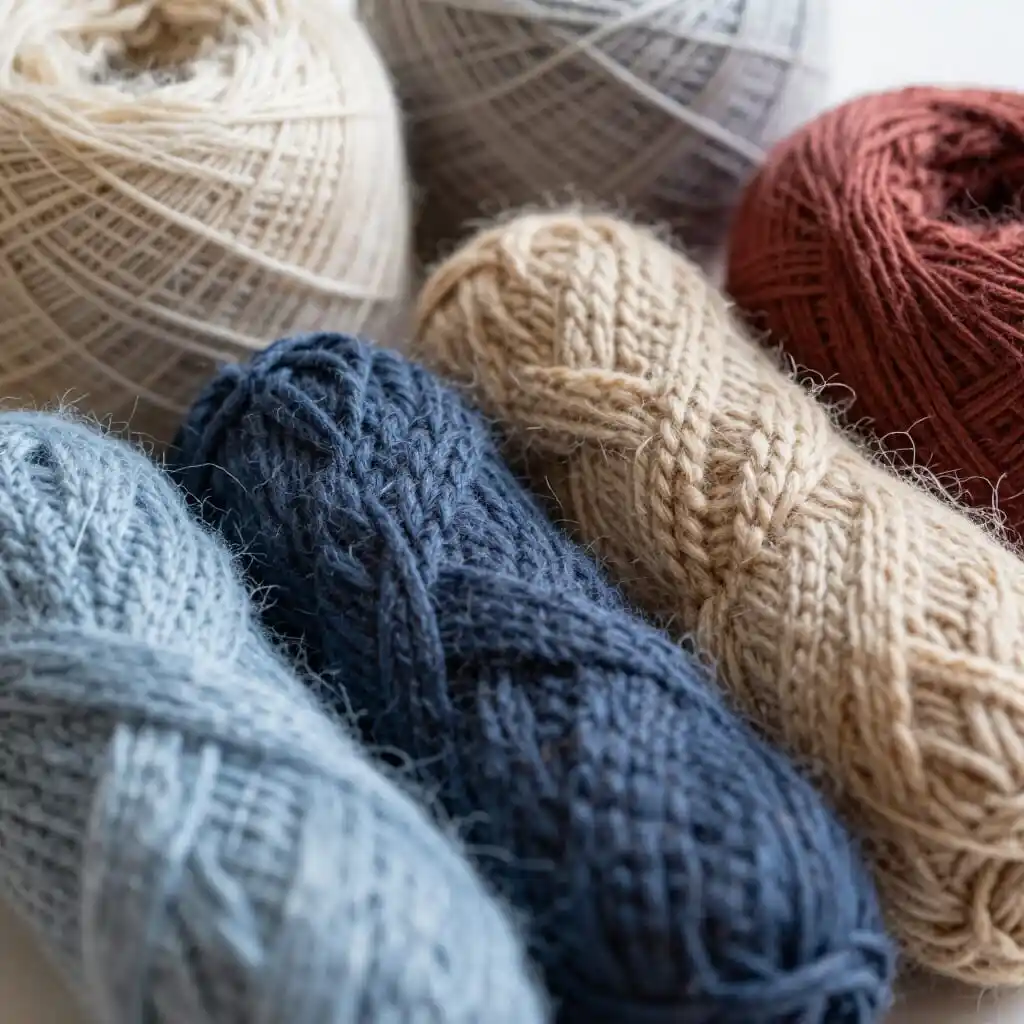
Here is an overview of the fibers I prefer for my sweater projects. Each type has its strengths and limitations, and choosing the right thread makes all the difference between a sweater you love to wear and a project abandoned in a corner.
Merino Wool
Merino wool has become a staple for fitted sweaters. Soft, breathable, and capable of regulating temperature, it is particularly pleasant to wear close to the skin. It also has the advantage of pilling less and resisting frequent wear. For a slim-fit sweater for everyday use, I highly recommend this yarn, especially for beginners who want a thread that is easy to work with.
Alpaca Yarn
If you are looking for a sweater that is very warm yet lightweight, alpaca is perfect. I love its silky softness and airy quality. Its main drawback is the price, but for a unique, heirloom piece, it is well worth the investment. However, be careful: this wool is more delicate to wash and often requires lying flat to dry to maintain its fluffiness.
Acrylic and Blends
Synthetic or blended yarns offer a practical alternative. Easy to maintain and affordable, they are perfect for everyday sweaters or pieces made for children. While they aren’t as breathable or luxurious as natural fibers, their durability and ease of washing more than make up for these limits.
Other Natural Fibers (Angora, Cashmere, etc.)
For luxury sweaters, cashmere or angora are incomparable. Ultra-soft, warm, and lightweight, they provide an exceptional feeling of comfort. However, these yarns require very delicate care and a higher budget. I generally reserve them for special projects, often as gifts or for sweaters that will be worn with great care.
Matching Your Yarn to Your Sweater Style
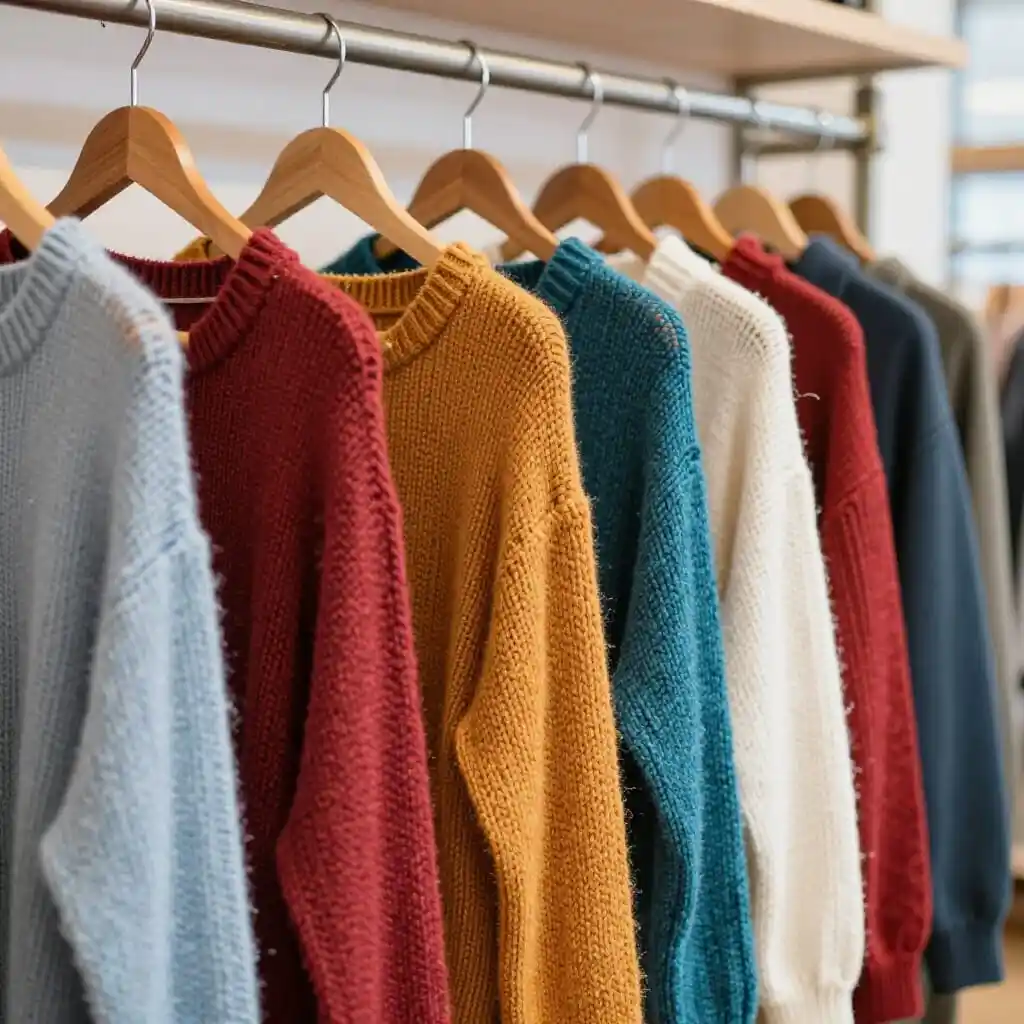
Every style of sweater deserves a specific yarn. The size, pattern, and intended use all influence your choice.
Oversized and Chunky Sweaters
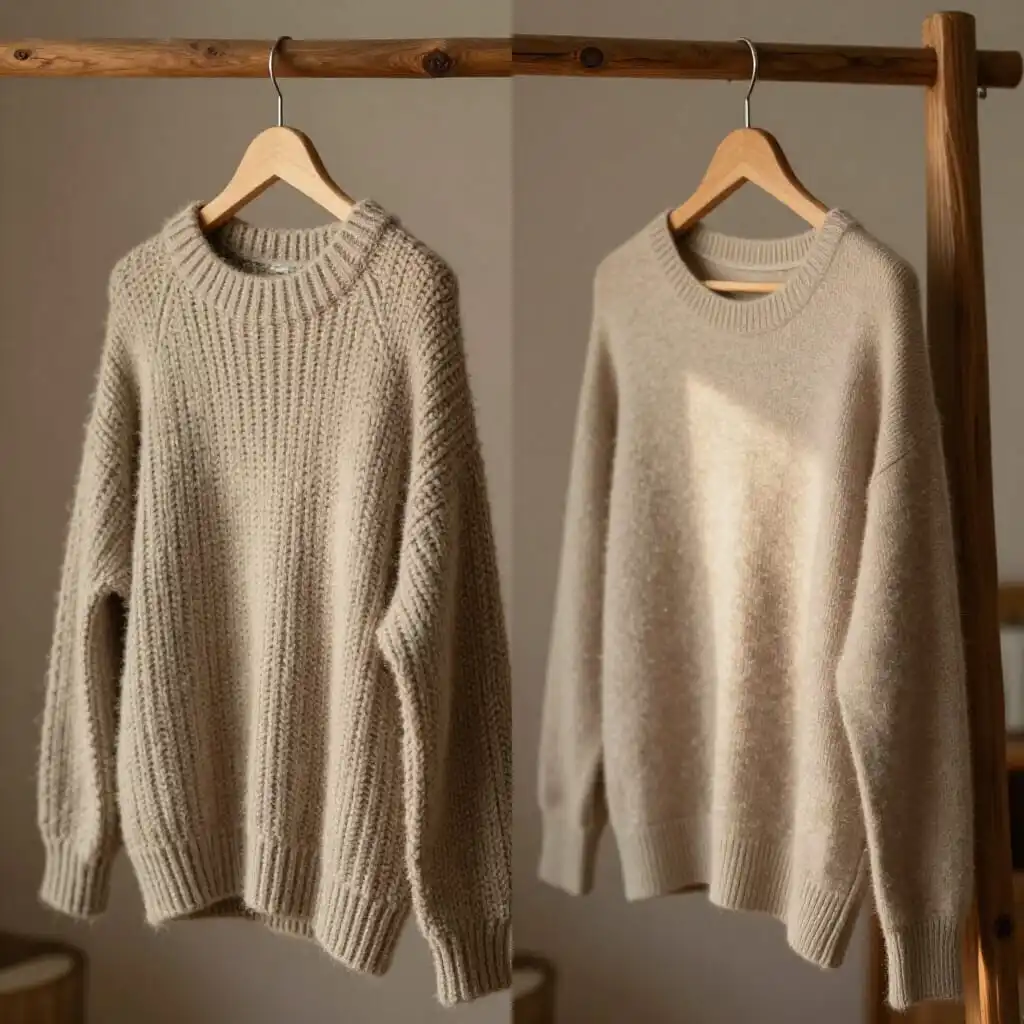
For a loose, oversized fit, I love voluminous and textured yarns. They give the garment body and a cozy look that invites you to curl up inside. Thick yarns also allow for faster knitting, which is a huge plus for impatient knitters like me!
Fitted and Lightweight Sweaters
For close-fitting sweaters, it is better to opt for lightweight yarns like merino or fine blends. They offer an elegant drape and highlight intricate patterns or cable knits. These yarns require a bit more patience to knit, but the result is worth it.
Sweaters for Kids and Babies
Softness is paramount for the little ones. I prioritize hypoallergenic yarns that are easy to wash and safe. To complete a baby set, I often pair my choices with matching accessories, such as hats made from soft yarn for children, to ensure everything is harmonious and comfortable.
Quick Guide: Which Yarn for Which Sweater?
| Yarn Type | Ideal Use | Care | Advantages |
|---|---|---|---|
| Merino | Fitted sweater | Hand wash | Soft, breathable |
| Alpaca | Warm sweater | Delicate wash | Very warm, lightweight |
| Acrylic | Everyday sweater | Machine wash | Easy, affordable |
| Cashmere | Luxury sweater | Hand wash | Ultra-soft, warm |
Pro Tips for Making the Right Choice
Over the years, I’ve developed a few tricks for picking the perfect yarn. I always knit a small swatch before starting to see how the fabric drapes and feels. I also buy a bit more yarn than the pattern calls for, as it is incredibly frustrating to run out during the last skein. Finally, don’t be afraid to mix different yarns to create unique textures or adjust the warmth of your sweater. These small details make all the difference between a successful project and a sweater you regret starting.
FAQ: Which yarn for a sweater?
Which yarn is the softest for a sweater?
Merino wool and cashmere are renowned for their softness. Alpaca is also very pleasant, though it can feel more silky than fluffy depending on the variety.
Can I machine wash a merino wool sweater?
Yes, but only on a wool or delicate cycle, at a low temperature and without a high-speed spin. Otherwise, hand washing remains the safest method.
Which yarn is the warmest for winter?
Alpaca and cashmere are the champions of warmth. Merino can also be very insulating, especially when used in thinner sweaters worn in layers.
Which yarn should I choose for a child’s sweater?
I prioritize soft, hypoallergenic, and easy-to-wash yarns, often blended with acrylic for practicality. Matching hats in soft baby yarn complete the set perfectly.
Can I mix different yarns in the same sweater?
Absolutely! This allows you to play with textures and colors. Just make sure the fibers have compatible care requirements to avoid any unpleasant surprises during washing.
Choosing which yarn to use for a sweater is a precious moment for any passionate knitter. Every fiber tells a story, offers a unique sensation, and influences the comfort and longevity of your garment. With these tips, I hope you fully enjoy the pleasure of knitting your next sweater, whether it’s chunky and cozy, or fine and elegant for your travels or cozy days at home.
See also
