
In short
- A festival focused on education and connecting with the origins of fibres.
- A historic location: the Coldharbour Mill textile mill.
- A rich programme: workshops, demonstrations, and sheep shearing.
- A celebration of British wool and sustainable textiles.
The Great British Fibre Festival is much more than just a wool and fibre fair: it is a total immersion into the world of British craftsmanship, where ancestral know-how meets modern textile innovation.
Set within the historic grounds of Coldharbour Mill—one of the world's oldest working wool mills, in operation since 1797—this festival stands out for its educational and purposeful approach. It aims to reconnect enthusiasts with the origins of raw materials, tracing the journey from farm to yarn through various transformation techniques.
From sheep shearing demonstrations and expert-led workshops to the discovery of rare fibres like linen, hemp, or even ceramics, the event celebrates ethical and sustainable British wool, far removed from industrial standards. Its mission? To educate, inspire, and unite a community that values transparency and authenticity in their knitting and textile practices.
What makes this festival truly unique is its strong local roots and collaborative spirit. Located in Uffculme, Devon, Coldharbour Mill embodies nearly 230 years of textile history, a heritage the festival highlights through exhibitions, encounters with local breeders and artisans, and a programme celebrating the diversity of British fibres—merino wool, cashmere, silk, and even unexpected materials like leather or plant fibres.
Unlike other trade shows focused purely on commerce, the emphasis here is on the transfer of knowledge: understanding production cycles, ecological challenges, and natural dyeing techniques. This philosophy appeals to both beginners and experienced knitters eager to bring meaning back to their craft by supporting local and responsible resources.
An Immersion into Fibre Culture
The Great British Fibre Festival positions itself as a centre of excellence for fibre culture, where craftsmanship meets history and innovation. Unlike traditional fairs centred on selling skeins or accessories, it offers an immersive experience where every detail tells a story: the story of wool traced back to its shepherd, yarn hand-dyed with natural pigments, or a garment designed according to circular economy principles.
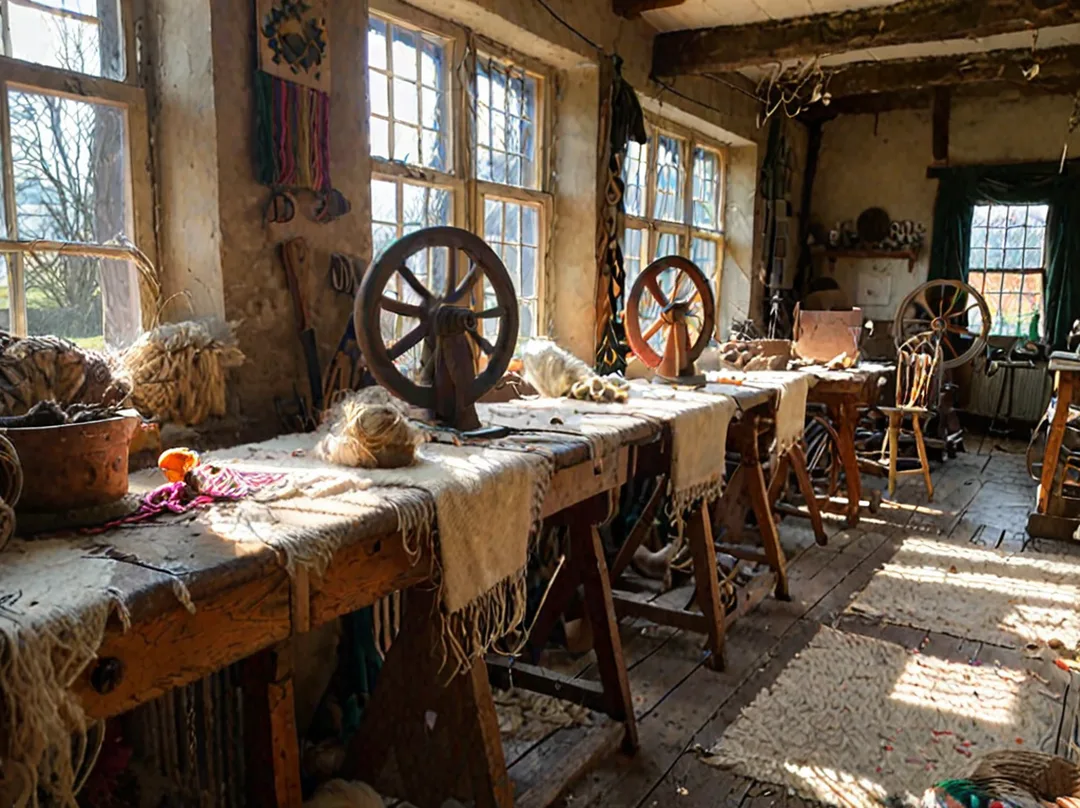
Built on the principle that "the best yarn is the one whose origin you know," the festival showcases raw and semi-processed materials—raw wool, plant fibres, vegetable leather—to raise awareness of their creative and ecological potential. This transparent and unfiltered approach makes it a rare meeting place for breeders, dyers, knitters, and designers, all united by a single quest: to make fibre accessible and understandable to the general public.
At its core, the festival cultivates a raw and authentic aesthetic, far from the polished codes of the textile industry. Visitors can take part in hands-on workshops to learn how to card wool, spin on a wheel, or transform plant fibres like linen or hemp, all within a historic and welcoming setting.
Sheep shearing demonstrations, exhibitions on British sheep breeds (such as the Jacob or Wensleydale), and meetings with local shepherds and breeders illustrate this desire to rehumanise the textile process. Even the exhibition spaces are designed to evoke a workshop or a farm: no flashy stands, but minimalist presentations where the materials speak for themselves. This philosophy is reflected in the festival's graphic identity, which is understated and organic, reminiscent of traditional British fabric patterns while incorporating contemporary touches.
The Textile Heritage of Coldharbour Mill
Founded in 1797, Coldharbour Mill is one of the last working textile mills in the United Kingdom, perpetuating a craft tradition that is over two centuries old. Located in Uffculme, Devon, this historic site was the heart of local textile production for generations before becoming a symbol of the rebirth of British textile skills.
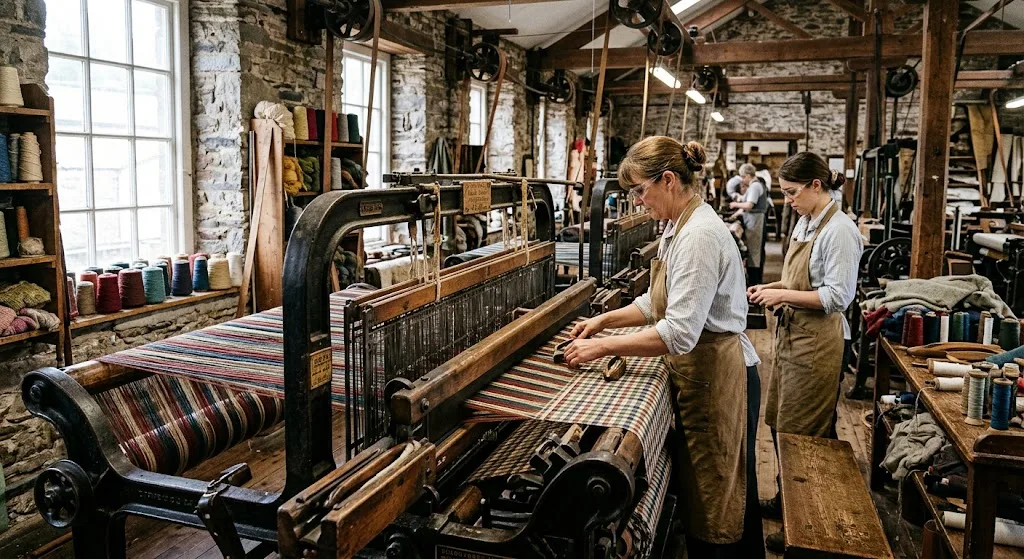
Its preserved architecture, period machinery, and remote location in the English countryside make it a place that is both industrial and poetic, where every visitor can experience the country's textile heritage firsthand.
Visiting Coldharbour Mill means discovering a place where history and modernity meet. In 2027, the mill will transition to electric-powered production, marking a key milestone in its evolution while preserving its artisanal soul. The moving machinery, spinning demonstrations, and access to workspaces offer a rare immersion into the process of transforming raw fibre into finished fabric.
For knitting enthusiasts, this tangible experience—amidst the hum of the looms and the scent of wool—strengthens the connection between their practice and the very roots of their passion, going far beyond a simple trade show.
A Rich Experience for Knitting Enthusiasts
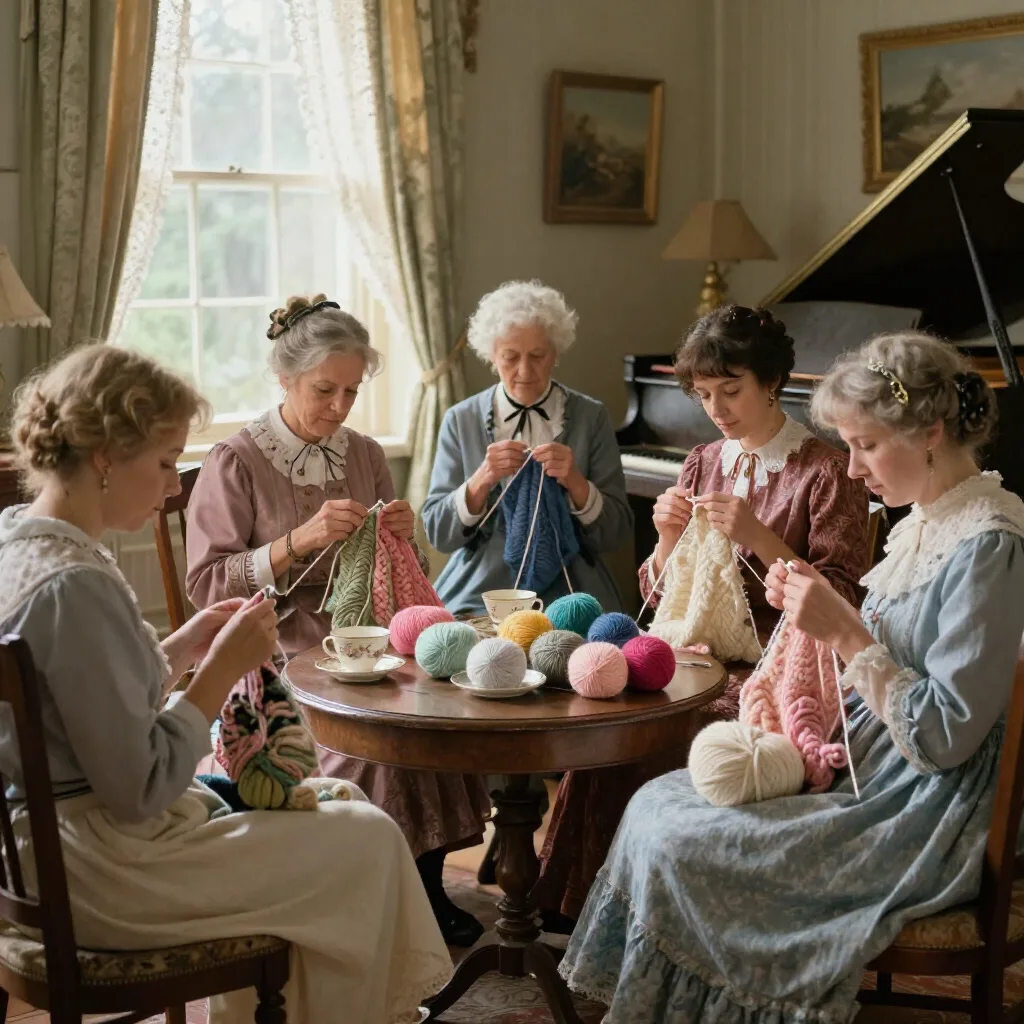
The Great British Fibre Festival stands out as an unmissable destination for knitting and fibre enthusiasts, offering total immersion in a creative and artisanal world. Through live demonstrations, exchanges with experts, and a convivial atmosphere, every visitor finds an experience that is both inspiring and unique, blending tradition and innovation.
- British fibre working workshops
- Loom demonstrations
- Live sheep shearing
- Conferences on ethical production
- Traditional textile exhibitions
Workshops and Demonstrations to Learn
Workshops and demonstrations are the heartbeat of the festival, with a varied programme covering every stage of textile creation. You can discover working with raw fibres, such as sheep shearing or hand spinning, as well as advanced techniques like 3D embroidery or natural dyeing. These interactive moments allow participants to leave with new skills while gaining an appreciation for the artisanal craftsmanship that has driven the sector for generations.
Exhibitors and Material Diversity
A notable trend in recent years is the rise of exhibitors highlighting responsible practices, such as wool certified by the Responsible Wool Standard (RWS) or dyes free from harsh chemicals. The festival thus becomes a laboratory of ideas for rethinking fashion and textiles, where every stall tells a story of transparency and environmental respect. For committed knitters, it is an opportunity to align passion with values by discovering brands that combine aesthetics with a positive impact.
Everything You Need to Know About The Great British Fibre Festival 2026
The Great British Fibre Festival 2026 will take place on May 30th and 31st, 2026, at Coldharbour Mill, located in Uffculme (EX15 3EE), near Cullompton in Mid Devon. This event, celebrating British wool and traditional textile skills, returns for a new edition at the same iconic site, as confirmed by official announcements on social media and local news.
Advance tickets are already available, confirming the excitement for this must-attend event for fibre enthusiasts. Access is directly from Coldharbour Mill, a place steeped in textile history, where workshops, demonstrations, and encounters with artisans come together.
| Edition | Dates | Location |
|---|---|---|
| 2026 | May 30-31 | Coldharbour Mill, Devon |
| 2027 | June 5-6 | Coldharbour Mill, Devon |
For those wishing to plan ahead, The Great British Fibre Festival is now a long-term fixture: the 2027 edition is already scheduled for June 5th and 6th, 2027, also at Coldharbour Mill.
This consistency makes it a must-mark event on the calendar for British knitters, allowing them to plan their trips around these dates. Furthermore, the organisers confirm their commitment to perpetuating the festival's spirit, focused on the promotion of natural fibres and the passing down of artisanal techniques, within a preserved and authentic setting.
FAQ
Where does the Great British Fibre Festival take place? The festival is held at Coldharbour Mill, near the village of Uffculme in Devon, England.
What are the festival dates for 2026? The 2026 edition will be held on Saturday, May 30th, and Sunday, May 31st.
What can I learn at this event? The festival offers workshops, demonstrations, and talks on the origin of fibres, from farm to finished product.
Who organises this event? It is organised by Stitch Fest Craft Shows, the organisers of Stitch Fest South West.
What materials can I discover there? In addition to wool, you will find linen, leather, hemp, and other natural fibres.
Sources
- The Great British Fibre Festival - Official Site
- Stitch Fest - Festival Information
- KC Guild - Event Details
See also