
In short
- An annual festival founded in 2010 celebrating the native Shetland sheep and the local textile industry.
- A rich program featuring exhibitions, knitting classes, and meet-and-greets with breeders.
- The 2026 edition will take place from September 27 to October 3.
- An international event attracting enthusiasts from around the world to a unique artisanal heritage.
Shetland Wool Week is the must-visit global event for knitting enthusiasts, celebrating the wool and textile heritage of the Shetland Islands in Scotland. Since 2010, this annual festival has brought together breeders, artisans, and knitters around an exceptional fiber and ancestral techniques. Between immersive workshops, farm visits, and the creation of an official hat pattern, the event transforms the archipelago into a hub of wool craftsmanship, where the transmission of skills is at the heart of every interaction.
The Spirit of Shetland Wool Week: More Than Just a Festival
Shetland Wool Week is more than just a series of knitting classes or a craft fair. It embodies the soul of an archipelago where survival once depended on the inhabitants’ ability to transform raw fiber into protective clothing against the biting winds of the North Atlantic. Since its foundation in 2010, the event has aimed to revitalize and promote local textile heritage, ensuring these precious techniques do not fade away in the face of industrial standardization.
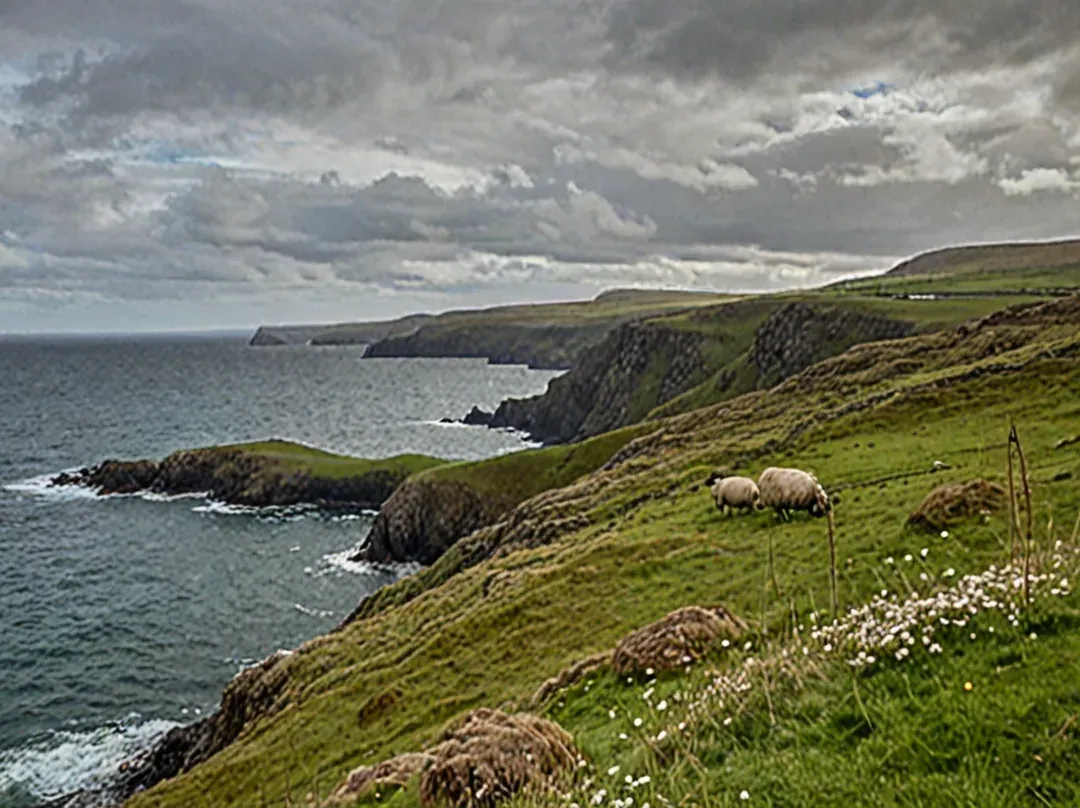
The central goal of the festival is to restore and strengthen an essential bridge between three key players: the sheep breeders (crofters), the processing artisans, and the knitters. By highlighting the Herculean work of the crofters, the festival reminds us that the quality of a Fair Isle sweater begins in the pasture, through flock management and respect for the natural cycle of the fleece. This holistic approach allows visitors to understand that yarn is not just a commodity, but the product of a fragile and precious territorial ecosystem.
The atmosphere during this week is unique. It is a fascinating blend of technical passion and cultural immersion. It is not uncommon to see seasoned knitters discussing the tension of a lace stitch while walking across wild moors or sharing tea in a rustic kitchen.
The festival creates a space where time seems to slow down, aligning with the gentle rhythm of knitting and the seasons. It is a celebration of “slow fashion” before the term existed, valuing sustainability, traceability, and the oral transmission of craft.
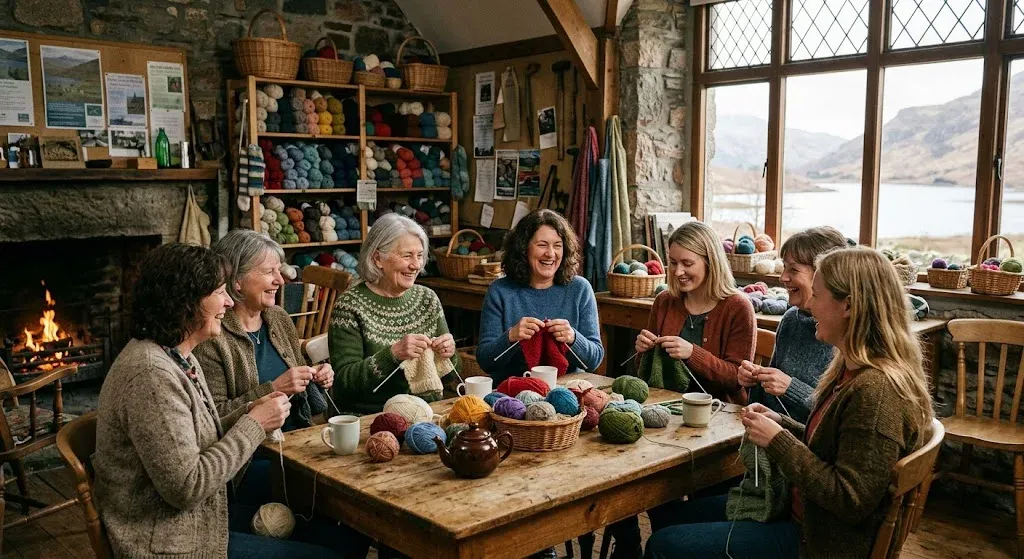
The community aspect is the true engine of the event. By bringing together local experts and international amateurs, Shetland Wool Week transforms the solitary act of knitting into a collective experience. Sharing tips, mutually admiring works, and discovering new fibers together create bonds of friendship that extend far beyond geographical borders. The festival thus becomes a sanctuary for all those seeking to reconnect their creative practice with the land and human history.
A Journey into the Heart of Textile and Territorial Heritage
The prestige of Shetland Wool Week rests primarily on the raw material: Shetland wool. This natural fiber is globally recognized for its exceptional properties. Simultaneously durable, lightweight, and remarkably fine, it is perfectly suited for harsh climates.
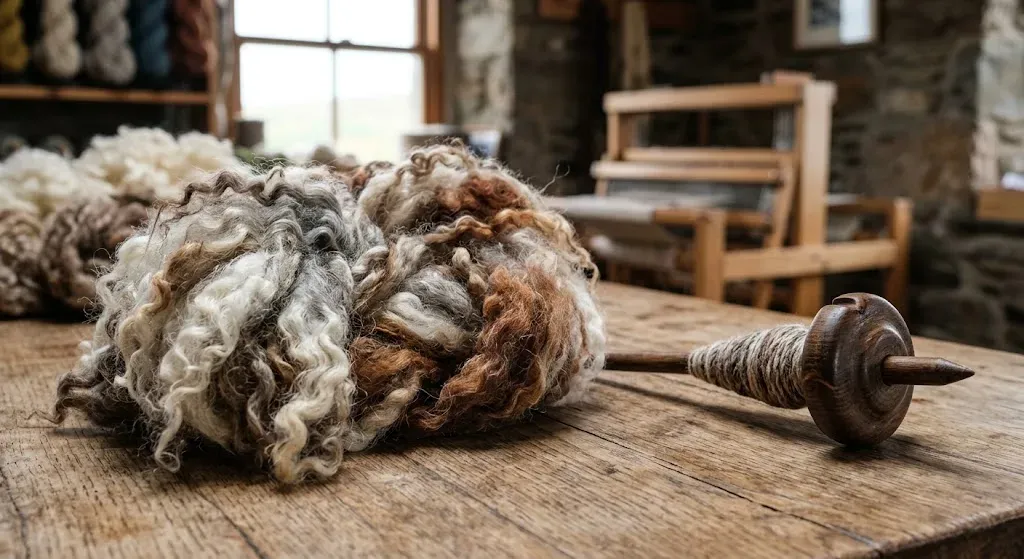
Its versatility is such that it can be spun to create dense, waterproof fabrics or, conversely, laces of an airy transparency. This intrinsic quality makes Shetland wool a material of choice for designers seeking technical excellence combined with an organic feel.
The link between the islands’ landscape and textile production is unbreakable. The archipelago, consisting of about a hundred islands situated between the Atlantic Ocean and the North Sea, imposes strict living conditions. It is precisely this hostile environment that shaped the local sheep breed, capable of producing a protective wool.
The grassy hills, rugged coastlines, and humid climate influence not only the quality of the fiber but also the imagination of the artisans. Traditional patterns and natural color shades (from creamy white to charcoal gray and golden brown) are a direct reflection of the territory’s chromatic palette.
In this context, rural communities and breeders play a crucial role. They are the guardians of ancestral knowledge that is not learned in books, but through observation and practice. Preserving purebred Shetland sheep is an act of cultural resistance. By maintaining these flocks, crofters ensure the survival of textile biodiversity. The festival makes this often invisible daily work visible by opening farm doors and explaining every step from shearing to spinning.
The global influence of Shetland knitting rests on two major pillars: lace knitting and Fair Isle patterns. Shetland lace is famous for its extreme fineness, creating shawls that look as if they were made of spiderwebs.
Meanwhile, the Fair Isle style, originating from a small island in the archipelago, has conquered the world with its complex geometric patterns and contrasting color play. These techniques, once used to identify family or village affiliation, are now studied and practiced by enthusiasts worldwide, making Shetland Wool Week the ultimate pilgrimage site for mastering these arts.
Event Highlights and Rituals
The Shetland Wool Week program is designed as a sensory and educational journey. Activities are varied and touch upon every aspect of the textile chain. Knitting workshops, led by local masters, allow participants to learn the subtleties of traditional stitches in an authentic setting.
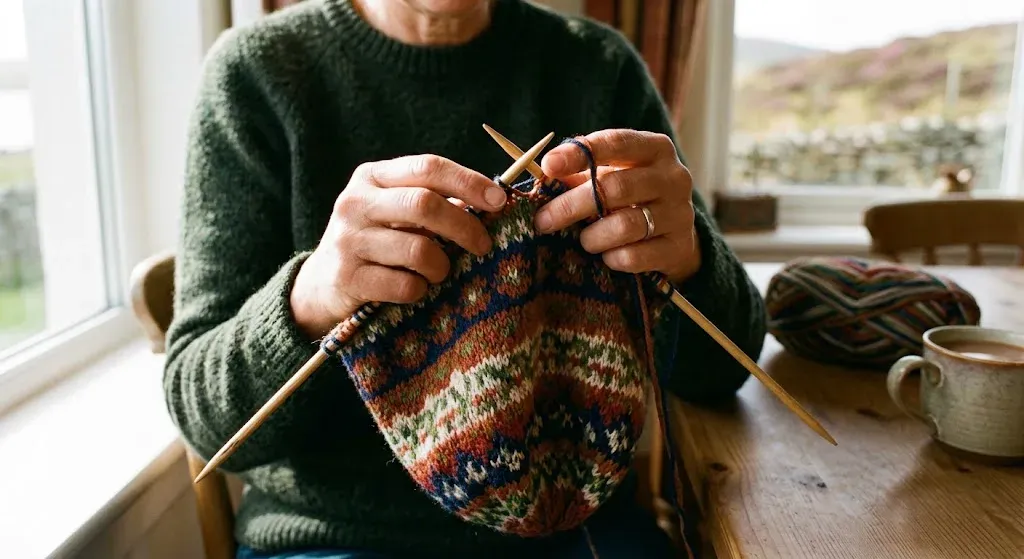
Visitors don’t just take a class; they soak up a method of work, a rhythm, and a philosophy. Textile exhibitions, often held in historical sites or community centers, showcase archival pieces that testify to the evolution of styles over the centuries.
The immersive experience is enhanced by farm visits. Being able to touch the raw fleece, observe the sheep in their natural environment, and chat with the breeder transforms the perception of the final product. This direct contact with the source is what gives the festival its meaning.
A sense of community is omnipresent: you will meet enthusiasts from Australia, the USA, or Canada, all united by a single thread. These intercultural exchanges enrich the practice of knitting, showing how Shetland traditions are reinterpreted according to local cultures and needs around the world.
The Annual Hat Ritual and the Shetland Wool Week Hat 2026
At the heart of the festival’s identity is an unchanging ritual: the creation of an official hat. This pattern, different for every edition, acts as a symbol of belonging. Wearing the year’s hat shows your connection to the current edition and shares a visual code with all other participants. It is a tangible way to mark time and build a personal collection of textile memories.
For the 2026 edition, the chosen model is the ‘Birsie Beanny’. This hat embodies the spirit of the festival by combining simplicity and elegance while highlighting the unique texture of local wool.
To make this art accessible to as many as possible, the pattern is offered in two formats: a digital download for quick access and a paper version for those who prefer a physical copy and the pleasure of flipping through a guide. The cost is kept very affordable, at £2.50 (+ VAT) for the PDF and £5 (plus postage) for the printed version.
| Pattern Format | Price |
|---|---|
| Digital Download | £2.50 + VAT |
| Printed Copy | £5 + postage |
The Written Legacy: The Shetland Wool Week Annual
Alongside the hat, the festival publishes a yearly collection called the Shetland Wool Week Annual. This document is much more than a simple pattern book; it is a living archive. The role of the Annual is to document the versatility of Shetland wool, showing how a single fiber can adapt to radically different projects, from utilitarian garments to statement pieces.
Volume 11 perfectly illustrates this ambition with eight exclusive patterns. Each pattern is designed to highlight a specific facet of the wool: its ability to hold a complex motif, its softness, or its durability. By analyzing these patterns, knitters discover traditional construction techniques that might have disappeared without this systematic documentation effort.
These collections serve as a bridge between generations, allowing beginners to rely on proven structures while encouraging experts to explore new variations. The Annual thus becomes a tool for sustainable transmission, ensuring that the creative genius of the Shetland Islands continues to inspire contemporary creations.
International Reach for Local Craft
The global appeal of Shetland Wool Week is a remarkable phenomenon. How did such a remote archipelago become a coveted destination for participants from Australia, the USA, or Canada? The answer lies in the quest for authenticity.
In a world saturated with industrial products, the return to the source, the artisanal gesture, and raw materials has a magnetic pull. The festival offers a total “disconnection” experience, where luxury lies not in material comfort, but in the quality of the human and textile experience.
Since 2010, the festival has seen steady, organic growth. What began as a local initiative to support crofters has become a world-renowned event. In 2024, the event attracted approximately 1,000 participants, including 800 registered members, most of whom traveled considerable distances. This turnout testifies to the vitality of modern knitting, which is no longer seen as an archaic hobby, but as a strong artistic and identity-based practice.
The economic and cultural impact on the rural Shetland community is significant. The festival injects funds directly into the local economy, benefiting not only breeders and wool shops but also accommodations, restaurants, and transport. More importantly, it restores immense pride to the inhabitants.
Seeing people travel thousands of miles to admire their wool and learn their knitting stitches reinforces the perceived value of their heritage. This encourages younger generations to take a renewed interest in land and textile trades, ensuring the longevity of the local industry.
- Approximately 1,000 participants hosted in 2024
- 800 officially registered members for the 2024 edition
- A majority of visitors traveling from abroad
Preparing for the Wool Celebration
Organizing a trip to the Shetland archipelago requires rigorous planning. Due to the limited size of the territory and the massive influx of visitors during the festival week, accommodation infrastructure reaches maximum capacity very quickly. It is advised to start searching for lodging several months in advance. Bed & Breakfasts (B&Bs) are the most popular options as they allow for deeper immersion in local life, but they are the first to be booked.
Transportation logistics to the islands, whether by ferry or plane, must also be planned carefully. Internal travel, essential for visiting different farms and workshops, often requires a rental vehicle, which is also subject to high demand.
To assist visitors with this organization, the festival provides a 12-step guide. This valuable document covers all practical aspects, from booking accommodation to obtaining a membership card and purchasing tickets for specific events, ensuring that the visitor can focus fully on their passion without logistical stress.
Dates and Organization: Shetland Wool Week 2026
The 2026 edition will mark the fifteenth anniversary of Shetland Wool Week. The official dates are confirmed: the festival will take place from Sunday, September 27 to Saturday, October 3, 2026. This autumn period is ideal for discovering the island landscapes in their changing colors while starting to prepare warm knits for winter.
To ensure you don’t miss any crucial information, signing up for official mailing lists and following social media is essential. These channels are where hat pattern launches, Annual pre-orders, and registration openings for the most sought-after workshops (which often fill up in minutes) are announced.
Looking Back at Shetland Wool Week 2025
Analyzing past editions, particularly 2025, is essential for anyone wishing to participate for the first time. Reviewing the pace and structure of the 2025 edition helps one understand how the week is organized: the balance between intense training moments and free discovery time.
The patterns and themes covered in 2025 paved the way for subsequent editions by introducing new design approaches or highlighting specific sheep breeds. Studying the 2025 archives allows knitters to practice similar techniques before tackling the challenges of the 2026 edition, turning the wait for the trip into a period of active technical preparation.
Anticipating Shetland Wool Week 2027
For the most forward-thinking, it is already relevant to keep an eye on 2027. The cyclical nature of the festival creates true loyalty among participants, many of whom return every year or every two years. Planning stays for future editions very early allows for the exploration of less-visited areas of the archipelago or attempts to secure spots in extremely selective workshops.
Participant loyalty is based on the constant evolution of the festival. Each year brings its share of surprises, new faces, and different perspectives on the art of knitting. Anticipating 2027 means accepting entry into a cycle of continuous discovery, where each edition adds a layer of knowledge and memories to a textile journey that never truly ends.
FAQ
What are the dates for Shetland Wool Week 2026? The festival will take place from Sunday, September 27 to Saturday, October 3, 2026.
Where can I find a free PDF download of the Shetland Wool Week hat 2026? Official patterns are not free; the 2026 model (Birsie Beanny) is available as a paid digital download or in a printed version.
How do I get Shetland Wool Week 2026 tickets? Access details and tickets are managed via the official website and the 12-step planning guide.
What is the Shetland Wool Week Annual? It is a yearly collection of knitting patterns highlighting the beauty and versatility of Shetland wool.
Is the festival open to beginner knitters? Yes, the festival offers a wide range of classes and workshops accessible to different skill levels.
Sources
- Shetland Amenity Trust - Shetland Wool Week
- Official Shetland Wool Week Website
- Wikipedia - Shetland – en.wikipedia.org
See Also
- knit a sweater
- knit a baby hat
- First knitted sock!
- hand-knitted gifts
