
In a world where chronic stress affects more and more of us, relaxing hands-on hobbies are becoming increasingly popular. It is no surprise: they offer an accessible way to unwind, requiring no medical equipment or prior professional training.
The principle is simple. When we engage in a repetitive, focused manual task, the brain enters a state similar to meditation. Intrusive thoughts fade, the heart rate slows, and the parasympathetic nervous system takes over. This mechanism is well-documented in various studies on cognitive psychology and neuroscience.
Here are 7 relaxing creative hobbies accessible to everyone, ranked from the simplest to the most creatively engaging.
Adult Coloring
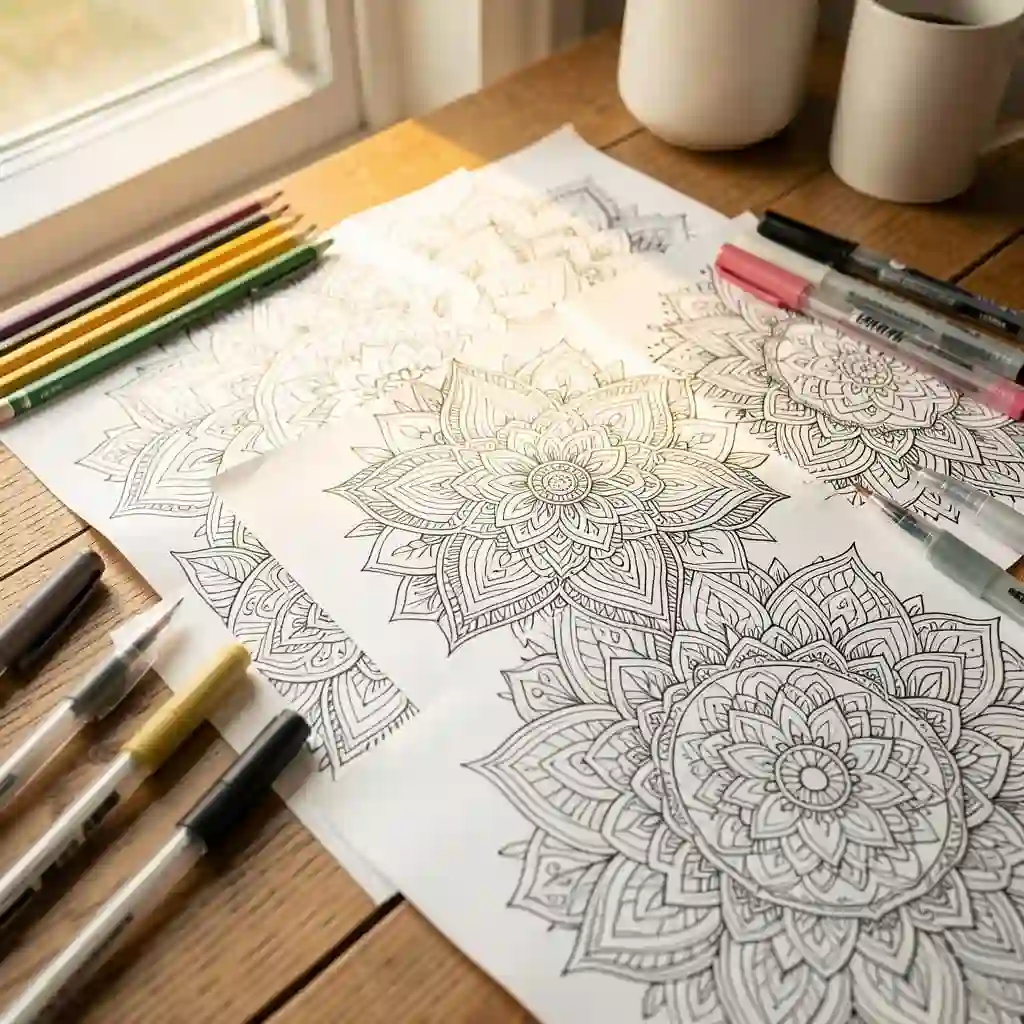
Adult coloring has seen a massive surge in popularity since the mid-2010s. The concept is straightforward: filling in pre-existing illustrations using colored pencils, fine-liners, or gel pens.
What makes this activity particularly effective for relaxation is the total absence of “creative pressure.” The drawing is already there. The user only decides on the colors and how to apply them. This intentional constraint frees the mind from the pressure to perform.
Knitting and Crochet
Knitting and crochet are among the most scientifically documented relaxing hobbies. The repetitive motion of the needles activates the same neural circuits as mindfulness meditation. Several studies have measured a significant reduction in cortisol levels among regular practitioners.
An additional benefit is that progress is visible and tangible. Every completed row represents a concrete step forward, which reinforces a sense of accomplishment.
Pottery and Sculpting
Working with clay engages the entire body in a concentrated sensory experience. The texture of the material, the resistance of the earth, and the precision required to center a piece on the wheel—all these elements anchor your attention in the present moment.
Pottery is often recommended in art therapy, particularly for those dealing with anxiety or PTSD. It doesn’t require innate talent, but it does demand sustained physical and mental presence.
Embroidery and Sewing
Embroidery is experiencing a notable revival, especially among young adults. The movement of the needle, the precision of the stitch, and the choice of thread colors make it an activity that requires fine attention without draining cognitive resources.
Sewing, in its simplest forms—such as repairing or customizing clothes—offers the same benefits, with the added advantage of being practical and sustainable.
Origami
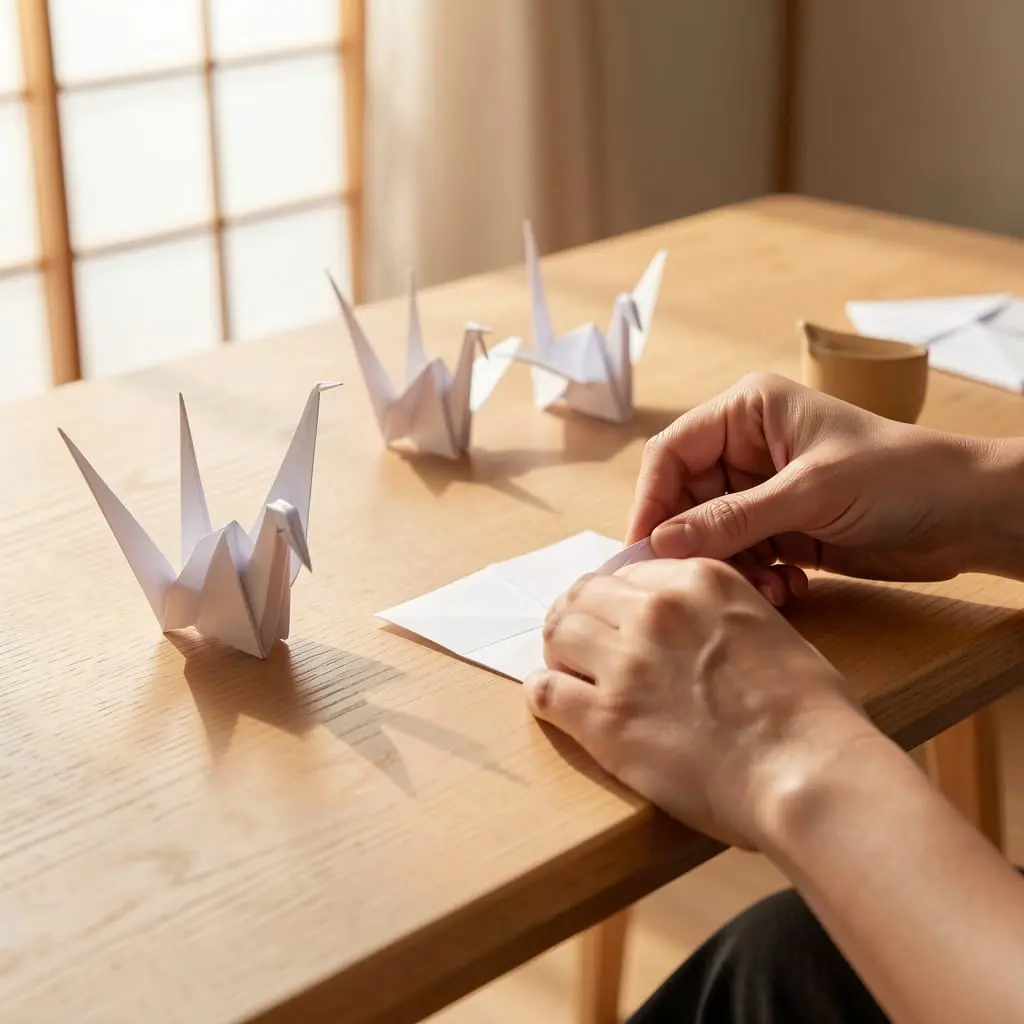
Origami, the Japanese art of paper folding, is a relaxing hobby perfectly suited for those who don’t have a full set of art supplies on hand. All you need is a single sheet of paper.
Folding requires sustained focus and precise movements, which effectively occupies the mind. Even the simplest finished shapes provide immediate satisfaction.
Mandalas
Drawing or coloring mandalas is a practice rooted in Buddhist and Hindu traditions, now widely integrated into Western wellness approaches. The circular and symmetrical structure of the mandala imposes a visual organization that also helps structure one’s thoughts.
This activity sits somewhere between adult coloring and creative drawing: you can start with an existing mandala to color or build your own using repeated geometric shapes.
Zentangle
Zentangle is a meditative drawing method created in the United States by Rick Roberts and Maria Thomas. It follows a precise 8-step protocol where repetitive abstract patterns, called “tangles,” are drawn on a small square of cotton paper called a “tile.”
What distinguishes Zentangle from other relaxing hobbies is the combination of three dimensions rarely found in a single practice.
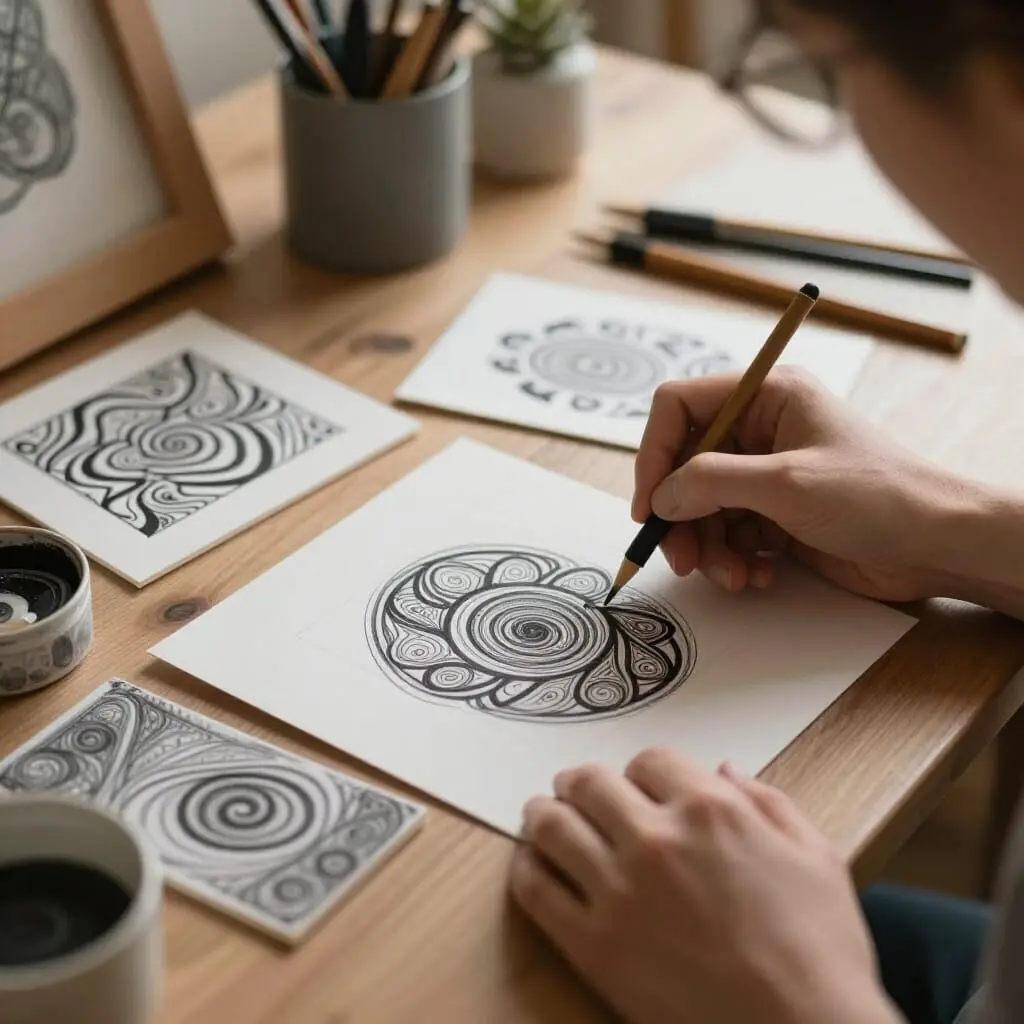
The meditative dimension. Each tangle is drawn stroke by stroke, with no erasing allowed and no predetermined result. This intentional constraint induces a state of mindfulness documented by several positive psychology practitioners.
The creative dimension. Unlike adult coloring, the practitioner creates the drawing from scratch. They choose the patterns, combine them, and compose their tile. This active creation produces deeper satisfaction and a real sense of achievement.
The progressive dimension. Zentangle offers a clear learning curve. Patterns are mastered gradually, the line becomes more fluid over time, and graphite shading gains depth. It is a practice that grows with the artist.
Accessible from the very first session with no artistic prerequisites, Zentangle is suitable for absolute beginners and experienced creators alike. To discover the method step-by-step, guided Zentangle courses provide a structured environment to begin the practice.
Which Hobby Should You Choose?
The choice depends primarily on the type of relaxation you are seeking.
For immediate decompression without creative effort: try adult coloring or origami. For an engaging sensory experience: try pottery or embroidery. For an activity that combines mindfulness and creation: Zentangle is perhaps the most complete practice, with documented short- and long-term benefits.
In any case, consistency is more important than intensity. A short daily session of 20 to 30 minutes is enough to see measurable effects on stress levels and focus.
See also