
In short
- The knit stitch is the fundamental starting point for any knitting beginner.
- Knitting only knit stitches creates the garter stitch.
- The technique involves inserting the needle, wrapping the yarn, and pulling the loop through.
- Maintaining a soft tension is key to successfully completing your first row.
The knit stitch is the essential building block for anyone looking to start knitting. As the first technique to master, it forms the backbone of many stitches, such as the garter stitch, which is created by working only knit stitches. To begin, simply insert your needle into the loop of the stitch, wrap the yarn around the needle, and pull it through the original loop.
Maintaining a soft tension—neither too tight nor too loose—is essential to avoid common mistakes like overly tight stitches or uneven tension. This gesture, both simple and precise, opens the door to a wide variety of creations, from scarves and sweaters to everyday accessories.
Whether you are drawn to knitting for its calming properties or to create unique pieces, mastering the knit stitch is a must. Learning it relies on repetition and paying close attention to the consistency of your loops. Once you have mastered this movement, you can move on to other techniques, such as purl stitches or increases, while maintaining a solid foundation. Both beginners and experienced knitters return to it often, as it is the foundation upon which most projects are built.
The Fundamentals of the Knit Stitch
The knit stitch, often referred to as the cornerstone of knitting, is a technique that involves creating regular loops by wrapping the yarn around a needle before pulling it through an existing loop. How do you knit knit stitches?
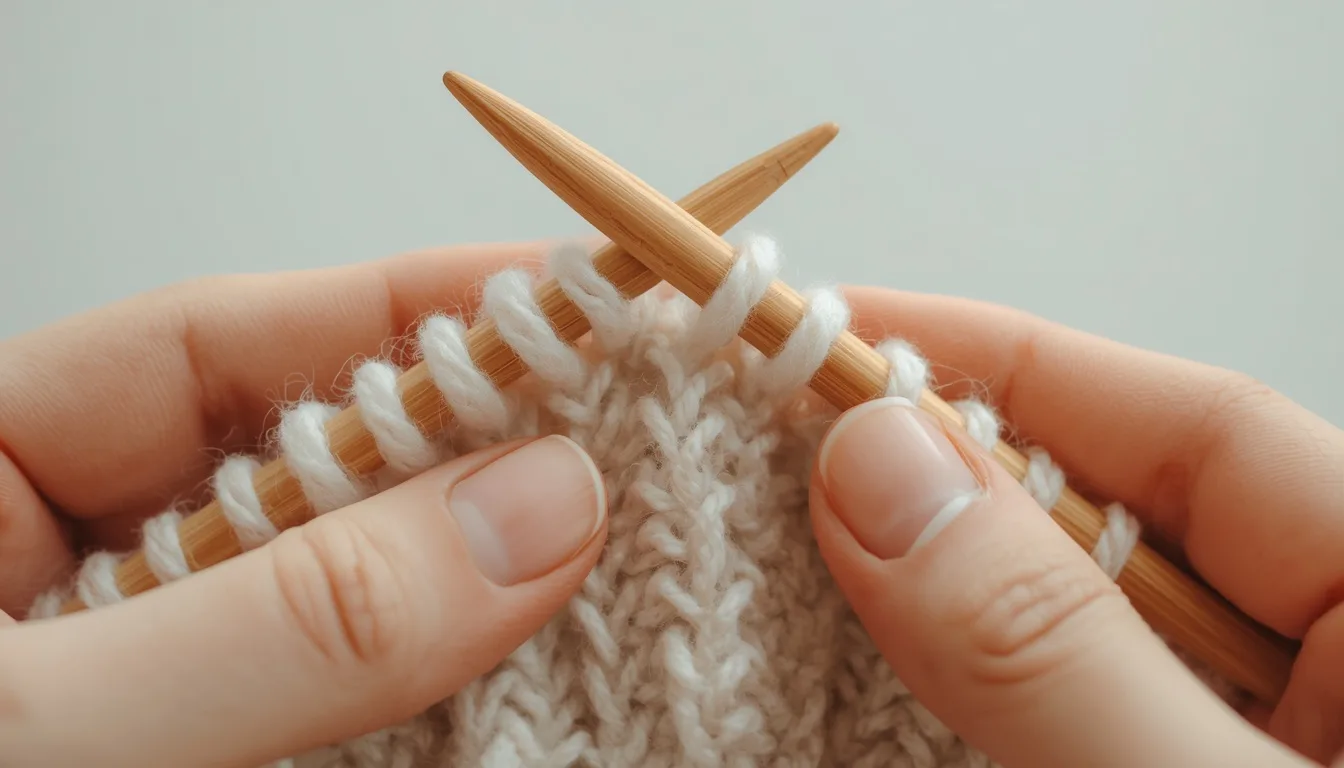
The term refers to this basic action, where each stitch is formed by inserting the right needle from left to right into the loop on the left needle, then wrapping the yarn before pulling it through. Repeating this gesture row after row produces a smooth, uniform fabric, ideal for beginners. The regularity of your stitches depends directly on your yarn tension—a detail often underestimated but crucial for a professional-looking finish.
What does "knitting in knit stitches" mean? This expression simply refers to performing the knit stitch, as opposed to the purl stitch, which is worked differently. When knitting, the yarn is typically held in a specific way to create a smooth appearance on the right side of the fabric.
Unlike the purl stitch, where the yarn is passed behind the work, this technique offers a flat surface without heavy texture. Understanding this distinction is essential for choosing the right stitch for your project: a stockinette stitch sweater, for example, often alternates between knit and purl stitches to create a smooth, flexible effect.
The art of knitting, of which the knit stitch is one of the founding elements, dates back centuries, though its exact origins remain unclear. Traces of similar techniques have been found in ancient textiles, such as the Pazyryk carpets (dating back to the 5th century BC), suggesting that similar methods existed in Central Asian nomadic societies.
In Europe, knitting became popular during the Middle Ages, particularly for making warm, durable clothing. The knit stitch, with its simplicity and efficiency, established itself as a universal technique, adapted to all cultures and eras, from simple woolen socks to the most sophisticated modern creations.
Mastering Knit Stitches in Knitting
To master knit stitches in knitting, it is essential to understand that this technique forms the basis of many projects, from scarves to sweaters. Unlike the purl stitch, it creates a smooth and uniform fabric, ideal for simple patterns or precise details.
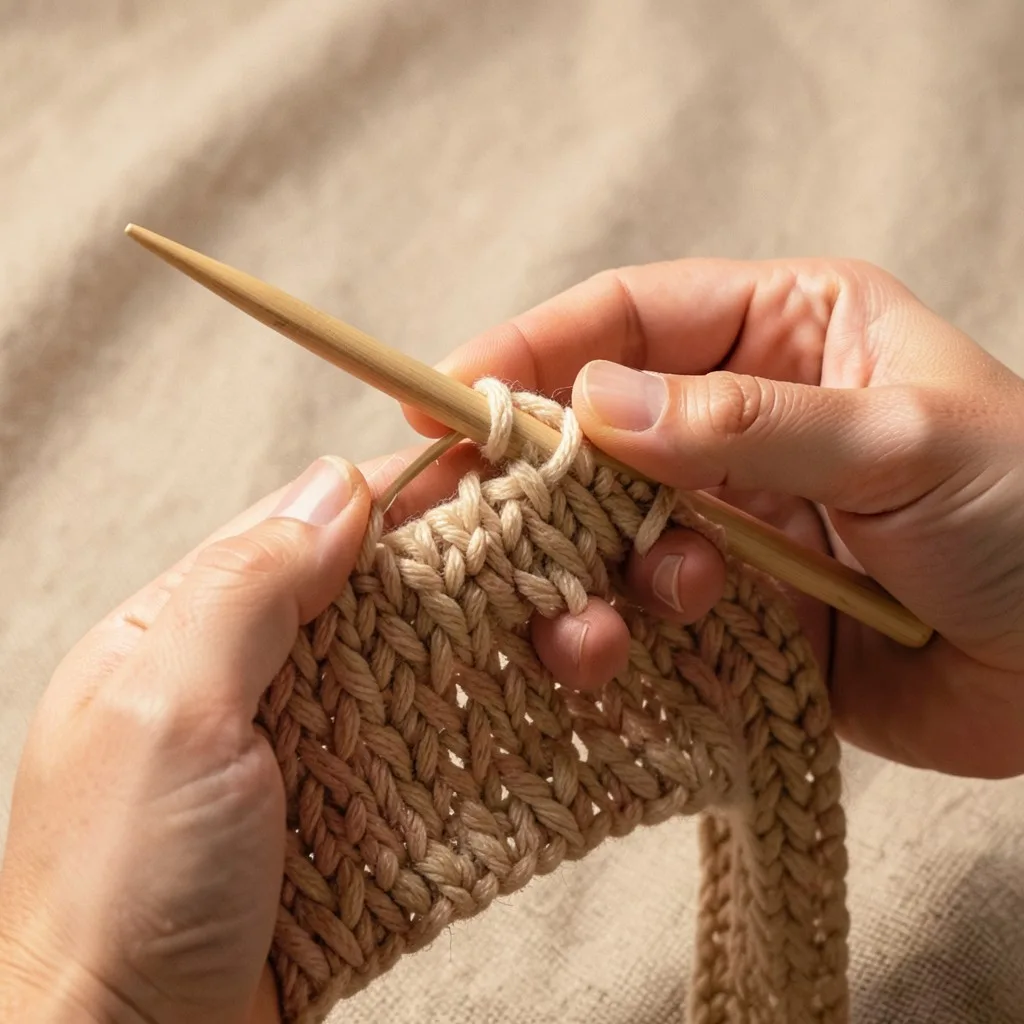
Before you begin, make sure you have a straight needle and a ball of yarn suitable for your level. The key lies in the consistency of your movements: even tension and a fluid motion will prevent irregularities. This section details every step, from your first movements with the needles to completing a full row, including adjustments for a professional result.
1. How should I hold my needles to knit?
Your posture and how you hold your needles determine the quality of your knitting. Hold the left needle vertically, with your thumb and index finger forming an angle to hold the stitches without gripping too tightly. The right needle should be free to move, held like a pen between your thumb and index finger, while your middle and ring fingers guide the yarn from the ball.
Avoid tensing your arms too much: keep your elbows slightly apart for natural movement. A relaxed position reduces fatigue and improves precision, especially during the first few rows when stitch alignment is crucial.
Step-by-Step Method for Knitting a Knit Stitch
- Insert the right needle into the first stitch by going under the left needle.
- Wrap the yarn from the ball around the right needle, going under and then over.
- Pass the tip of the right needle through the stitch and bring it over the left needle.
- Drop the stitch off the left needle while holding the others in place with your index finger.
- Continue this for the rest of the row to move all stitches from the left needle to the right.
The step-by-step method for knitting a knit stitch relies on a precise sequence. Start by inserting the right needle into the first stitch on the left needle, passing it under the loop of the stitch to avoid twisting it. Next, wrap the yarn around the right needle, sliding it first under, then over the needle.
Then, slide the right needle through the stitch and pull it forward, maintaining yarn tension to form a new loop on the right needle. Let the original stitch fall off the left needle by gently pushing it with your index finger, while keeping the other stitches in place. Repeat this motion for every stitch in the row, ensuring they all progressively move from the left needle to the right.
Tips for Successful Tension
Starting with tension that is too tight can make your knitting stiff and difficult to work with. To avoid this, do not pull the yarn excessively when creating your initial stitches; they should be loose enough to slide easily on the needle.
Regularly check the uniformity of your loops by comparing them, especially during the first few inches. A helpful tip is to knit a 10-stitch swatch before starting a project to adjust your tension and ensure the fabric remains supple. Conversely, tension that is too loose can create holes, which is why finding a balance between firmness and fluidity is so important.
Difference Between Knit and Purl Stitches
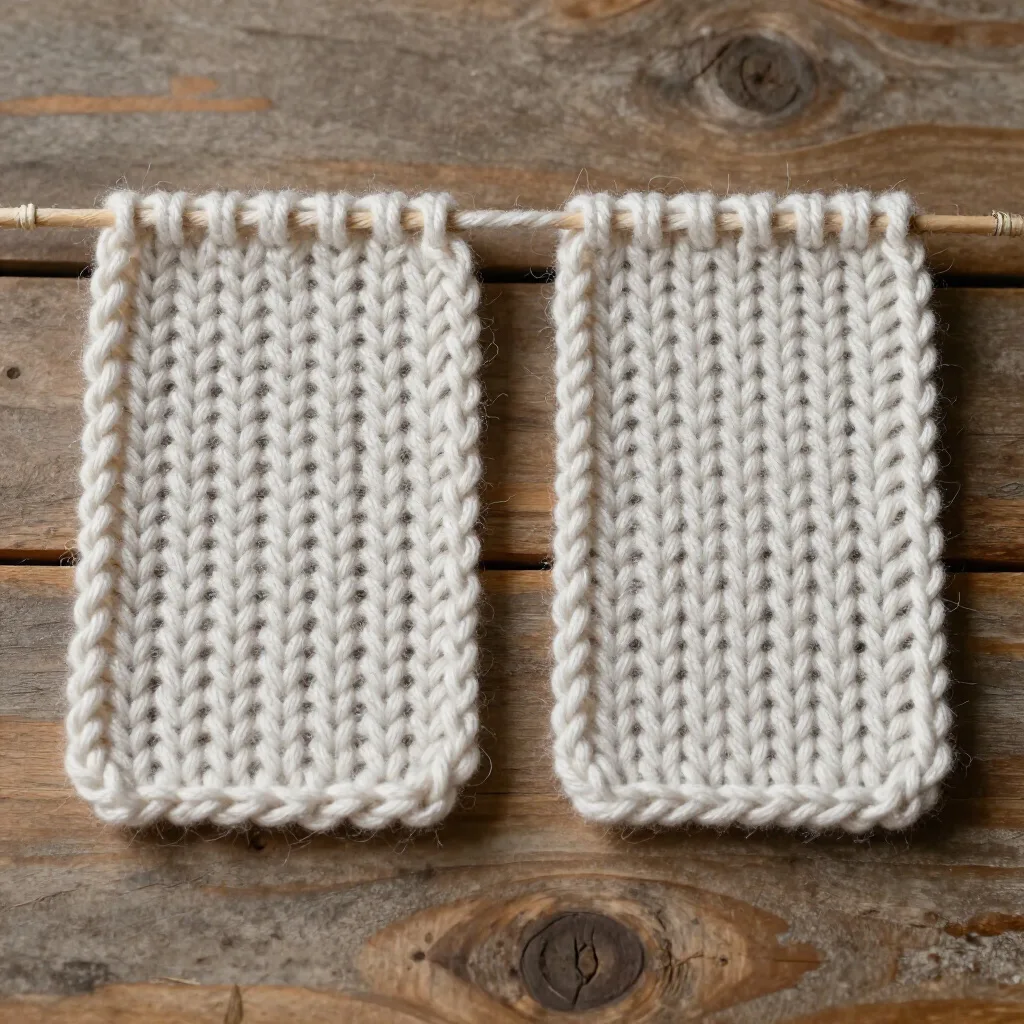
The difference between knit and purl stitches is visible in the structure and texture of the resulting fabric. A knit stitch is recognizable by its characteristic V-shape, which creates a smooth, even surface. In contrast, a purl stitch has a bumpier, more textured appearance, consisting of small horizontal bars or knots. These two stitches are the fundamental building blocks of all knitting.
Variations: Straight Knit Stitch and Twisted Knit Stitch
You can use variations to achieve different looks in your work. The straight knit stitch is a variation of this basic technique. It produces a regular surface with a constant and uniform stitch structure throughout the work. This method allows you to create a very stable visual appearance without changing the nature of the stitch.
The twisted knit stitch is another technical variation used to modify the stitch. This method involves changing the position of the loop on the needle before knitting it. This change alters the structure of the stitch and produces a different relief than the standard version, offering a distinct visual appearance and texture.
All Your Questions About "How to Knit in Knit Stitches"
Many beginners have questions during their first steps with the needles. Inquiries about technique or consistency are very common when starting out. To support your learning, we answer all your questions about "how to knit in knit stitches" here. This section is designed to clarify points that might slow your progress and help you better understand the basic movements.
Garter stitch is a fundamental technique that you can achieve very easily once you have the basics down. To get this result, you simply knit every stitch and work every row in knit stitches. This pattern was formerly known as the seed stitch (in some contexts) or simply referred to as all-knit rows.
When making your project, the structure is distinguished by a specific visual rhythm. To count the rows in garter stitch, it is helpful to know that there is always a "valley" row and a "ridge" row in every two-row cycle. This characteristic is essential for tracking the progress of your work accurately.
FAQ
How do I knit a knit stitch? Insert the right needle into the stitch, wrap the yarn around the needle, then pull the loop through the stitch before letting it slide off the left needle.
What does "knitting in knit stitches" mean? It is the action of performing the basic knitting stitch that creates a small V-shaped relief on the right side of the work.
What is garter stitch? Garter stitch is obtained by knitting every stitch on every single row.
How can I avoid knitting too tightly? Ensure your cast-on is not too compact to allow the needles to slide freely.
How can I recognize a knit stitch? A knit stitch is recognizable by its characteristic small V-shape on the main (right) side of the knitting.
Sources
- Ladylaine - How to knit knit stitches
- Bergère de France - Knit and purl stitches – bergeredefrance.fr
See also
- knitting patterns
- My first knitted socks!
- handmade knitted gifts
- Foncia reviews