
In short
- The Andalusian stitch creates a textured relief through the alternation of knit and purl stitches
- The simple version is worked over an even number of stitches for flat knitting
- The double Andalusian stitch requires a multiple of 3 plus 1 stitch
- This stitch is beginner-friendly and perfect for scarves and beanies
The Andalusian stitch is an iconic knitting pattern, recognizable by its textured relief and geometric patterns formed by alternating knit stitches and purl stitches. Unlike stitches such as stockinette, it doesn't rely on monotone repetition but on a succession of varied rows, creating a dynamic visual effect.

To answer the question: what is the Andalusian stitch in knitting? It is a beginner-accessible technique, ideal for adding character to projects like scarves, beanies, or sweaters. Its strength lies in its versatility, available in simple or more complex versions, such as the double Andalusian stitch, while remaining easy to memorize.
This stitch takes its name from its supposed origin in Spain, though it is now universally adopted for its versatility. Knitting is based on a fundamental principle: the interlacing of loops, or stitches, which form a continuous fabric. Each stitch, whether knit or purl, influences the final texture.
The Andalusian stitch uses this duality to generate a textured pattern, where purl stitches contrast with knit stitches, offering a result that is both elegant and durable. It is one of the easiest and fastest Andalusian stitch variations for beginners, thanks to its pattern repeating every few rows.
What is the Andalusian Stitch in Knitting?
To answer the question: what is the Andalusian stitch in knitting? It is a textured pattern achieved by combining knit stitches and purl stitches, arranged according to a specific chart. Unlike smooth stitches like stockinette, the Andalusian stitch introduces height variation between the strands, creating a three-dimensional visual effect.
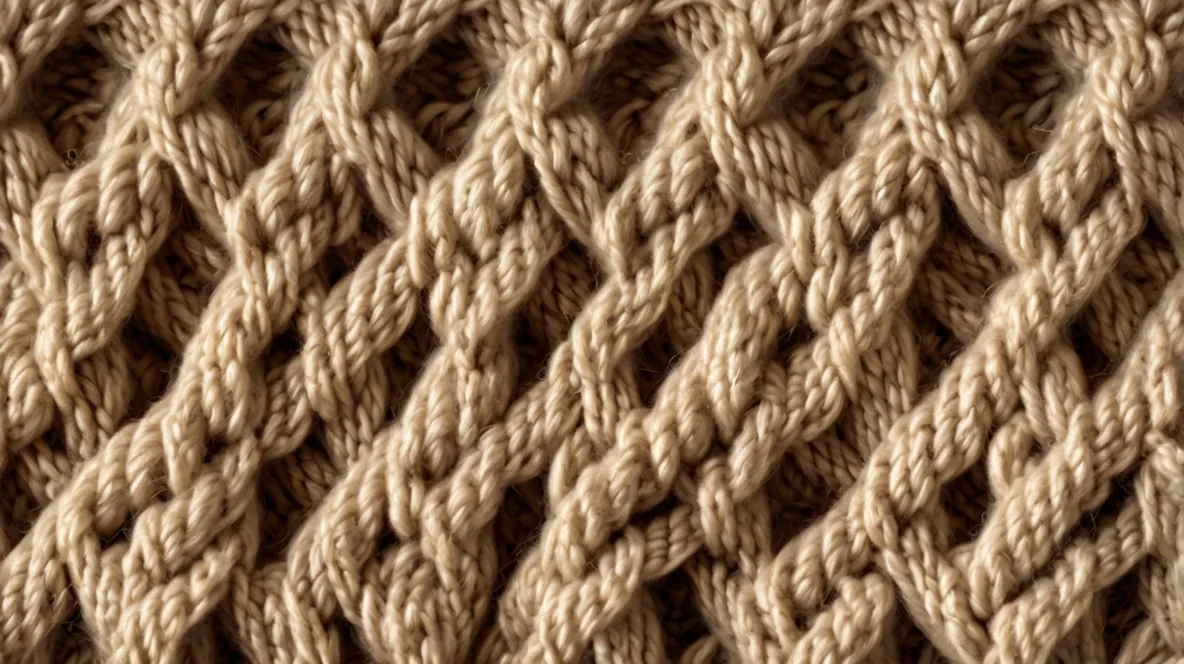
This technique is particularly prized for its cozy appearance and its ability to hide imperfections, making it a popular choice for beginners. Its name evokes an Andalusian origin, although its use has spread far beyond, notably in Nordic countries where it is appreciated for its cold-weather resistance.
Knitting, as a craft, relies on manipulating yarn to form interlaced stitches. Each stitch is a loop held by a needle, and their sequence constitutes the fabric. In the case of the Andalusian stitch, the combination of knit stitches (smooth) and purl stitches (bumped) generates a relief pattern.
This alternation creates diagonal or horizontal lines depending on the row, giving the fabric a texture that is both supple and structured. The flexibility of the Andalusian stitch lies in its ability to adapt to different types of yarn, from chunky wool to fine cotton, while maintaining its distinctive character.
It's one of the easiest and fastest Andalusian stitches to start with, as it requires no advanced skills. Its structure is based on a repetition of four basic rows: the first entirely in knit, the second entirely in purl, followed by an alternation of knit stitches and purl stitches, and a final row in purl to close the pattern.
This regularity makes it an accessible stitch, while allowing for creative variations, such as adding extra motifs or changing colors. Its adaptability makes it a favorite for unisex or women's projects, from scarves to blankets.
The Andalusian Stitch: How to Knit It?
To master the Andalusian stitch, you must follow a precise cycle of four Andalusian stitch rows that create its characteristic relief. Here are the detailed steps to answer the question: The Andalusian Stitch: How to Knit It? This pattern, both elegant and easy to adapt, relies on a methodical alternation between knit stitches and purl stitches, while maintaining a repetitive structure.
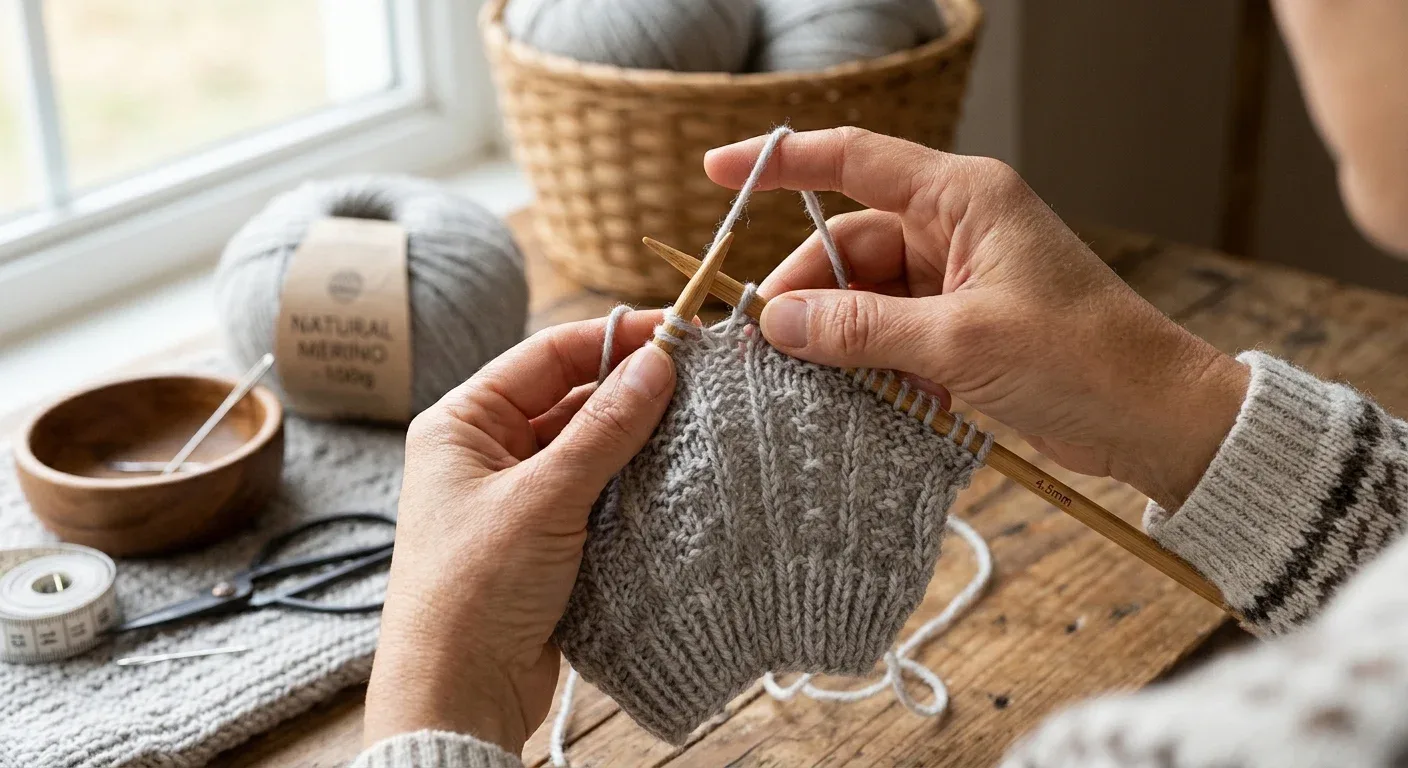
Whether you want to work it flat or in the round, the key lies in the consistency of the Andalusian stitch rows and the choice of the initial number of knit stitches, which must be even to avoid errors. Once these basics are mastered, Andalusian knitting becomes accessible even to beginners, provided you can clearly distinguish between the knit row and the purl row.
Andalusian Stitch for Flat Knitting
To succeed with the Andalusian stitch in flat knitting, it is imperative to cast on an even number of stitches, as this pattern relies on a perfect symmetry between knit stitches and purl stitches. This technical detail prevents distortions and ensures a harmonious result. Once the stitches are in place, the work begins with a first stitch row knitted entirely in knit, which forms the smooth base of the pattern. This step is crucial as it defines the loop alignment for the following Andalusian stitch rows.
- Row 1: Knit all stitches
- Row 2: Purl all stitches
- Row 3: Alternate 1 knit stitch and 1 purl stitch
- Row 4: Purl all stitches
This is the basis of simple Andalusian knitting: the first stitch row is always worked in knit, while the second row is worked entirely in purl. This alternation creates a subtle visual contrast, essential for distinguishing the pattern from classic stockinette. The purl stitches of the second row highlight the knit stitches of the first, reinforcing the relief without weighing down the fabric. For beginners, marking these first two stitch rows with stitch markers can make it easier to track the pattern.
The third stitch row introduces the characteristic alternation of the Andalusian stitch, with a sequence of 1 knit stitch, 1 purl stitch, repeated across the entire row. This sequence, noted as 1 k, 1 p, is the heart of the pattern and must be executed precisely to avoid shifts. The knit and purls thus created form relief patterns that repeat every four Andalusian stitch rows, giving the fabric its distinctive texture. A helpful tip is to count the knit stitches** after each row to verify consistency.
This is how you learn how to knit the Andalusian stitch: the cycle closes with a fourth row knitted entirely in purl, just like the second row. This repetition of purl rows at positions 2 and 4 stabilizes the structure and prepares for the return to the first knit stitch row.
By chaining these four stitch rows, the pattern develops naturally, with the Andalusian knit gaining density and elegance with each repetition. For a flawless result, it is recommended to knit several cycles before measuring the piece to ensure the number of stitches remains constant.
Andalusian Stitch for Circular Knitting
Executing the Andalusian stitch in circular knitting has one major difference: the removal of turning the work between stitch rows, which slightly modifies the pattern's structure. Unlike flat knitting, where each stitch row is turned, circular knitting keeps the stitches under constant tension, which influences the distribution of knit stitches and purl stitches. This adaptation is essential to avoid uneven tension, especially on projects like beanies or scarves.
- Row 1: All knit
- Row 2: All knit
- Row 3: Alternate 1 knit stitch and 1 purl stitch
- Row 4: All knit
In this version, Andalusian stitch rows 1, 2, and 4 are knitted entirely in knit, a notable difference from flat knitting where only the first row is. The second and fourth knit rows create a smoother and more uniform surface, ideal for projects where feel is as important as appearance. This modification also reduces the risk of fabric twisting, a common problem in circular knitting. For beginners, using stitch markers after each stitch row makes it easy to track progress.
The only row that provides relief in the circular Andalusian stitch is the third, where you systematically alternate one knit stitch and one purl stitch, as in flat knitting. This sequence, 1 k, 1 p, is repeated across the entire stitch row to maintain symmetry.
Unlike the flat version, where purl rows are more frequent, this circular version relies on the regularity of the knit-purl alternation to structure the pattern. The result is a slightly more open fabric, perfect for lightweight accessories like scarves or cardigans.
The Variant: The Double Andalusian Stitch
The Andalusian stitch brings a unique visual aspect to your work. The Andalusian aesthetic is highly prized for its pronounced relief, creating a rich and dense texture that stands out clearly from the classic model. There is a more complex option: the variant known as the double Andalusian stitch. This choice allows for a more sophisticated look, ideal for adding character to an accessory. The Andalusian stitch worked this way offers remarkable structure thanks to the organization of the stitches.
Preparation requires particular attention when starting. The Andalusian style demands precision so that the pattern aligns perfectly. For double Andalusian knitting, the number of stitches is crucial. You must cast on a multiple of 3 plus 1 stitch. This precise calculation ensures the regular repetition of patterns across the entire width of the knit, avoiding shifts when creating this Andalusian stitch.
The work rhythm is established over a regular cycle. The structure of the double Andalusian stitch relies on these first three rows. Start with a row of knit stitches, followed by a row entirely in purl, and finish this sequence with a second row of knit stitches. These knit and purl stitches create the necessary base to support the relief that will appear in the fourth row, transforming the classic stockinette into an Andalusian pattern.
The final step of the cycle defines the aesthetic of the pattern. Alternate one purl stitch and two knit stitches throughout the row. This play of purl and knit stitches builds the characteristic relief. By alternating the purl stitch and stabilizing the knit stitches, you achieve a unique texture. This difference allows you to choose between the simple or double Andalusian stitch. This repetitive process allows you to knit the Andalusian stitch with precision.
- Row 1: All knit
- Row 2: All purl
- Row 3: All knit
- Row 4: 1 purl stitch, 2 knit stitches (repeat)
Tips and Tricks for a Successful Project
To achieve a professional look, it is advisable to keep your yarn tension steady without over-tightening the stitches. Among the 3 tips for successfully creating the Andalusian stitch, tension is paramount to maintain a regular relief throughout the piece. By knitting with flexibility, you will prevent the fabric from shrinking too much. Managing the knit stitches ensures a fluid texture, essential for highlighting the Andalusian stitch.
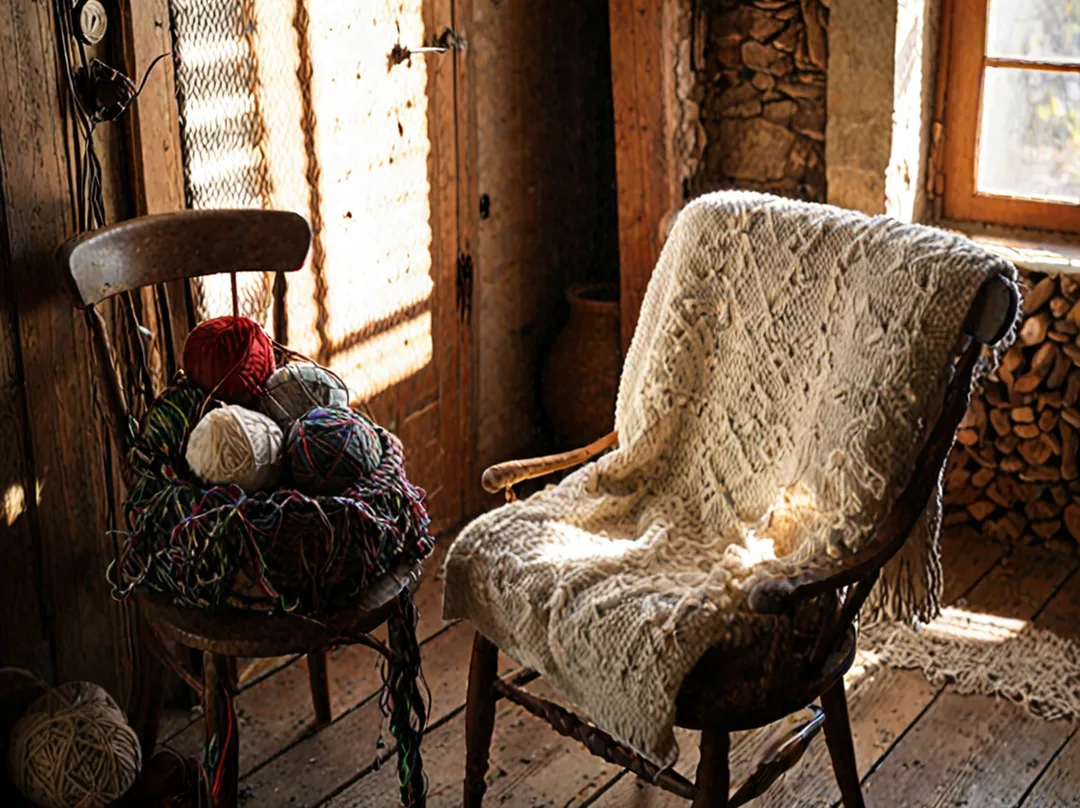
Do not confuse this pattern with the seed stitch, as the latter alternates stitches every single row. It is useful to understand the difference between the Andalusian stitch and the seed stitch to avoid technical errors. While the former creates a structured and dense relief, the latter scatters purl stitches across a stockinette background. By observing each stitch row, you will notice that the alternation between the knit-purl and purl stitches varies according to the Andalusian style.
The 'contrary' Andalusian stitch involves shifting the start of the pattern to change the orientation of the relief. Some knitters prefer this offset Andalusian knitting to create asymmetrical or more dynamic visual effects. Depending on the number of stitches used, this shift changes the overall perception of the design. The alternation between a knit stitch and knit stitches then defines the final look of this Andalusian style, offering an interesting way to personalize your work.
What to Knit with the Andalusian Stitch?
The Andalusian stitch is distinguished by its thickness and textured relief, making it ideal for creating winter accessories that combine warmth and elegance. Its dense appearance makes it a preferred choice for projects requiring good structure, such as garments or blankets.
Unlike lighter stitches, it offers increased resistance to friction while maintaining a pleasant suppleness. For beginners and experienced knitters alike, this pattern is a safe bet for timeless creations, where Andalusian knitting showcases a result that is both rustic and refined.
The scarf and snood are undoubtedly the most iconic projects for exploring the Andalusian stitch, as they allow the relief of the pattern to be fully expressed along their entire length. A scarf knitted in chunky wool, for example, will highlight the knit and purl stitches that compose this stitch, creating a captivating visual effect.
For your Andalusian stitch pattern inspirations, start with a scarf in Andalusian stitch rows to master the regularity of the pattern before moving on to more complex projects. The knit-purl alternations and purl stitches flow naturally, offering perfect symmetry once the work is turned.
Beyond clothing accessories, the Andalusian stitch is perfectly suited for home decor, particularly for Andalusian knit items like cushions or throws. A chunky wool throw, knitted with the knit and purl stitches of this pattern, will add a cozy touch to a living room while remaining resistant to daily wear.
The Andalusian stitch rows repeat with surprising ease, making it a practical choice for large projects. For an even more spectacular result, pair it with contrasting yarns or subtle embroidery, which will emphasize the relief without overpowering it.
Beanies and berets also benefit from the qualities of the Andalusian stitch, notably its ability to maintain a fitted shape while providing optimal insulation. A beret knitted with purl stitches and knit-purl alternations in this pattern resists deformation better than classic stockinette, while retaining natural elasticity.
The knit and purl stitches that make up the pattern allow you to adapt the number of stitches according to the desired size without altering the overall structure. For a professional project, prioritize semi-rigid wools or shape-memory yarns, which will perfectly contour the head while preserving the characteristic relief of Andalusian knitting.
FAQ
How do you do the Andalusian stitch in knitting? The simple Andalusian stitch is worked over an even number of stitches: row 1 knit, row 2 purl, row 3 alternate 1 knit / 1 purl, row 4 purl.
How do you do a 'contrary' Andalusian stitch? This involves shifting the rhythm of the knit and purl stitches on row 3 to reverse the relief of the pattern.
What is the Andalusian stitch in knitting? It is a textured stitch created by the strategic alternation of knit and purl stitches over a four-row cycle.
What is the difference between the Andalusian stitch and the seed stitch? The seed stitch alternates stitches every single row, whereas the Andalusian stitch uses entire rows of identical stitches.
What can I knit with the Andalusian stitch? This stitch is ideal for scarves, snoods, beanies, throws, or decorative cushions.
Is the double Andalusian stitch difficult? It is slightly more complex than the simple version because it requires a precise cast-on (multiple of 3 + 1) and a specific row 4.
Sources
See Also
- knitting patterns
- First sock knitted!
- handmade knitted gifts
- foncia reviews