In short
- Opt for simple constructions (simple heel or afterthought heel).
- Use sock-specific yarn and appropriate needle sizes.
- Always knit a gauge swatch (10 cm / 4 inches) for a perfect fit.
- Choose free patterns to practice without any financial risk.
Knitting your own socks is an excellent way to start your knitting journey, as these projects allow you to practice repetitive motions while creating something useful for everyday life. For those looking for beginner knitting sock patterns, the ideal approach is to prioritize simple constructions, such as an afterthought heel or seamless knitting, to avoid common mistakes.
Using sock-specific yarn—which is typically lightweight and elastic—along with the right needles is essential to ensure a comfortable and durable result. Finally, systematically measuring your gauge swatch at 10 cm (4 inches) before starting allows you to adjust the size and achieve a perfect pair without wasting yarn. Thanks to free patterns, you can practice without financial risk while discovering the basics of circular knitting.
Beginners are often intimidated by the prospect of knitting socks, but with the right tips and proper materials, this creation becomes completely accessible. The most recommended beginner knitting sock patterns generally incorporate techniques like a V-heel or an afterthought heel, which simplify the process.
To knit socks without frustration, you must also choose the right yarn: for example, Twin Soxx 8ply yarn, often used in beginner patterns, offers a great balance between elasticity and durability. Circular needles, especially mini-circulars, are indispensable for working the foot seamlessly, while allowing you to manage a stitch count between 56 and 76 depending on the size of the sneakers or socks worn.
Success with Your First Socks: Materials and Preparation
Finding beginner knitting sock patterns suited to your skill level is the first step toward a successful first pair of socks. These patterns, often designed to be knit with fine yarn and circular needles, allow you to learn basic techniques such as tight stitches, increases, and progressive decreases.
The advantage of socks lies in their repetitive structure: once you have mastered the heel, the body of the sock is knitted in the round, which limits errors and builds confidence. For those who are still hesitating, tutorial videos or dedicated beginner knitting forums offer visual explanations and real-world feedback, which are helpful for avoiding common pitfalls.
Choosing the right equipment is crucial to guarantee the quality of the final result. Circular needles, often recommended for beginner knitting sock patterns, allow you to work stitches without excessive tension while making it easier to manage narrow feet. For example, a pattern like Basic Socks suggests using Twin Soxx 8ply, a lightweight and stretchy yarn ideal for beginners.
Mini-circulars, with their smaller diameter, are particularly well-suited for knitting seamless socks while accommodating a stitch count between 56 and 76, depending on the size of the sneakers. Another tip is to prioritize metal or bamboo needles, which glide more easily and reduce the risk of holes in your knitting.
Before launching your sock creation, it is essential to knit a gauge swatch to adjust your tension. This step, often underestimated, prevents sizing surprises at the end of the project. To do this, knit a 10 cm (4 inch) square following the pattern instructions, then measure the number of stitches and rows per centimeter.
For example, a gauge of 22 stitches and 30 rows per 10 cm is common with DK yarn. This measurement allows you to calculate the total number of stitches needed for the pair of socks, taking into account the circumference of the foot and the desired length. Once your gauge is validated, all that’s left is to choose a beginner knitting sock pattern circular needle and start your project with confidence.
Essential Materials to Get Started
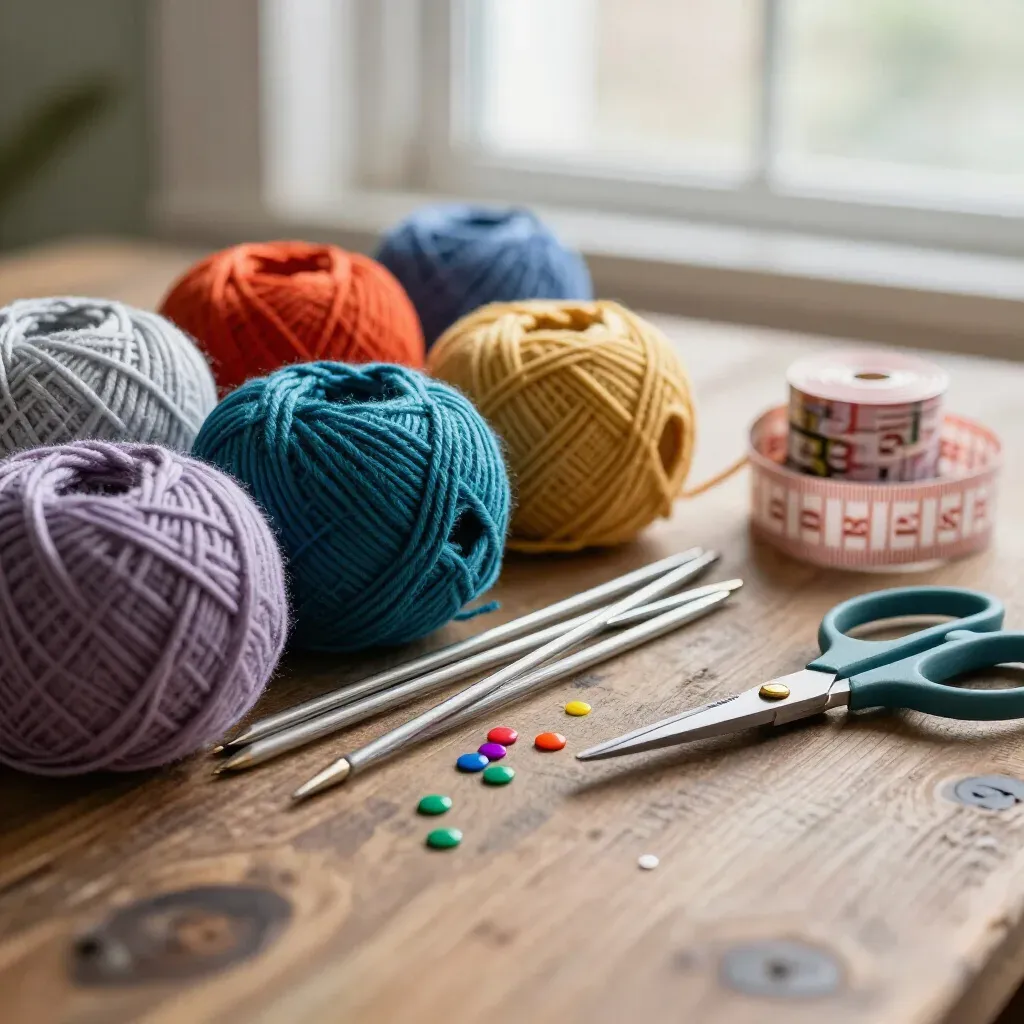
To start without mistakes, the essential equipment is limited to a few key items. First, a pair of circular needles in a size appropriate for your chosen yarn: for DK yarn like Twin Soxx 8ply, 3.5 mm to 4 mm needles are generally recommended. Next, an elastic and durable yarn, such as merino wool or a specific sock yarn, ensures a comfortable and long-lasting result.
Details like stitch markers or a row counter are also useful to avoid losing your place. Finally, a tape measure and a pair of precision scissors complete your basic kit, allowing you to measure lengths and cut yarn accurately. These items, available in knitting shops or online, are often affordable and sufficient to complete your first pair of socks without excessive investment.
Selection of Knitting Sock Patterns for Beginners
Knitting your first socks opens the door to a creation that is as useful as it is rewarding, where every pair becomes a project in its own right. Whether you dream of timeless models or original pieces for Halloween or Christmas, the options for beginners are varied: simple patterns to master the basics, or ideas featuring colorwork, stripes, cables, or slip stitches to add a personal touch.
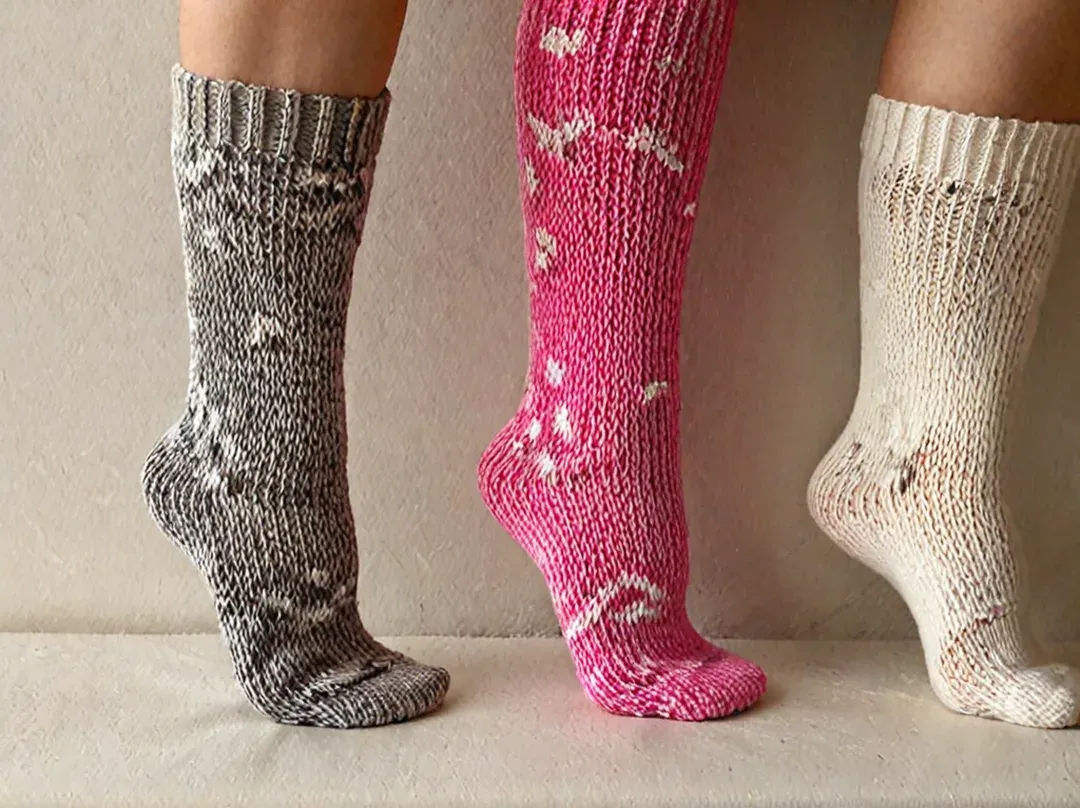
Even techniques like the heel or the toe, which are often feared, become less intimidating thanks to patterns designed for steady progress. Here is our selection of knitting sock patterns for beginners, where each project corresponds to a specific level, from the most accessible first pairs of socks to more elaborate creations. The advantage? These models allow you to test different colors and textures while maintaining impeccable quality, even using sneakers as inspiration.
| Pattern | Level | Features |
|---|---|---|
| Monday socks | Beginner | 2 sizes available |
| Petite fleur | Beginner | 3 sizes: 36-38, 39-41, 42-45 |
| Moréa Socks | Beginner | 3 sizes based on circumference |
| Buchettes | Beginner | 4 sizes, reinforced heel |
| Smurfette Socks | Beginner | One size, toe-up construction |
Simple and Accessible Models
To avoid discouragement, prioritize free beginner knitting sock patterns that combine simplicity with satisfying results. The goal is not just to succeed with your first pair of socks, but also to build confidence in your skills. The most popular patterns among novice knitters focus on minimalist details: well-fitting feet, wedge or horseshoe-shaped heels, and elastic toes for optimal support.
These patterns are often accompanied by tutorial videos or tips on how to adjust the size, ensuring a smooth creation. The objective? To knit a pair that holds up even after several washes, while exploring colors that reflect your personal style.
Knitting for Toddlers
Toddler socks represent an ideal playground for beginners, both due to their small size and the fact that the creation is often much faster. An easy free baby slipper knitting pattern, like the P’tits pieds (Little Feet), perfectly illustrates this approach: using only 20 grams of yarn, it allows you to use up leftover scraps while providing a cute and functional result.
These models are also attractive due to their versatility: they can be knitted in bright colors for a joyful effect or in neutral tones for a timeless look. An extra advantage? Because baby feet are smaller, there is less risk of large errors, and you can practice basic techniques like tight stitches or simplified heels much faster. A finished pair then becomes a creation to be gifted with love, celebrating every bit of progress.
Deepening Your Practice and Varying Styles
To progress in your sock knitting creations and move from your first pair of socks to more advanced pieces, it is essential to understand the very structure of a pattern. A sock consists of three key elements: the toe, the heel (which can vary depending on the pattern, with or without reinforcement), and the leg (the main part of the sock).

Some patterns start at the cuff or the toes, while others prefer an afterthought heel, a technique that is useful for adjusting the size. This diversity allows you to adapt the model to your feet and your level, whether you are looking for a simple pair of socks or a technical challenge. By analyzing these details, you will gain the confidence to read and interpret available patterns, whether they are free or paid.
Mastering Different Constructions
Before diving into a more ambitious project, clarify two fundamental aspects: the knitting direction (top-down or bottom-up) and your chosen heel type. A reinforced heel, for example, requires special attention to tight stitches, while an afterthought heel offers more flexibility for correcting errors.
To start, searching for a simple sock knitting pattern with a basic heel is ideal, as it allows you to focus on the consistency of your ribbing and the precision of the toes. Tutorial videos accompanying these patterns are an asset for visualizing each step, especially if you are deciding between a classic heel or a gusseted model. Once these basics are mastered, you can explore variations like seamless socks or versions adapted for sneakers or trainers using specific patterns.
Adding Color and Patterns
Once you are comfortable with plain stockinette stitch, the next step is to integrate colors and patterns to personalize your knitted socks. Colorwork, for example, offers a level of complexity that is accessible to beginners thanks to patterns designed to guide you step-by-step, with explanatory videos and technical tips included. To knit colorful striped socks, start with simple motifs like vertical bands or geometric patterns, then move on to bolder combinations.
Specialized guides even offer color charts to test combinations before starting your creation, along with suggestions for alternative colors for every season—from January (festive themes) to December (winter motifs). These resources transform a pair of socks into a creative project where every detail, from the heel to the feet, reflects your style. With these tools, pattern quality no longer depends solely on technique, but also on your ability to play with colors and inspiration.
FAQ
Where can I find free sock knitting patterns? You can find many free patterns on specialized blogs or websites dedicated to knitting communities.
How many stitches do I need to knit a sock? This depends on the pattern, but it is common to knit between 56 and 76 stitches using circular needles.
How can I knit socks easily? To start, choose models with a simple heel and a top-down construction.
Which knitting patterns are the easiest to knit? Basic stockinette stitch models, like the Monday socks, are perfect for a first experience.
Sources
- Club Tissus - Free beginner pattern – blog.clubtissus.com
- Tricocotier - Sock patterns
- Katia - Knitting project sheet
- Yktl-shop - Understanding construction
See also
- knit a sleeveless sweater
- knit a baby hat
- My first knitted sock!
- hand-knitted gifts