In short
- Festival founded by the Wisconsin Sheep Breeders Cooperative, held every Labor Day weekend at the Jefferson County Fair Park.
- Over 100 exhibitors, sheep shows, shearing demonstrations, spinning, knitting, and dyeing workshops, plus the famous Lead-Line Costume Class.
- A major educational event: over 500 fiber arts students are expected annually for classes led by renowned experts.
- Affordable ticketing: $20 weekend passes, $10 daily admission, offering a family-friendly atmosphere deeply rooted in Wisconsin's agricultural heritage.
The Wisconsin Sheep & Wool Festival is much more than just an annual event: it is a living tribute to Wisconsin's agricultural and artisanal heritage, born from the Wisconsin Sheep Breeders Cooperative's mission to showcase sheep farming and the craftsmanship of wool.
JillianEve walks through the vendor booths and watches a sheep shearing demonstration at the 2023 festival.

Operating as a non-profit entity, the festival has become an essential destination for fiber enthusiasts, featuring more than 100 exhibitors, sheep competitions, shearing demonstrations, and hands-on workshops. Every year, it attracts hundreds of participants, including over 500 fiber arts students who come to learn from recognized experts. The atmosphere is both welcoming and deeply connected to the land, blending agricultural traditions with textile creativity.
Held every year during the weekend following Labor Day at the Jefferson County Fair Park, the festival offers a three-day program mixing education, competition, and discovery. Highlights include the Lead-Line Costume Class—an iconic competition where participants parade in costumes made entirely of knitted or spun wool—as well as dyeing, knitting, and spinning workshops.
Ticketing remains accessible, with a $20 weekend pass or $10 daily admission, reflecting the event's inclusive, family-oriented spirit. For knitters and crafters, it is a unique opportunity to immerse themselves in the world of local wool while celebrating the unbreakable bond between Wisconsin and its sheep farmers.
The Roots and Evolution of a Locally-Grown Festival
The Wisconsin Sheep & Wool Festival finds its roots in the Wisconsin Sheep Breeders Cooperative, an organization founded to promote sheep farming and fiber arts within the state. In 1995, this cooperative established the festival as a non-profit entity, registered as a 501(c)5 LLC, to ensure a lasting space dedicated to passing down skills and promoting local products.
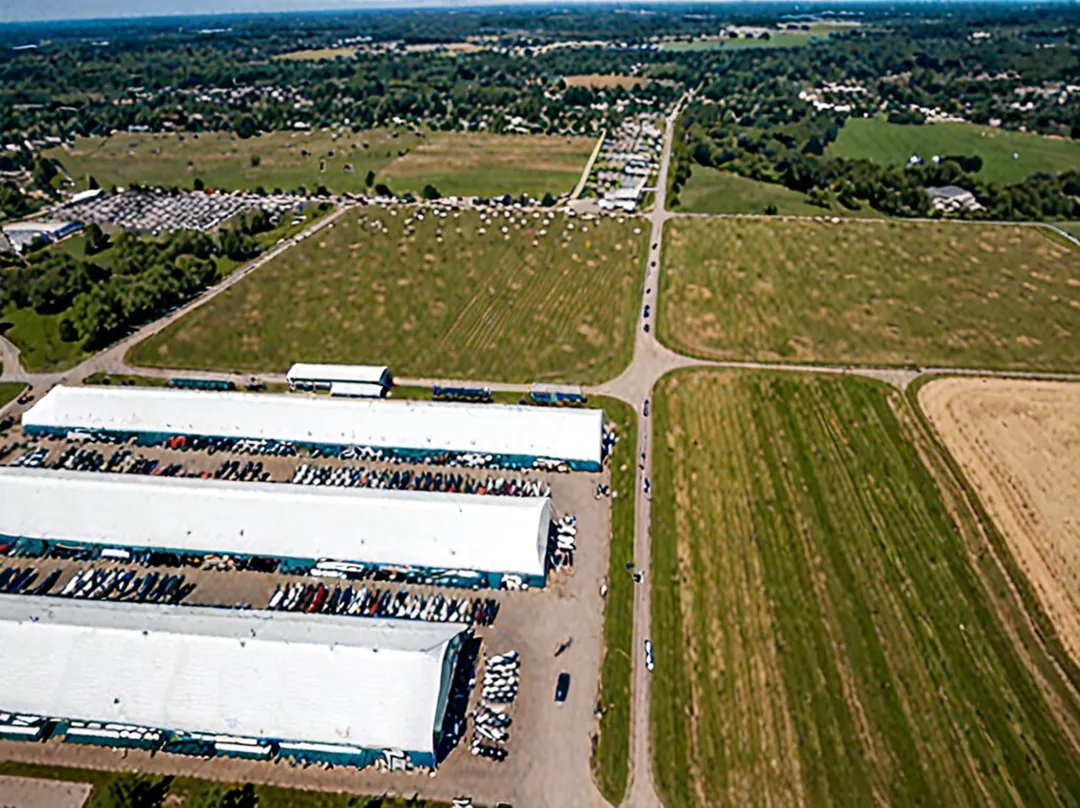
Originally designed as a showcase for Wisconsin breeders and artisans, the event quickly grew beyond its regional borders to become a national destination, all while maintaining its authentic soul.
Since its inception, the festival has been held without exception on the weekend following Labor Day at the Jefferson County Fair Park—a strategic choice that makes it a reliable annual landmark for wool enthusiasts and industry professionals alike.
This consistency has helped build a strong tradition where each edition reconnects with the same core values: celebrating Wisconsin's agricultural heritage while providing an educational and fun environment. Located in Jefferson County, the venue reinforces this connection to a region where sheep farming remains a major economic and cultural activity.
Over the years, the Wisconsin Sheep & Wool Festival has evolved to include increasingly diverse activities without ever losing its local community roots. Transitioning from a sheep-centered agricultural show to a multidisciplinary event, it has successfully attracted a wider audience while remaining true to its origins.
Today, it embodies both the richness of Wisconsin's sheep traditions and innovation in the fiber arts, offering activities for all skill levels, from beginners to experts. This duality between heritage and modernity is at the heart of its identity.
What Makes the Wisconsin Sheep & Wool Festival Unique
The Wisconsin Sheep & Wool Festival stands out due to its unique balance between a traditional agricultural fair and a fiber arts expo—a rare combination in the Midwest. Unlike other specialized events, it integrates sheep breed judging, fleece competitions, and sheepdog trials alongside workshops and exhibitions focused on wool, yarn, and textile creations.
This dual approach attracts both professional breeders and hobbyist knitters, creating a dynamic where production and craftsmanship complement one another. The emphasis on education, with classes accessible to the general public, reinforces this specialty: the festival is a place to learn as much as it is to discover, as evidenced by its extensive three-day educational program.
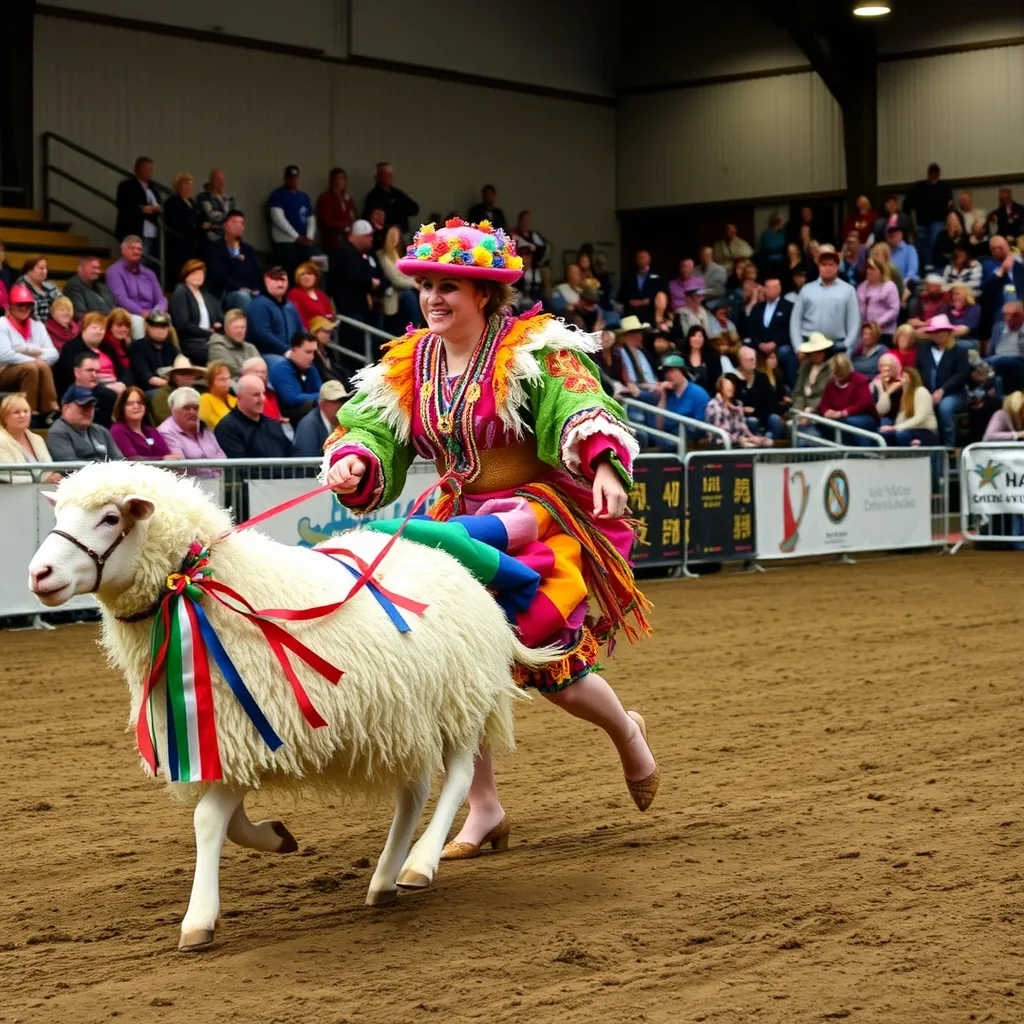
The Lead-Line Costume Class is undoubtedly the event's most iconic element, turning competition into a festive and whimsical spectacle. Every year, participants of all ages—from 6 months to 100 years old—parade through the arena in costumes made entirely of wool, leading a sheep with either elegance or humor.
Whether these outfits are handmade or purchased from exhibitors, they showcase the creativity and adaptability of local artisans while providing a moment of lighthearted fun in a festival often focused on technical skill. This class, both playful and technical, has become a highly anticipated tradition that symbolizes the festival's joyful and inclusive spirit.
The sheep-to-shawl competition embodies the entire textile supply chain, offering the public a hands-on look at the key stages: shearing the sheep, carding, spinning, and weaving a shawl within a limited timeframe. Wisconsin teams demonstrate their expertise here, transforming raw fleece into a finished piece before the eyes of the visitors. This live demonstration, both educational and spectacular, highlights the festival's commitment to transparency and the promotion of local skills while showcasing the versatility of animal fibers.
The atmosphere of the Wisconsin Sheep & Wool Festival relies on a rare blend of friendliness and shared passion, where every generation finds its place. You will see experienced breeders discussing shearing techniques alongside beginner knitters discovering the basics of spinning, while children watch sheepdog demonstrations with fascination.
Organizers frequently highlight this intergenerational aspect as a pillar of the event, strengthening the sense of belonging to a community united by a love for wool and manual craft. This human warmth, palpable in the aisles and the workshops, makes the festival much more than a simple event: it is a living celebration of Wisconsin's textile heritage.
Three Days of Highlights, Competitions, and Demonstrations
The Wisconsin Sheep & Wool Festival takes place over three consecutive days, from Friday to Sunday, with a meticulous schedule that alternates between technical sessions and public entertainment. Each day begins with sheep breed judging, where experts and breeders evaluate how well sheep meet the standards of their variety, before making way for practical demonstrations in the afternoon.
These sessions, open to everyone, allow visitors to discover the key stages of wool processing while participating in interactive workshops. In the evenings, friendly activities such as screenings or meet-and-greets with artisans extend the immersion into the world of fiber.
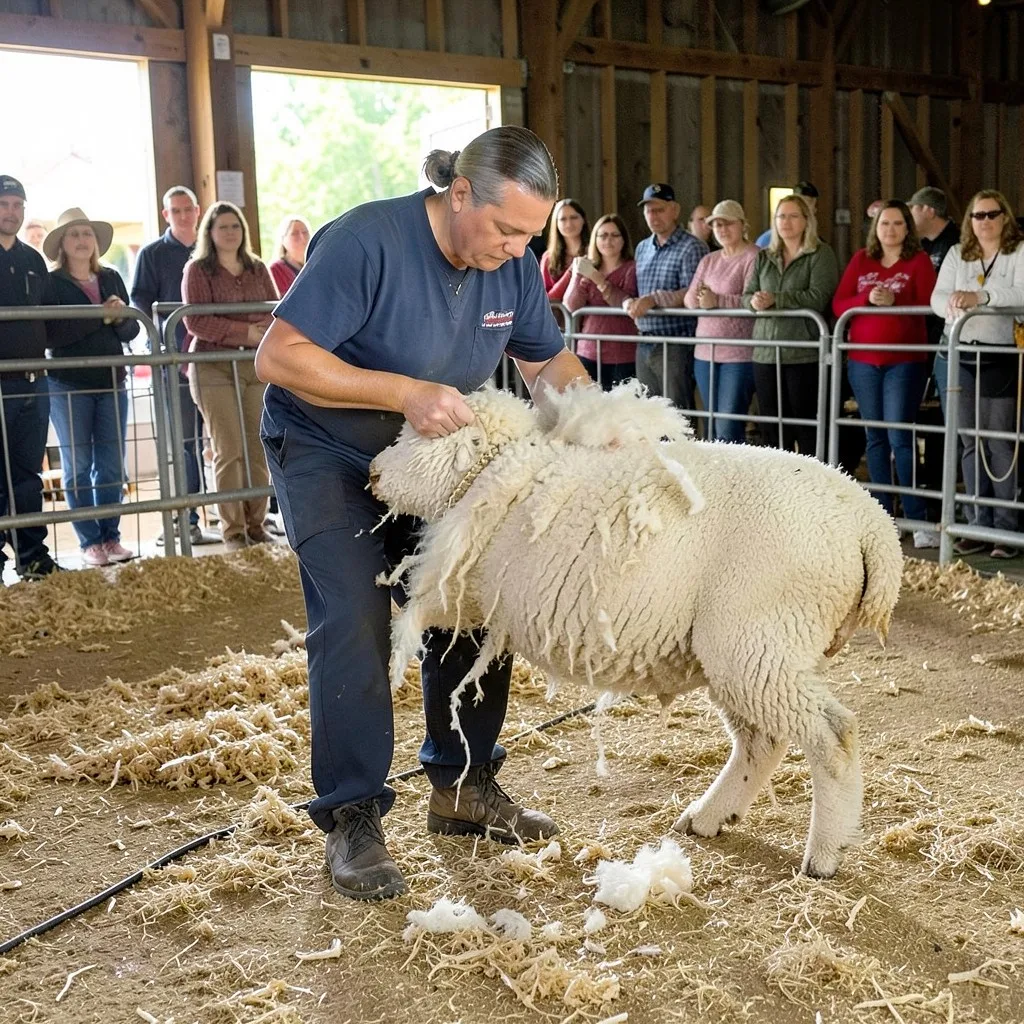
Professional shearing demonstrations are one of the festival's major highlights, attracting hundreds of spectators every year. Led by experienced shearers, these sessions showcase precise, repetitive movements where every motion counts to preserve the quality of the fleece while ensuring the animal's comfort.
Organizers emphasize the educational aspect: demonstrators explain the tools used, shearing techniques adapted to each breed, and answer questions from the public, who are often amazed by the required speed and dexterity. These moments, combined with explanations of the sheep's life cycle, offer a complete view of the wool industry.
Sheepdog trials capture the attention of visitors with their dynamic action. On a regulated course, Border Collies and other herding breeds execute synchronized maneuvers under the command of their handlers, illustrating the daily work on Wisconsin sheep farms.
These competitions, judged by strict criteria of precision and obedience, highlight the unique bond between humans and animals while reminding us of the historical importance of these dogs in herd management. Visitors can sometimes even participate in simplified training sessions organized alongside the main events.
Two iconic parades often close out the day: the Make It With Wool and the Best of Wisconsin Style Show. The first showcases garments and accessories made entirely from local wools, highlighting the creativity of artisans and the versatility of the fiber.
Pieces are judged on technical criteria (sewing quality, durability) and aesthetic ones (originality, color harmony), with special attention paid to showcasing the unique characteristics of Wisconsin wools. The second parade, more fashion-focused, celebrates creations that embody the spirit of the region, often inspired by the local landscapes and rural culture.
For visitors looking to get actively involved, participatory activities transform the festival aisles into one giant workshop. The Walk & Knit / Walk & Crochet Relay Race, for example, invites participants to knit or crochet while walking along the booths, featuring timed challenges and prizes to be won.
Other workshops, such as hand-felting sessions or spinning introductions, allow people to touch the wool and understand its transformation firsthand. These social moments reinforce the family-friendly aspect of the festival, where beginners and experts meet around the same thread—literally.
Education at the Heart of the Festival: Workshops, Classes, and Knowledge Sharing
The Wisconsin Sheep & Wool Festival stands out as a pillar of textile arts training in the United States, with an educational program that welcomes more than 500 participants each edition. These on-site workshops cater to both beginners and seasoned artisans, offering total immersion in both traditional and contemporary techniques. The goal is to democratize access to often-overlooked skills while celebrating their role in preserving local textile cultures.
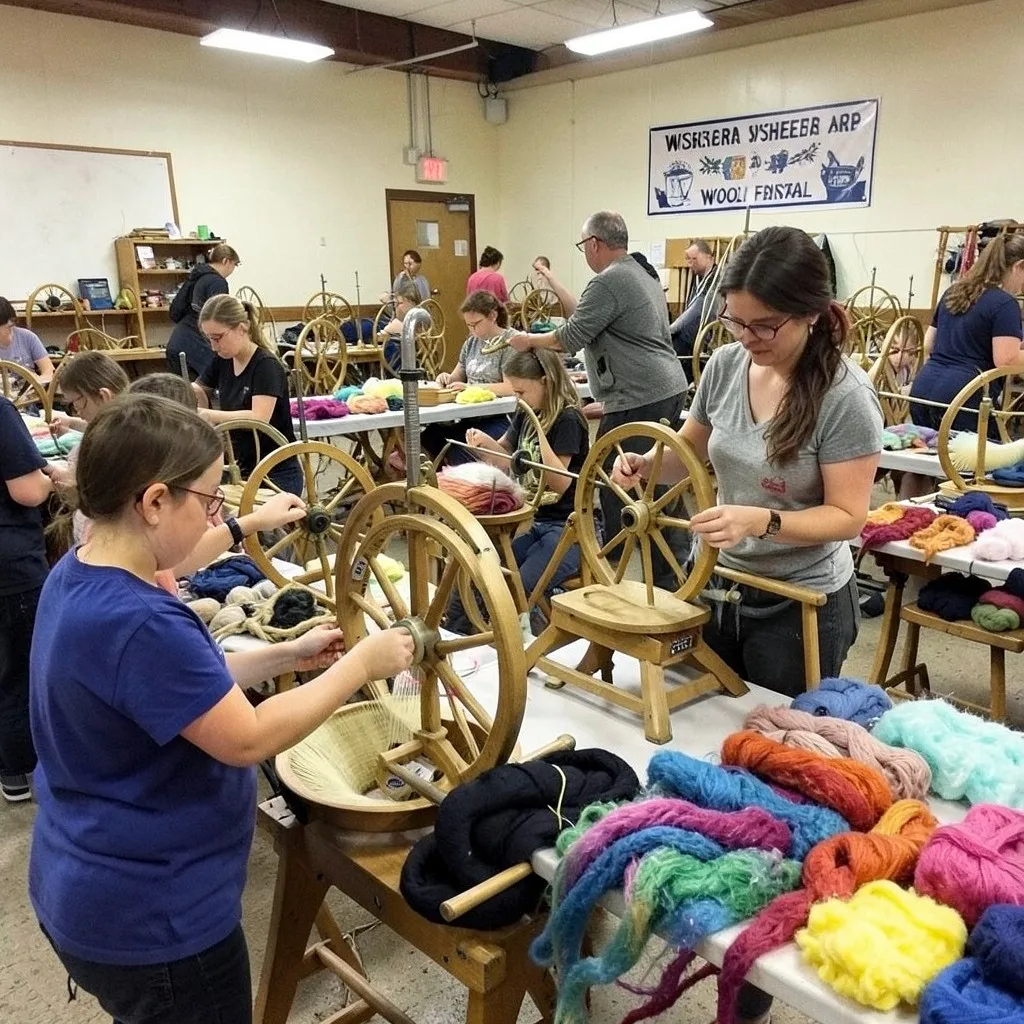
The festival offers a wide range of classes covering various disciplines: from hand spinning (spindle and wheel) to advanced knitting techniques like lace, jacquard, or seamless construction, as well as dyeing (natural and synthetic), felting, and weaving. The preparation of raw wool—a step often overlooked—also holds a central place, with demonstrations on washing, carding, and combing. Each workshop is designed to combine theory and practice, with materials adapted to different skill levels.
Among the recurring instructors are recognized names in the fiber community, such as Amy Tyler, a specialist in traditional knitting techniques, or Jillian Moreno, an expert in botanical dyes and wool upcycling. Their presence attracts a loyal following, often from the Midwest, for whom the festival is a must-attend event on their annual calendar. Some participants travel for several days to attend the full range of classes, turning their trip into a truly immersive experience.
A unique feature of the festival is its hybrid model: exhibitors, who are often artisans or fiber suppliers themselves, host workshops or live demonstrations. This approach allows visitors to combine learning and shopping, discussing techniques directly with the professionals they are learning from. For example, a participant might attend a felting workshop in the morning and purchase the tools used that afternoon from the same exhibitor, creating a virtuous ecosystem between education and commerce.
Over 100 Exhibitors: Wool, Fibers, Tools, and Artisan Creations
The exhibitor village brings together more than 100 vendors spread across several buildings in the fair park. Visitors can discover a vast array of products, including hand-spun wools, raw fleeces sorted by breed, and small-batch dyed yarns. The selection also includes rare fibers such as yak, bison, or qiviut, making this space a go-to destination for enthusiasts of exceptional materials.
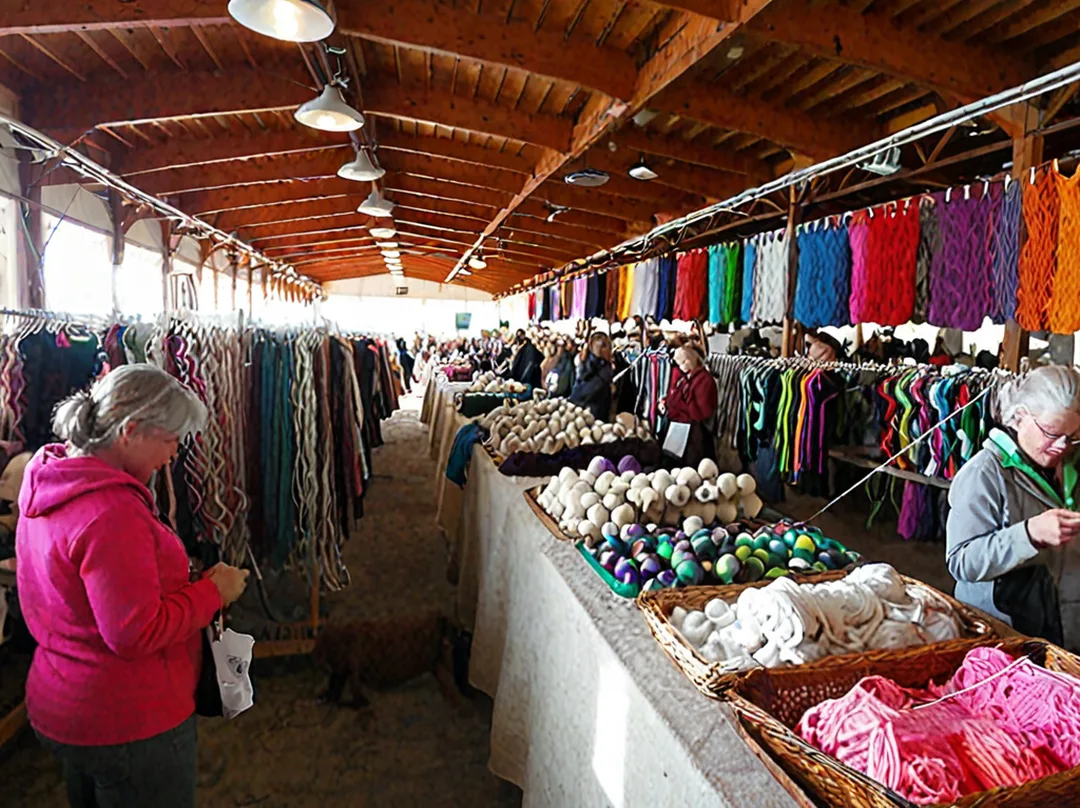
The festival also offers a wide choice of specialized tools. Enthusiasts can acquire spinning wheels, spindles, carders, or combs, as well as portable looms. You can also find artisan knitting needles and various accessories made of turned wood, ceramics, or leather, all designed by local craftsmen.
The presence of breeders selling their fleeces directly is a major highlight. This allows spinners to select their specific wool while discussing breed, husbandry, and preparation techniques with the producer. This direct interaction strengthens the unique link between the land and the yarn that defines this festival.
Beyond fibers, several creators offer related art objects. The public can find pottery, baskets, felt items, or handmade buttons. The availability of exclusive patterns completes this offering, allowing creators to expand their creative horizons without diluting the festival's fiber-centered identity.
The Living Connection Between the Festival, Wool, and Wisconsin
Wisconsin is one of the most dynamic sheep-producing states in the U.S., and the Wisconsin Sheep & Wool Festival is its most iconic expression, building a direct bridge from the prairies of Jefferson County to the hands of knitters. Unlike other fiber-focused events, this one is intentionally territorial; every fleece exhibited or sold carries the imprint of the local soil and climate, from the Upper Midwest to the harsh winters.
This geographic dimension is intentional: it forms the festival's identity, which distinguishes itself by refusing abstraction and anchoring every thread in a concrete story—that of an agricultural ecosystem where wool is not just a generic raw material, but the result of knowledge passed down through generations.
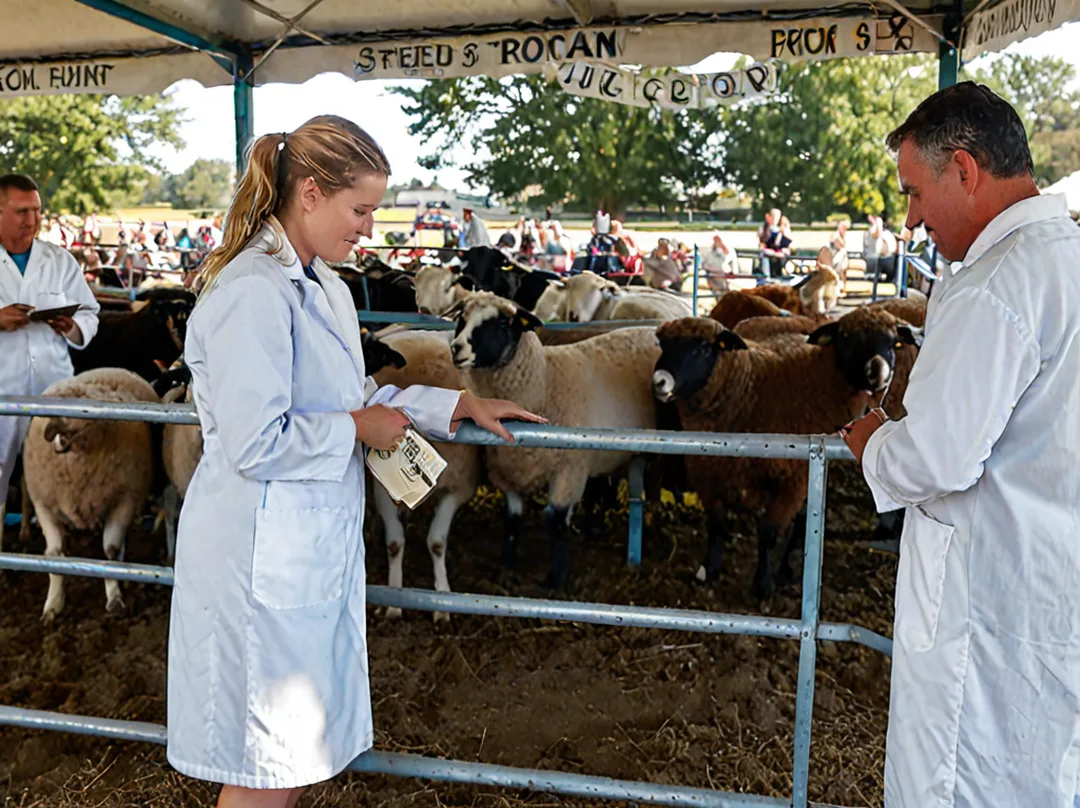
The sheep breeds presented during judging competitions—including Suffolk, Hampshire, Dorset, Merino, Corriedale, as well as long-wool varieties like Lincoln or Cotswold—illustrate this genetic diversity adapted to Midwest climates.
These breeds, selected for their hardiness and productivity in an environment with distinct seasons, also reflect the choices of Wisconsin breeders, who prioritize lineages capable of withstanding weather fluctuations while providing high-quality wool. The festival thus becomes a living showcase of this ovine biodiversity, where each breed tells a specific story linked to its origin and its role in local agriculture.
The Wisconsin Sheep Breeders Cooperative, the historical organization behind the festival, makes it much more than a simple commercial gathering: it makes it a promotional tool for the entire industry, from farming to processing. Beyond wool, the association also highlights local lamb meat, which is often overlooked, and emphasizes the sustainability of fiber by highlighting its closed-loop life cycle—from the sheepfold to the needle—as an alternative to synthetic materials.
The festival also serves as a way to attract new generations to farming by showing how wool can be both an economic product and a vehicle for cultural transmission, especially among young knitters and artisans.
This territorial rooting largely explains the festival's longevity, which resists the fleeting trends of the fiber market. Unlike more cosmopolitan events or those focused on creations disconnected from their origin, the Wisconsin Sheep & Wool Festival does not just sell wool: it celebrates a living agricultural system, where every player—breeder, spinner, knitter—plays a role in a coherent value chain.
By purchasing a fleece or participating in a workshop, participants become ambassadors for a responsible consumption model, where the final product—a sweater or a scarf—embodies both the heritage of a region and a commitment to local, transparent, and environmentally respectful production.
Practical Information: Dates, Location, Tickets, and Access
The Wisconsin Sheep & Wool Festival takes place every year during the weekend following Labor Day. The next edition will be from Friday, September 11 to Sunday, September 13, 2026 (in 2025, it was held from September 5 to 7). The event is held at the Jefferson County Fair Park, located at 503 N. Jackson Avenue, Jefferson, WI 53549, a central location accessible via I-94, between Milwaukee and Madison.
Visitors can purchase a $20 weekend pass or $10 daily admission, with free parking on-site. No reservations are required for entry, but organizers recommend arriving early due to the crowds, especially on Saturdays. Hours generally run from 7 AM to 5 PM on Fridays and Sundays, and until 7 PM on Saturday, depending on the scheduled activities.
FAQ
What are the dates for the Wisconsin Sheep & Wool Festival 2026? The 2026 festival takes place from September 11 to 13, the weekend after Labor Day.
Where is the Wisconsin Sheep & Wool Festival held? At the Jefferson County Fair Park, 503 N. Jackson Avenue, Jefferson, Wisconsin 53549.
How much does admission to the Wisconsin Sheep & Wool Festival cost? A weekend pass is $20 per person, and daily admission is $10 per person.
What types of workshops are offered at the festival? Spinning, advanced knitting, dyeing, felting, weaving, and raw wool preparation, with renowned instructors like Amy Tyler, Jillian Moreno, or Kate Larson.
How many exhibitors are at the Wisconsin Sheep & Wool Festival? More than 100 vendors offer wool, fibers, raw fleeces, tools, patterns, and artisan creations.
What is the Lead-Line Costume Class? A costumed parade where participants of all ages lead a sheep while wearing a wool outfit—either handmade or purchased—in a festive, intergenerational atmosphere.
Is the festival suitable for families with children? Yes, it is a family-friendly event with activities for all ages, animal demonstrations, accessible workshops, and a friendly atmosphere.
What is the difference between this and the Rhinebeck wool festival? The Wisconsin Sheep & Wool Festival takes place in September in the Midwest and is organized by a breeders' cooperative with a strong agricultural focus (judging, shearing, sheepdog trials); the Rhinebeck wool festival (New York State Sheep & Wool Festival) is held in October in New York State and attracts a broader national crowd.
Sources
- Official Wisconsin Sheep & Wool Festival website — presentation and history – wisconsinsheepandwoolfestival.com
- Official website — About page and legal structure – wisconsinsheepandwoolfestival.com
- WI Ag Tourism — event listing with programming details
- Jefferson County Fair Park — official event page with ticketing and 2024 program – jcfairpark.com
- Spin Off Magazine — introductory article focusing on the Lead-Line Costume Class and instructors
- Nordic Star Yarns — 2026 USA fiber festival calendar confirming dates and location
- Midwest Farm Report — pre-festival 2025 article with details on activities and exhibitors
See also
- My first knitted sock!
- hand-knitted gifts
- knitted cardigans and vests
- Hiking and knitting in Vermont