In short
- Prioritize natural fibers like merino or alpaca for optimal comfort.
- Understand yarn weight categories (0 to 6) to choose the right needles.
- Identify yarn structures (plied, heathered, bouclé) to achieve your desired look.
- Take advantage of clearance sales to find precious yarns (silk, mohair) at a discount.
To knit durable and comfortable pieces, choosing precious wool yarns during clearance sales starts with understanding how they are made. Natural fibers like merino or alpaga, selected for their thermal insulation properties, are transformed into yarn through a process called spinning. This step determines not only the softness and durability of the final product but also its appearance and knitted texture.
Knowing how to distinguish weights (from 0 to 6) allows you to adapt your needle size, while various structures—plied, heathered, or textured—influence the volume and color of your project. Furthermore, clearance sales offer the opportunity to acquire rare yarns, such as silk or mohair, at advantageous prices while preserving their original quality.
Whether you are a beginner or an experienced knitter, mastering these basics helps avoid common mistakes: choosing a yarn that is too fine for a thick project, or vice versa, or ignoring the specifics of synthetic fibers. Novelty yarns, for example, are recognized by their unique appearance, often being multicolored or having raised textures, but they require special attention during handling to avoid tangles or loss of structure.
Conversely, natural yarns like wool, composed of keratin fibers, combine strength and elasticity, making them ideal for winter garments or hard-wearing accessories. Finally, clearance sales, with their wide variety of products, are a goldmine for finding lots of precious yarns at low prices, provided you check their condition and composition before purchasing.
From Fiber to Yarn: Spinning and Threading
Understanding the nature of textile yarns begins with their origin: the transformation of raw fiber into yarn, a process known as spinning. Wool, a form of hair from mammals such as sheep, goats, or llamas (alpaca), is one of the most widely used fibers in knitting thanks to its keratin structure, which provides thermal insulation properties.
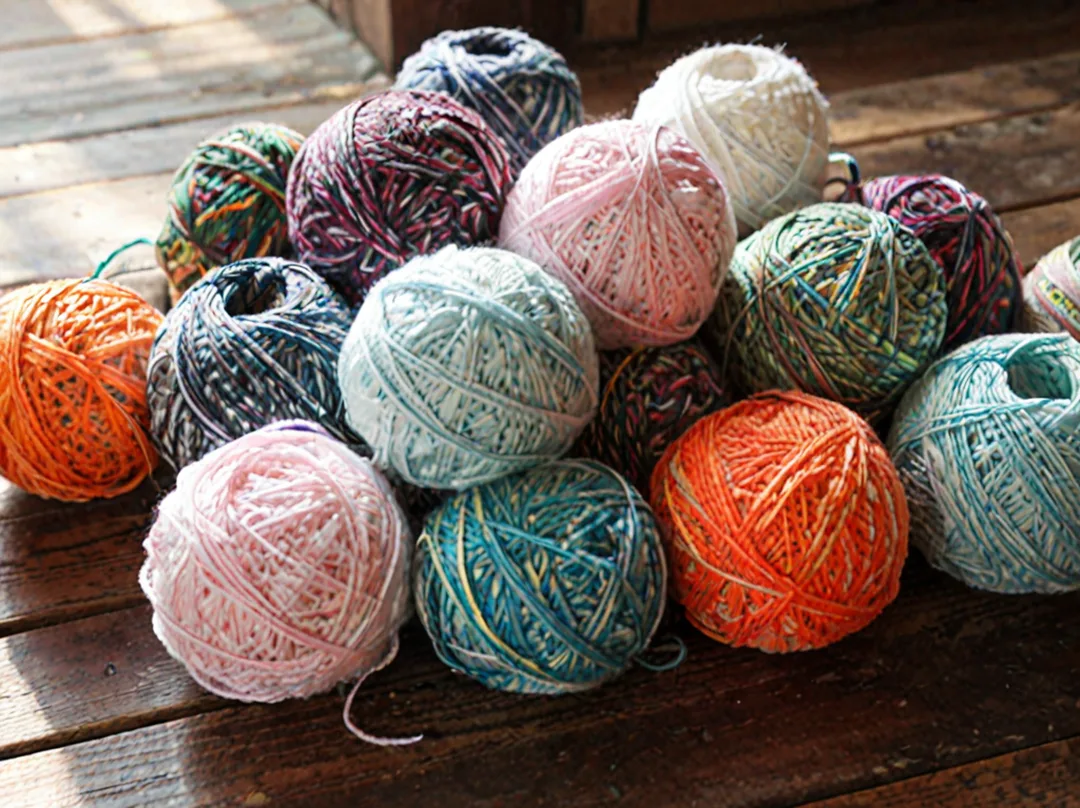
This fiber, harvested as fleece, is then combed, carded, and drawn to form a continuous strand before being twisted into yarn. This strand can also come from other natural fibers, such as cotton or linen, or from synthetic fibers created in a lab, each bringing distinct characteristics in terms of softness, strength, or care requirements.
The spinning of natural fibers relies on traditional methods that preserve their integrity. Unlike synthetic fibers, which are often treated to standardize their texture, animal or vegetable fibers retain variations in length and diameter, which influences the final appearance of the yarn. For example, fine and supple merino wool produces smooth, lightweight yarns, while thicker alpaca provides more structured yarns that are highly resistant to the cold.
These differences explain why knitters often prefer natural yarns for projects requiring both comfort and durability, such as sweaters or scarves intended for cold seasons.
The twist of the yarn determines its robustness and how it behaves during use. A single-ply yarn, with little to no twist, can stretch or unravel easily, making it unsuitable for projects requiring strength. In contrast, a plied yarn, composed of several single strands twisted together, offers better cohesion and better resists friction.
Textured yarns, meanwhile, undergo mechanical treatment to create waves or curls, providing volume and a fluffy appearance, which is ideal for lace patterns or relief effects. This twisting step is crucial: it also prevents fibers from separating during knitting, thereby ensuring the integrity of the final product.
Yarn Types by Composition and Structure
Yarn types are distinguished by their composition, a key criterion for choosing the right product for a project. Natural fibers like wool or cotton dominate the market, offering specific qualities: the softness and elasticity of wool contrast with the strength and lightness of cotton.
Novelty yarns, often composed of blends or synthetic fibers, provide unique visual appearances, such as raised textures or multicolored colors. Their selection will depend on the desired result, whether it be a textured effect or a touch of volume for your knitting.
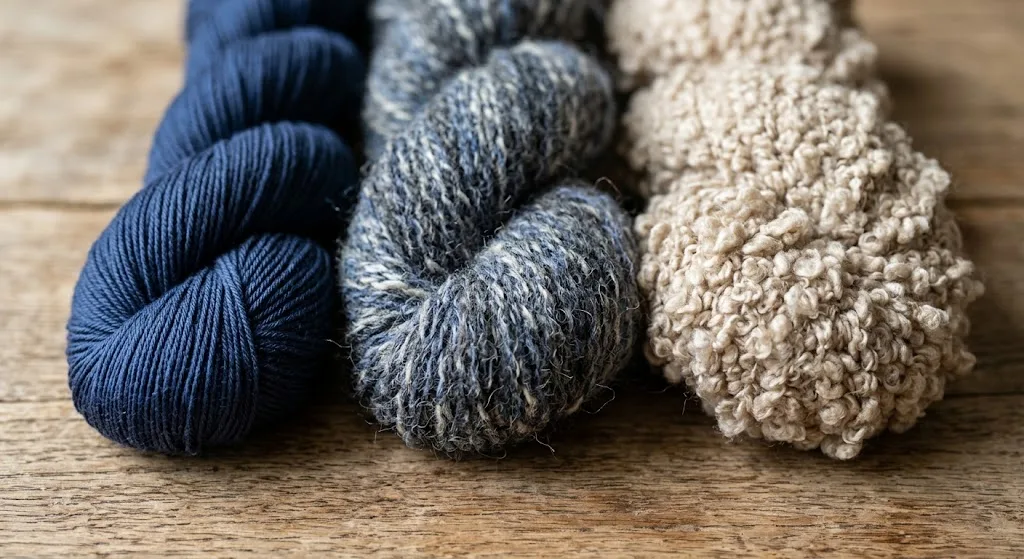
Analyzing yarn types by their structure reveals a diversity of techniques that influence their appearance and use. For instance, plied yarns combine several strands twisted together for increased strength, while heathered yarns play with different colored fibers or materials to create surprising visual effects.
The latter, often classified as novelty yarns, are distinguished by their ability to vary looks depending on light or fabric. Choosing them depends on the project, whether it is a delicate accessory or a piece requiring another yarn for sharp contrast.
Among yarns with striking visual effects, heathered and marled yarns stand out for their ability to blend heterogeneous fibers, producing organic patterns or color gradients.
Striated yarns, similar to heathered ones but with more pronounced color zones, offer an alternative for projects where one wants a yarn that can highlight details without complete uniformity. These textures, often associated with novelty yarns, are attractive for their originality, though they require special attention while knitting to preserve their final quality and appearance.
Special textures like bouclé or chenille transform a simple yarn into a product with striking reliefs. Bouclé yarns, made of three-strand twists, create soft bumps, ideal for velvety effects or voluminous patterns, while chenille mimics velvet thanks to its plush surface.
Conversely, crepe or granité yarns add a tactile dimension with their roughness, perfect for projects where softness and volume are sought. These textured yarns, often classified among novelty yarns, require technical mastery to avoid knots or deformations, but the resulting look justifies the effort.
- Simple and plied yarns for the base
- Heathered and marled yarns for color
- Bouclé and chenille yarns for relief
Mastering Weights: Need Expert Textile Advice?
Need advice from a textile specialist? Start with the weight. Choosing the right yarn category is essential to guarantee the success of your project, whether it is a delicate novelty yarn or a textured yarn with reliefs. Weights, classified from 0 to 6, determine not only the final appearance of your work but also the strength and softness of the natural fibers used.
A mismatch between the yarn and the needles can alter the result, especially for projects requiring precision or volume. For example, a yarn that is too thick for a fine pattern will create tight, rigid stitches, while a yarn that is too fine on large needles will result in a loose, unstructured finish. Mastering these nuances transforms a simple wool into a finished product tailored to every type of project.
Very fine yarn categories, numbered 0 to 2, are ideal for delicate work such as fingering weight yarns or yarns with subtle multicolored tones. Category 0, the finest, is used with needles ≤ 2 mm, perfect for lace or heathered yarns with complex patterns. Category 1, slightly thicker, requires needles of 2.25 to 3.25 mm and is suitable for light yarns like sock yarn, often used for socks or airy scarves.
Finally, category 2, with needles of 3.25 to 3.75 mm, offers a balance between fineness and structure, ideal for novelty yarns or textured pattern yarns like tweed or heather yarns. These weights, though less common in clearance sales, are sought after for their quality and their ability to highlight noble fibers like cashmere or linen.
Standard and thicker categories, from 3 to 6, cover the majority of common knitting needs, from solid yarns to those with marked reliefs. Category 3, or DK (Double Knit), is equivalent to two strands of fingering weight knit together (2 Fingering = 1 DK) and is used with needles of 3.5 to 4.5 mm. This versatile yarn, often in wool or cotton, is a favorite for beginners due to its ease of use and uniform result.
Category 4, with needles of 4.5 to 5.5 mm, corresponds to worsted or aran yarns, perfect for warm sweaters and scarves thanks to their volume and strength.
Finally, category 6, the thickest, requires needles of 5.5 to 8 mm and is intended for other yarns like high-relief wools or very pronounced novelty yarns, such as chunky or bulky yarns. These weights, often offered in promotions during clearance sales, allow for the creation of quick and cozy items, ideal for winter projects or bright colored accessories.
| Category | Yarn Type | Recommended Needles |
|---|---|---|
| 0 | Lace | <= 2 mm |
| 1 | Super Fine / Fingering | 2.25 - 3.25 mm |
| 2 | Fine | 3.25 - 3.75 mm |
| 3 | DK (Double Knit) | 3.5 - 4.5 mm |
| 4-6 | Aran to Bulky | 4.5 - 8 mm |
Precious Yarn Wool Sales: How to Find the Best Deals?
Finding precious wool yarns at clearance sales requires a method to avoid the traps of seasonal sales or end-of-line stock. Great deals are often hidden in less obvious novelty yarns or natural fibers, such as mohair or silk blends, which offer a superior appearance and softness compared to standard wools.

To find them, look for retailers specializing in textured yarns or online outlets where products are sorted by quality. A useful tip is to check the label: yarns with regular results (such as Vivienne wools) maintain their strength even after washing, a key criterion for a long-lasting investment. Multicolored colors or reliefs are also indicators of value, as they often come from leftover stock.
Investing in luxury blends like mohair or silk during a clearance sale can transform a knitting project into a unique piece. Sesia's Vivienne wool, for example, combines 70% mohair fibers and 30% silk for unmatched volume and shine, while maintaining exceptional strength.
These yarns are distinguished by their velvety appearance and their ability to hold deep colors, making them ideal for high-end scarves or sweaters. Their high retail price justifies an active search during sales, where precious yarns are sometimes offered at 50% off without any loss in quality. To identify them, compare the yarns with known samples: their texture and softness to the touch will betray their premium composition.
What is fur yarn?
Discover Faux Fur Yarns | Phildar - Buy Knitting & Crochet Wool for your projects—a category of yarns with a velvety appearance that mimics animal fur. These synthetic or blended fibers (such as polyester knitted in loops) create unique volume and softness, perfect for winter accessories or linings. Their textured texture makes them ideal for novelty yarns, where the relief effect is more important than fineness.
Unlike traditional wool, their durability is often higher, and their simplified care (machine wash at 30°C) makes them practical for demanding projects. Their price, varying by color and brand, makes them accessible precious yarns during clearance sales, where end-of-line lots are sold at attractive rates.
FAQ
What is the best wool in the world? It depends on the use, but cashmere and silk are often considered the most luxurious fibers.
What are the knitting trends for 2026? Trends are moving toward organic textures and sustainable, eco-friendly fibers.
Where can I get a free skein of wool? Sometimes samples are available during new collection launches or through knitting community contests.
Where can I find discounted wool? Clearance periods and online end-of-stock sections are ideal for finding reduced prices.
What is fur yarn? It is a yarn with a fuzzy and very soft appearance, often made from mohair or specialized synthetic fibers.
Sources
- Wikipedia - Wool – en.wikipedia.org
- Mad Laine - Yarn weight guide
- Tricot-T - Category guide
- TextileAddict - Yarn structure
See also