In short
- The wrap cardigan is an ideal cross-over garment for beginners or for varying styles
- The choice of yarn, such as alpaca, influences the softness of the final result
- The technique relies on regular increases at the neckline
- There are patterns suitable for everything from newborns to adults
The wrap cardigan is a knitting classic, combining elegance and simplicity, appealing to both beginners and experienced knitters. This wrap sweater, often associated with lace patterns or elegant borders, comes in patterns for all ages, from newborns to adults. Its main advantage lies in its accessible execution: circular needles and progressive increases make it an ideal project for mastering techniques like tight stitches or decreases.
Whether for a personalized gift or a timeless piece, the wrap cardigan embodies the versatility of knitting, with adaptable sizes and yarn qualities—such as alpaca or cashmere—that enhance the final result. For those wondering, "How to knit a wrap cardigan (pattern or knitting accessory)?", this enveloping garment offers a solution that is both creative and practical, blending tradition with modernity.
This style is particularly popular due to its central place in the wardrobe: it can be worn alone as an accessory, layered over shirts, or integrated into winter outfits. Unlike a classic sweater, the wrap cardigan relies on borders or repetitive patterns that add dynamism to the silhouette without weighing down the garment. The project is also an excellent way to vary styles—lace, solid, or geometric patterns—while working with needles suited to the chosen yarn.
For both women and children, existing patterns cover a wide range of sizes, with short versions for babies or adjustable lengths for adults. Its success also stems from its quick execution: a wrap cardigan can be completed in a few hours for a simple model, or become a technical challenge with complex patterns.
Understanding the specifics of this enveloping garment
The wrap cardigan is much more than a simple cardigan: it is a hybrid garment that combines the softness of a sweater with the lightness of an accessory. Its design, inspired by traditional models like the classic cardigan or wrap sweater, relies on an asymmetrical structure where borders or V-shaped patterns create an enveloping effect without restriction. Unlike a standard sweater, it is distinguished by its often shorter project length and the use of circular needles, which allow for working in the round while leaving the neckline open.
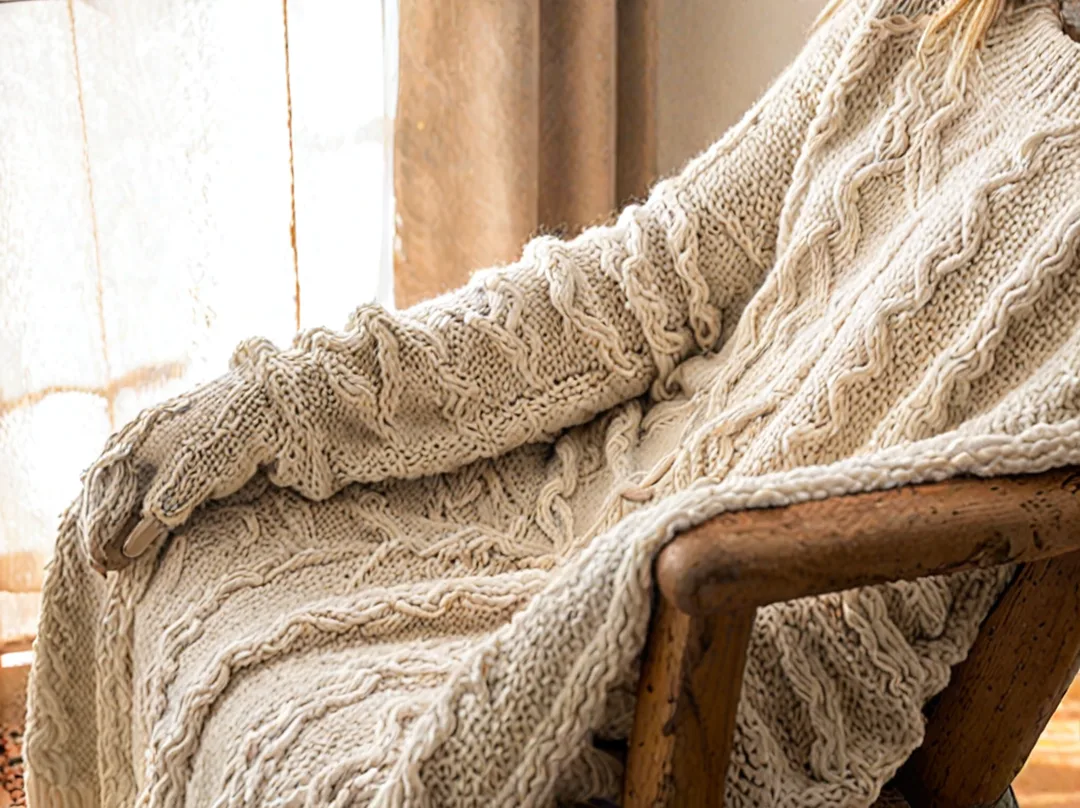
This unique feature makes it a preferred choice for those wanting to knit a wrap cardigan (pattern or knitting accessory)?, as it combines aesthetics and functionality: it protects against the cold while remaining airy, making it ideal for transitional seasons. Its technical summary is also an asset for beginners, as it limits seams and complex adjustments.
Choosing a wrap cardigan as a knitting project meets several practical and aesthetic criteria. First, its execution is faster than a full sweater, with patterns often designed to be knitted in one piece without assembly. Second, its size is easily adjustable: by modifying the starting number of stitches or varying the length of the borders, it can be adapted for a woman or a child.
Finally, its timeless style makes it a versatile accessory that pairs well with jeans, dresses, or even professional attire. Unlike other models like scarves or beanies, the wrap cardigan holds a central place in the wardrobe, sitting between clothing and accessory, while highlighting the quality of the yarn used—whether it be cashmere, alpaca, or thick cotton.
Preparing your supplies for a successful project
To knit a successful wrap cardigan, the choice of supplies is decisive. A balanced composition of wool and animal fibers improves both the softness and the drape of the garment. For example, a yarn composed of 65% wool and 35% alpaca offers a supple finish while being resistant to stretching, ideal for fitted models like the wrap cardigan. This proportion also ensures better thermal insulation, which is essential for a cardigan worn in cooler seasons.

Alpaca fibers, being lighter, avoid the stiffness often associated with pure wool, while wool provides the necessary structure to maintain the pattern's shape. This blend is particularly suitable for projects requiring both elegance and comfort, such as feminine versions or cozy sweaters for children. A common mistake is neglecting the composition: yarn that is too thick or too thin can alter the quality of the execution, especially for larger sizes where the material must follow the curves without deforming.
Needles play a role just as crucial as the yarn in the success of a wrap cardigan. Their size must be precisely adapted to the yarn weight to avoid stitches that are too loose or, conversely, a fabric that is too tight. For a yarn composed of 65% wool and 35% alpaca, 3 mm needles are generally recommended, as they allow for a regular stitch without excessive effort.
A diameter that is too small risks creating a dense and rigid fabric, incompatible with the fluidity of a wrap sweater, while a diameter that is too large would result in a fabric that is too airy, less suitable for fitted models.
Beginner knitters tend to underestimate this parameter, opting for standard needles without checking their compatibility with the yarn. For larger sizes (EU 42-48), it can be useful to combine two needle sizes (for example, 3 mm and 3.5 mm) to adjust the stitch tension according to the parts of the pattern, particularly at the shoulders or under the arms where tension must remain uniform.
Material and Size Summary Table
| Size | Yarn Type | Quantity | Needles/Hooks |
|---|---|---|---|
| 34-36 | Anny Blatt Subtile Cotton | 15 balls | 3.5 and 4 |
| 38-40 | Anny Blatt Subtile Cotton | 16 balls | 3.5 and 4 |
| 34-36/38-40 | Bouton d'Or Surya Cotton | 5 balls | Hook n°2 and 3 |
| 38-40 | Anny Blatt Odyssée/Muguet Cotton | 9 balls | 3.5 and 4.5 |
Here is a summary of the supplies needed according to the size of the wrap cardigan, based on feminine patterns and tested executions. For sizes 34-36, plan for 15 balls of Anny Blatt Subtile cotton in the color Topaz with needles n°3.5 and 4, while sizes 38-40 require 16 balls of the same yarn, with a slight increase for sizes 42-44 (17 balls) and 46-48 (18 balls).
For a lighter cotton cardigan, such as one made from Bouton d’Or Surya in Icy Rose, the requirements vary: 5 balls for sizes 34-36/38-40, 6 balls for 42-44, and 7 balls for 46-48, using hooks n°2 and 3 for finishing.
Finally, for a wool-cotton blend pattern like Anny Blatt Odyssée (in Lagoon) combined with Muguet (in Mint), the quantities increase: 5 balls of Lagoon + 4 of Mint for 38-40, up to 8 balls of Lagoon + 5 of Mint for sizes 50-52, using needles n°3.5 and 4.5 as well as hooks n°2.5 and 3 for details. These estimates assume a garter stitch or tight stockinette project; for lace patterns, add 10 to 15% more yarn to compensate for the eyelets.
The garment construction technique
The design of a wrap cardigan is based on an asymmetrical structure where the front panels overlap. Unlike a standard wrap sweater, this wrap cardigan pattern often uses a single large front panel that wraps around the body. Choosing the right size is crucial to ensure that the wrap cardigan stays securely in place without being too tight, while ensuring a fluid drape for this model.
Step-by-step instructions
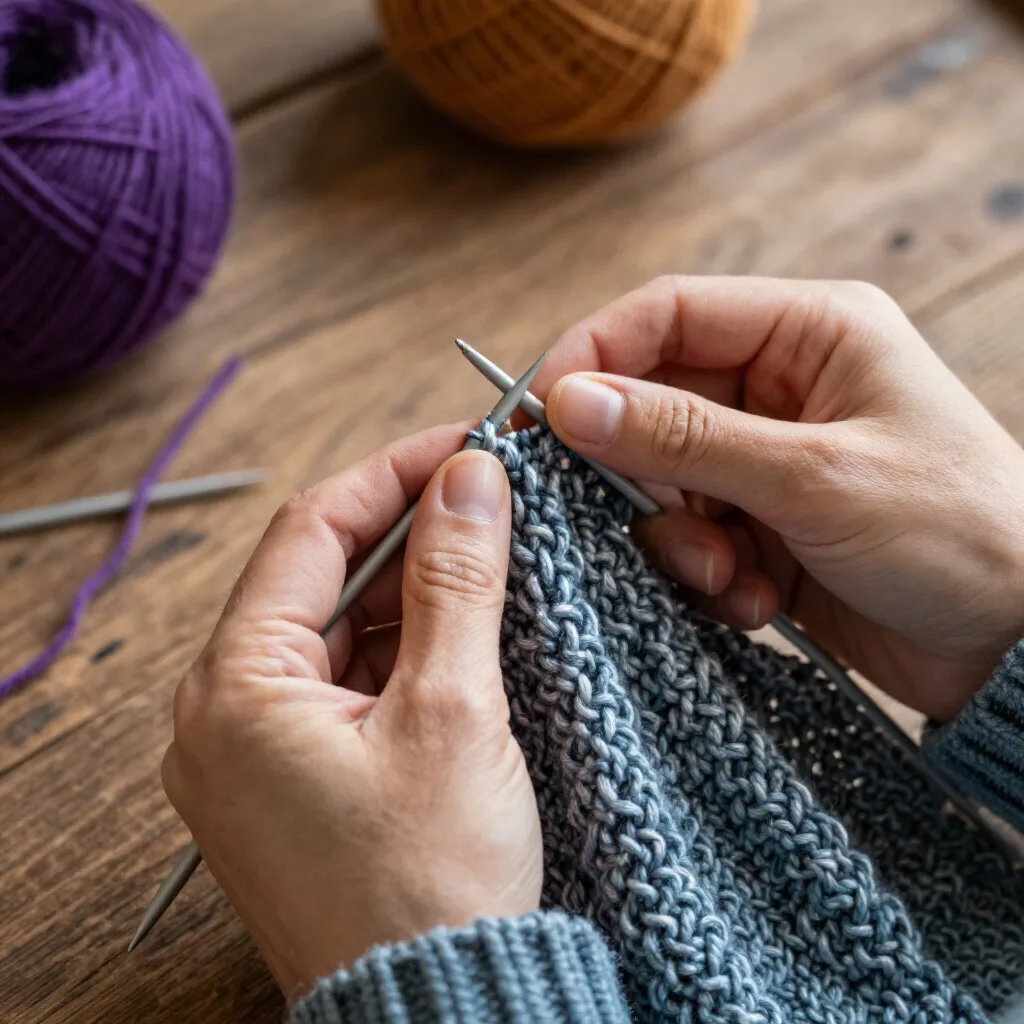
To successfully execute this project, follow the steps methodically, from casting on to the finishing touches. Usually, you start with the back, then shape the fronts and sleeves with the appropriate needles. This cardigan requires particular attention during assembly to ensure every model fits perfectly. Learning to knit a wrap cardigan requires patience to achieve a wrap cardigan pattern that finds its place in a wardrobe. A beautiful wrap cardigan requires precision.
- Cast on stitches for the back
- Work the two front panels with increases at the neckline
- Knit the sleeves separately
- Join the pieces at the shoulders
- Add closure ties or ruffles
Inspiration for knitting a wrap cardigan for women and children
There is a wide variety of styles for this enveloping garment. Finding a free wrap cardigan knitting pattern can help kickstart this project. Whether you want a simple cardigan or a more intricate creation, every pattern offers possibilities. Knitting a wrap cardigan thus becomes an activity where the choice of yarn and stitches influences the final look of your garment.
Success in baby knitting and children's sizes
For the little ones, making an easy baby wrap cardigan is a common option. Size is a central element of the process. For example, for size 2T (2 years), you should cast on 78 stitches. This cardigan model requires precision to ensure the result is accurate. By following the instructions for each size, your wrap cardigan will be perfectly adapted to the baby's build.
FAQ
Can you explain the wrap cardigan knitting technique? The technique involves knitting two asymmetrical front panels that cross over the chest, often fastened with ties or buttons.
How do I knit a heart pattern? A heart pattern can be created using yarn overs and decreases to draw the shape, or by using the stranded colorwork technique.
Can you explain the knitting pattern for a baby wrap cardigan? For a baby, the pattern prioritizes simple stitches like stockinette or moss stitch, with gentle increases to avoid distorting the fabric.
Sources
- YouTube: Children's Wrap Cardigan Tutorial
- YouTube: Wrap Vest Tutorial
- Ladylaine: Women's Wrap Cardigan Guide
See also
- knitting gauge
- How to knit an adult throw: patterns, dimensions and techniques
- My first knitted sock!
- Hand-knitted gift ideas