In short
- Tutorials allow for step-by-step learning, which is ideal for beginners.
- Sites like Drops Design offer hundreds of free patterns.
- Ravelry is the go-to community platform for finding patterns.
- It is essential to prepare your materials before starting a new project.
learn to knit or perfect your techniques, often by relying on free knitting tutorials available online to guide each step with precision. Whether you are a beginner or an experienced knitter, these resources allow you to follow technical details such as choosing the right skeins of yarn or reading a pattern, all while avoiding common mistakes.
Platforms like Drops Design or Ravelry offer hundreds of varied models, from the simplest to the most complex creations, at no cost. The advantage of tutorials lies in their progressive approach: they break down a project into a logical sequence of operations, making them ideal for mastering the basics or exploring original styles. Before starting, it is crucial to check the needle size and the type of yarn recommended, as these elements directly influence the final result.
Why choose free resources instead of paid patterns? The answer lies in diversity and accessibility. Free tutorials cover a wide range of projects, from a child's stuffed animal to a fitted jacket, as well as accessories like scarves or beanies. They also offer the opportunity to learn specific techniques, such as combining crochet with knitting or embroidery on yarn.
Unlike a simple pattern, a detailed tutorial explains key steps, tips for fixing tight stitches, or advice on how to adapt a model to your size. This teaching method makes learning more intuitive, especially for those starting out who want to avoid the frustrations of a misinterpreted project.
Why Look for Free Knitting Tutorials?
Searching for free knitting tutorials meets a very real need: the desire to learn or progress without financial constraints. These online resources transform a manual activity into structured learning, where every step is explained with visuals or diagrams. For beginners, they demystify technical terms like "double crochet," "single crochet," or "increases," which are often a source of confusion.
Free tutorials also stand out for their flexibility: they allow you to knit at your own pace, revisiting a step as many times as necessary. Their interactive format, often enriched with videos or discussion forums, creates a community where mistakes become shared learning opportunities.
A technical pattern is generally limited to a concise description of dimensions and stitches to be made, whereas a tutorial adds a pedagogical dimension. The former is aimed at knitters already familiar with the basics, while the latter guides you step-by-step, illustrating each stage with photos or animations.
For example, a pattern for a sweater will simply indicate the number of stitches to cast on and pattern repeats, without specifying how to adjust the yarn tension for a soft and uniform result. Conversely, a tutorial will explain how to choose the right yarn for the season, how to avoid holes in the seams, or how to modify a model for a specific size. This difference explains why beginners prefer tutorials: they reduce the risk of giving up by clarifying often-implied details.
Where to Find Free Knitting Tutorials?
Free knitting tutorials are multiplying online, offering a diversity of projects adapted to all levels. Whether you are looking to make a stuffed animal for a child, a wool sweater for winter, or a crochet accessory, online resources allow you to vary your creative pleasures without spending a cent.
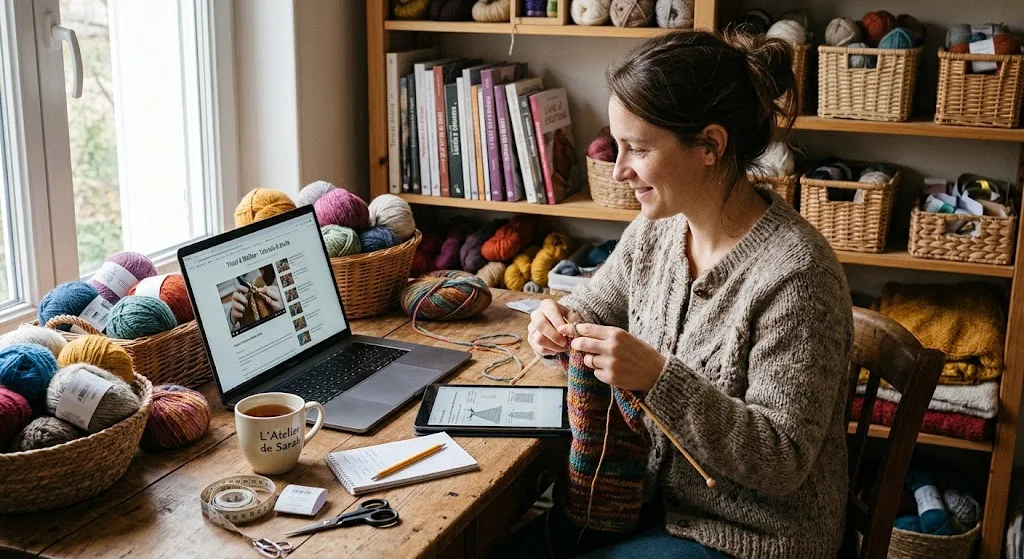
Available formats range from detailed videos to written patterns, including illustrated steps to guide every aspect of the piece from start to finish. These educational tools, often shared by enthusiasts, transform knitting into an accessible and inspiring activity.
Yarn Brands and Specialized Sites
Among the most complete free patterns, specialized brands stand out with their impressive catalogs. DROPS, for example, offers a rich library of varied models, ranging from technical details to simpler creations. A targeted search like "free DROPS knitting patterns to download" reveals hundreds of options, including series of tutorials to master every step of a project. These resources, often accompanied by advice on choosing yarn or needles, cater to both beginners and experienced knitters.
Sites like Marie Claire or Ravelry feature free collections with filters for size, project type (scarves, beanies, etc.), or difficulty level. Some even offer exclusive patterns, such as sweater models or stuffed animals designed by renowned designers. These platforms allow you to download PDF files directly or access video tutorials, providing a smooth transition between theory and practice.
- Drops Design for its vast collection
- Phildar and its models for the whole family
- We Are Knitters for modern projects
Community Platforms and Networks
Social networks, especially Instagram and Pinterest, have become mines of inspiration for knitters looking for free patterns. Knitting-focused accounts, such as those by We Are Knitters or Phildar, regularly share visuals of their creations accompanied by links to detailed tutorials. These visual platforms allow you to quickly spot trends, such as crochet motifs or openwork body techniques, while discovering technical details through images or explanatory GIFs.
Online communities, such as Ravelry forums or specialized Facebook groups, offer an undeniable collaborative side. Members exchange not only free patterns but also feedback on which steps to prioritize to avoid common mistakes. These spaces also allow you to filter searches by language, making tutorials more accessible for English, French, or Spanish speakers, for example. Some groups even organize monthly challenges around specific projects, like making a stuffed animal or a sweater, to motivate participants.
- Ravelry for searching patterns by criteria
- Pinterest for visual inspiration
- Instagram for community sharing
Making the Cozy Sweater - Free Knitting Pattern
Studying a model like the Cozy Sweater - knitting pattern - Free offers an excellent opportunity to decode the key steps of a knitted garment. This pattern, designed for a flexible body and a size suitable for beginners, illustrates how to assemble technical details while maintaining a soft and comfortable finish.
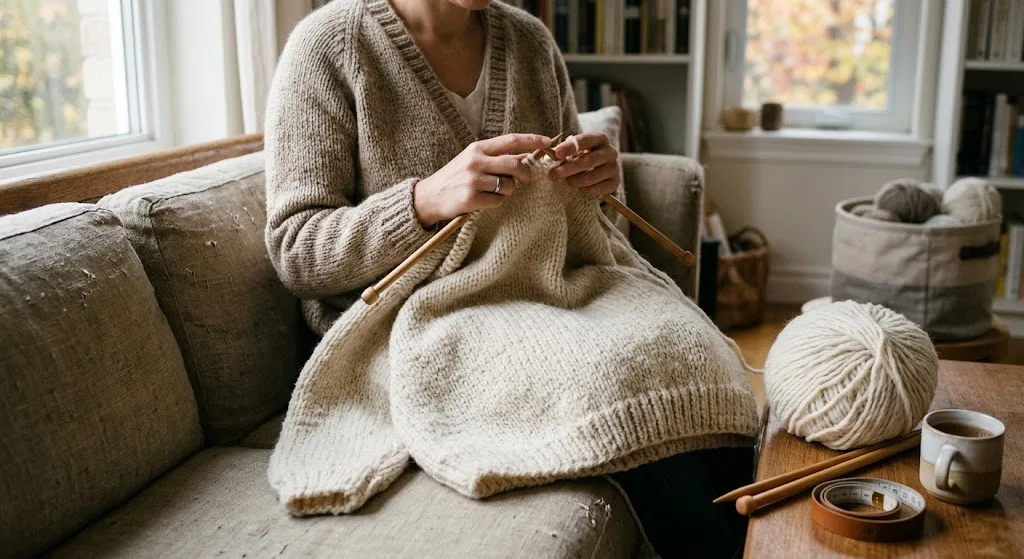
By following its instructions, you learn to structure a piece into three distinct parts: the neckline, the body, and the sleeves, with smooth transitions between each section. The advantage of such a model lies in its apparent simplicity, which actually hides principles applicable to other creations, such as managing M1 increases or a tubular bind-off.
Materials Needed for the Project
| Tool | Specification |
|---|---|
| Circular needles | 10mm (40 and 80cm) |
| Circular needles | 8mm (40 and 80cm) |
| Crochet hook | 8mm |
| Accessories | Stitch markers |
To make the Cozy Sweater - knitting pattern - Free, the choice of tools is decisive. The pattern recommends circular needles of 10 mm (both 40 cm and 80 cm models for the body and sleeves) as well as 8 mm circular needles for the 1x1 ribbing.
An 8 mm crochet hook completes the kit, which is useful for joining certain steps or adjusting edges. Stitch markers are also indispensable for marking the start of rows and maintaining symmetry, preventing reading errors as you continue knitting. The yarn used should be soft, ideal for a smooth and stretchy finish, such as those in the merino or cotton blend categories.
Knitting Techniques Used
- stockinette stitch
- 1x1 Ribbing
- M1 increases (left and right)
- Tubular bind-off method
Creating this pattern relies on mastering three fundamental techniques. Simple Stockinette, worked in 1x1 ribbing, forms the base of the project, providing natural elasticity to the sweater's body. M1 increases (left and right) allow the sleeves and the hem to flare out gradually, while the tubular method for binding off stitches ensures clean, professional edges.
These stitches, although basic, are essential to ensure the consistency of the stuffed animal (or garment) and how it fits the model. Once these basics are acquired, the knitter can adapt the pattern to other projects simply by changing the needle size or the type of yarn.
Succeeding with an Easy Free Knitting Tutorial
To avoid frequent mistakes and progress confidently, an easy free knitting tutorial must be chosen carefully. Beginners often prefer simple models like scarves or squares, where the steps are repetitive and the details are less complex.
A targeted search using keywords like "easy free knitting tutorial" allows access to tailored resources where every part of the work (tight stitches, crochet) is explained step-by-step. These tutorials generally emphasize the consistency of the finished pieces, avoiding overly technical patterns that might be discouraging. The goal remains to master the basics before moving on to more ambitious projects, such as a sweater or plushie pattern, where size and stitch tension become critical.
Patience is an essential virtue when starting out with free knitting tutorials. Contrary to what one might think, mistakes are an integral part of learning: a misaligned side or a poorly chosen skein (too thin or too thick) are common challenges, but they are fixable. Tutorial creators often emphasize the need to repeat the same steps until a harmonious result is achieved, especially for beginners.
For example, knitting a square in single crochet requires several attempts before the detail of the stitches becomes natural. Once this phase is passed, confidence grows, and subsequent projects, even more elaborate ones, become accessible. The trick? Do not hesitate to go back and rework a sequence of stitches if necessary, without frustration.
- Check your gauge before starting the project
- Read all instructions carefully
- Plan for a slightly larger amount of yarn
- Mark your rows so you don't lose your place
FAQ
Where can I find free DROPS knitting patterns to download? The Drops Design (Garn Studio) website offers a vast collection of free patterns.
How can I find free knitting patterns with explanations? Look for step-by-step tutorials on blogs or specialized YouTube channels.
Are there free knitting tutorials for babies? Yes, many brands offer free patterns for newborns and children.
How can I get a free sweater pattern with instructions? Search for specific tutorials on brand websites or social media platforms.
Where can I find free knitting tutorials for children? Brand websites like Phildar or creative blogs offer many options.
Sources
See Also
- Knitting an adult throw: patterns, dimensions, and techniques
- knitting gauge
- My first knitted socks!
- round