
In short
- Cables add volume and texture to your knitted pieces.
- A cable needle is essential for crossing stitches.
- There are many styles, ranging from simple to Celtic.
- Skill progression goes from small cables to complex patterns.
Cable knitting is a technique that adds volume and dimension to your work, transforming a simple stockinette stitch into a dynamic, textured pattern. The process relies on using a cable needle to cross stitches, creating various visual effects ranging from basic cables to intricate Celtic motifs.
Whether you are a beginner or an experienced knitter, mastering this technique opens the door to unique creations where every stitch becomes a design element. The natural progression leads from your first simple cables to more elaborate designs, where precision and pattern repetition become a rewarding play of patience and creativity.
Cable knitting is beloved for its ability to structure a garment while providing a striking aesthetic dimension. Unlike classic stitches like stockinette or seed stitch, cables introduce a three-dimensional element that catches the eye and gives character to clothing, accessories, or home decor.
Their popularity also stems from their versatility: they suit everything from minimalist projects to patterns inspired by traditional craftsmanship, such as Irish knitting. For those looking to explore this technique, an easy cable knit often serves as the perfect first step, allowing you to master the basics before moving on to more ambitious projects.
Mastering an Easy Cable Knit
Cable knitting is based on a fundamental technique where stitches are interlaced to form raised patterns. Much like weaving, this method uses a continuous thread to create fabric, but here, it is the loops or stitches that interlock. Each active stitch remains on the needle until a new stitch is passed through it, consolidating the structure.
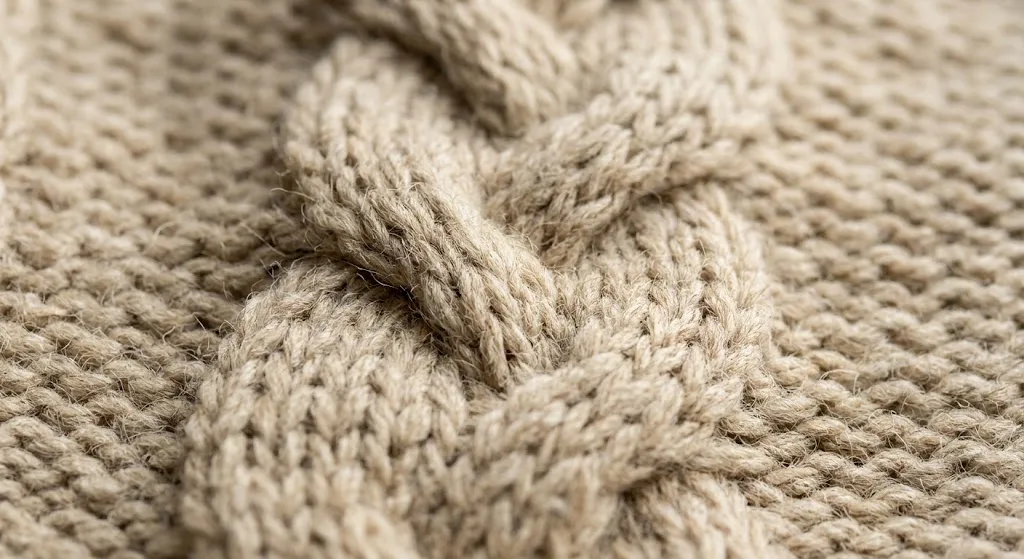
This unique structure allows you to play with crossings to achieve distinct visual effects. Cables modify the path of the yarn and add a unique texture to the piece. Mastering this technique requires a fine understanding of yarn over stitches and slip stitches, two key elements for successfully completing an easy cable knit without errors.
The primary appeal of cables lies in their ability to transform flat knitting into a dynamic, volumetric surface. They add a touch of originality to projects that might otherwise appear too plain or conventional. For example, an easy cable knit integrated into a scarf or a sweater can immediately draw attention with its pronounced relief while remaining accessible to beginners.
Their use is also justified by their versatility: they work beautifully with fine yarns for delicate patterns or thick yarns for rustic creations. Thus, whether you are making a daily accessory or a collector's piece, cables offer a creative solution to elevate your work.
To correctly orient your cables, it is essential to understand their crossing direction, which determines whether they lean to the right or the left. This orientation depends on how the stitches are interlaced with the cable needle.
For example, a detailed cable knitting explanation often specifies that to obtain a right-leaning cable, you must hold the cable needle at the back of the work with the selected stitches, then knit the following stitches from the main needle before knitting the stitches from the cable needle. Conversely, a left-leaning cable requires holding the cable needle at the front. This precision is crucial to avoid asymmetrical or messy patterns, especially when multiple cables are worked within the same row.
- Prepare the stitches on the needle
- Place the stitches on the cable needle
- Cross the stitches according to the desired direction
- Knit the stitches from the main needle
The 3-Stitch Cable Technique
The 3-stitch cable is one of the simplest techniques for getting started with cables, making it ideal for beginners. It involves selecting three active stitches on the main needle, placing them on the cable needle while crossing them once, and then returning them to the main needle in reverse order. The result is a small, raised bump visible on both sides of the work.
This method allows you to create repetitive patterns, such as parallel lines of cables, or more complex geometric designs by alternating them with simple stitches. To achieve this, it is recommended to work with a slightly thicker yarn than usual to make the stitches easier to distinguish and the crossing easier to manage. Once mastered, this cable can be integrated into various projects, from sock borders to decorative motifs on scarves.
The Style of Irish Cable Knitting
Irish cable knitting draws its roots from Celtic artisanal traditions, where interlaced patterns symbolized both protection and family heritage. This style, emblematic of Ireland's lush landscapes, is distinguished by its asymmetrical cables and plays on volume, often integrated into scarves, socks, or sweaters.
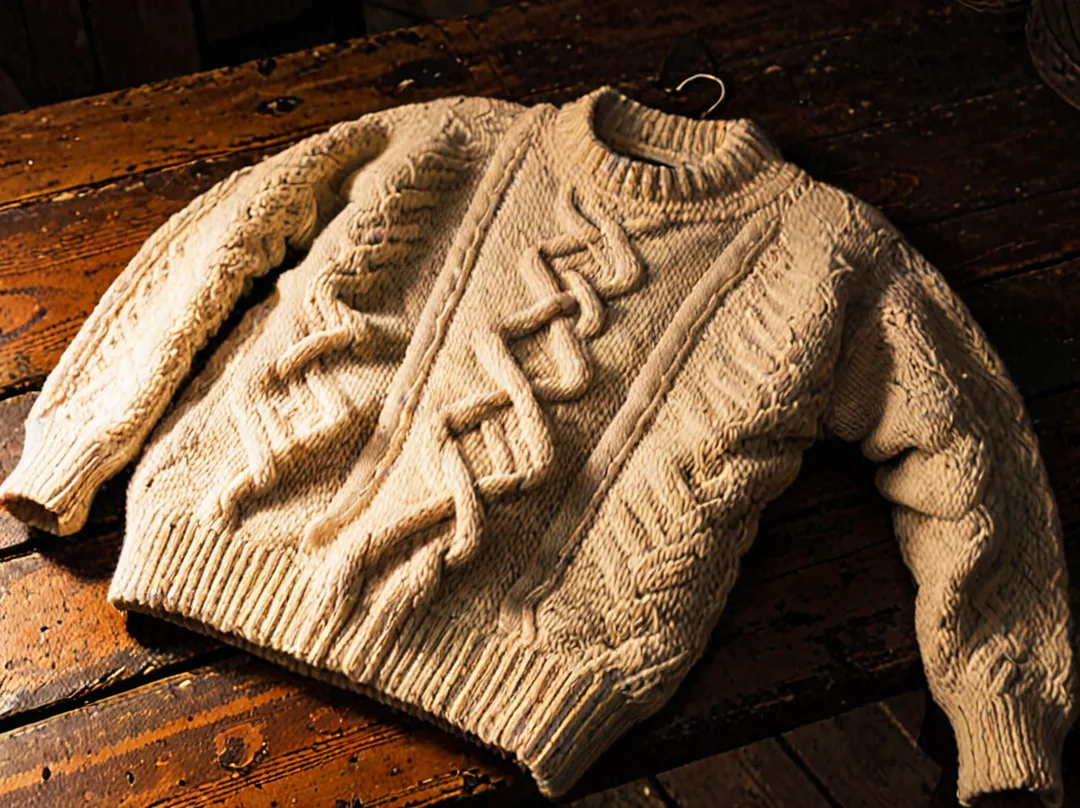
The motifs, sometimes inspired by local landscapes like the Connemara hills or the rocky coasts of Clare, transform every piece into a narrative work where each cable tells a story. Its current success is due to its balance between tradition and modernity, capable of adapting to contemporary trends while retaining its artisanal soul.
To approach Irish cable knitting, mastering an Irish cable chart becomes essential, especially when patterns interlace over multiple rows. These diagrams, often found in specialized books or on dedicated platforms, detail every movement with precision: the direction of the cables, the alternation of knit and purl stitches, and the management of symmetry.
Unlike linear patterns, Irish cables require a three-dimensional reading, where each cable must be visualized as an evolving knot. Beginners are encouraged to start with simple models, such as two-strand cables, before moving on to more complex compositions involving spiral motifs or multiple interlaces.
Creating Complex Cable Knits
Complex cable knits mark a step toward more elaborate creations, where mastery of stitch count and repetition becomes essential. These patterns, often inspired by revisited traditional techniques, require particular attention to yarn tension and the regularity of the rounds. Their execution requires a deep reading of charts, where each cable is calculated to integrate harmoniously into a larger structure.
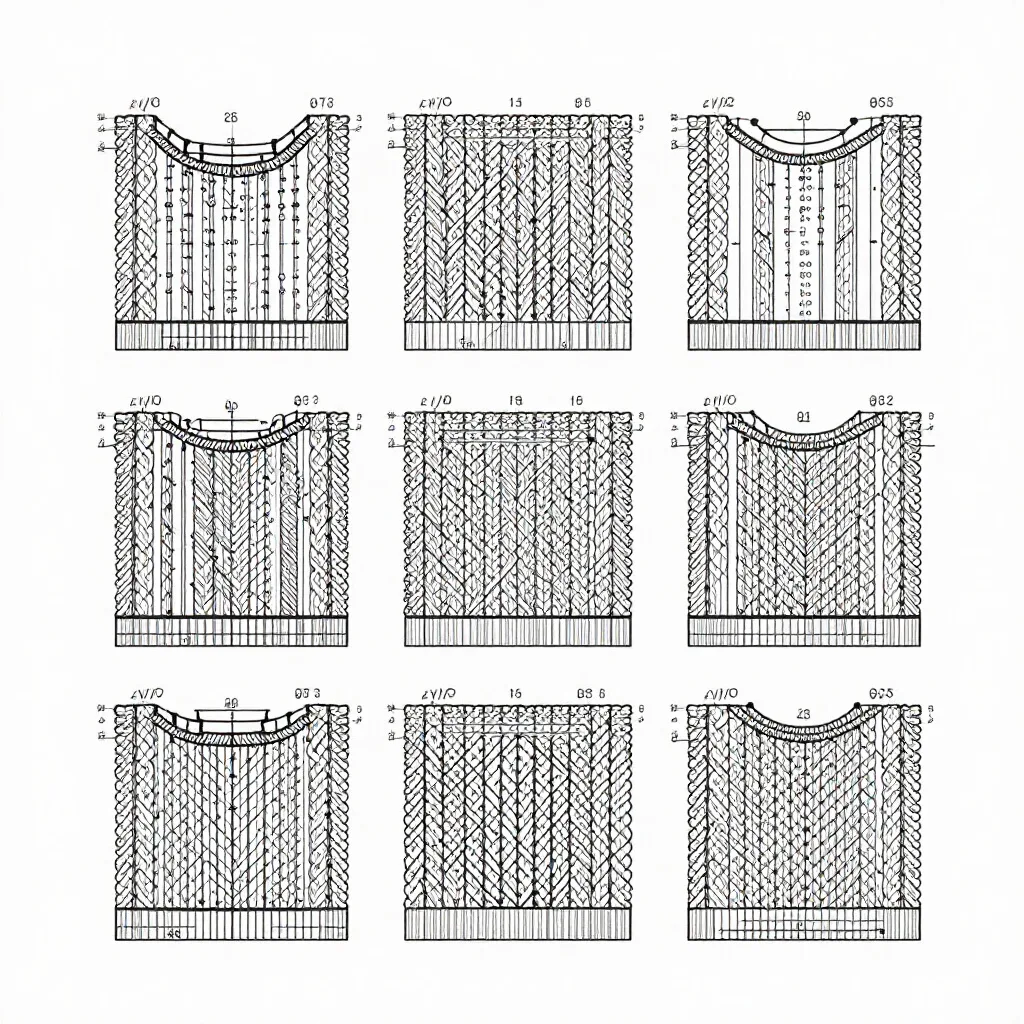
Advanced beginner knitters find this to be a playground for experimenting with texture contrasts while consolidating their basic technique. The challenge lies less in the apparent complexity and more in the precision of the details, where a single error can alter the visual balance of the pattern.
For knitters looking for a technical challenge, a 12-stitch cable represents an ideal exercise for exploring large-scale formats. These wide cables allow for the creation of striking visual effects, such as waves or spirals, while offering increased creative freedom. Their execution often requires a thicker yarn or an appropriate needle size to avoid a tightening effect while maintaining uniform tension.
Ambitious projects, such as scarves or shawls, take advantage of these motifs to structure their composition, turning each cable into a key element of a cohesive whole. The secret lies in patience: the wider the pattern, the more methodical the repetition of rounds must be to avoid distortion.
Finding Your Inspiration
To start or refine your technique, free cable knitting patterns are a valuable resource. A simple search for "free cable knitting patterns" can provide access to various designs, often shared by knitting communities on dedicated platforms.
These options, ranging from basic cables to more elaborate variations, provide a solid foundation for practicing without significant investment. Specialized forums and knitting blogs are also full of visual tutorials, ideal for visualizing key steps before diving into your own project.
Major yarn brands and renowned designers often inspire both hobbyists and seasoned experts. Phildar cable knitting, for example, illustrates this diversity with collections that blend tradition and modernity, such as their geometric pattern ranges.
Catalogues from brands like Drops Design or Scheepjes also offer bold interpretations, while professional knitters' Instagram accounts (such as @tricot_artisan or @knitting_revolution) showcase unique creations, from scarves to full sweaters. Drawing inspiration from these references allows you to rethink your own creations while respecting the technical rules of cable texture.
FAQ
How do I knit a right-leaning cable? You need to hold the cable needle at the back of your work rather than in the front.
What are the benefits of cable knitting? They allow you to add volume and texture to your knitted fabrics.
What materials do I need to get started? A pair of knitting needles and a cable needle to cross the stitches.
Can I do cables with thin yarn? Yes, but the relief will be much less pronounced than with a thicker wool.
How do I read a cable chart? You must follow the crossing symbols on the grid from top to bottom.
Sources
See Also
- Knitting an adult throw: patterns, dimensions, and techniques
- Your first pair of knitted socks!