In short
- Baby knitting, or layette, includes blankets, cardigans, hats, and booties.
- Prioritize soft fibers like cotton, merino, or alpaca for sensitive skin.
- Layette projects are ideal for beginners due to their small size.
- The choice of wool depends on the purpose: a family heirloom or everyday wear.
Baby knitting, or layette, refers to the collection of garments and accessories hand-knitted for infants, ranging from blankets to booties and hats. This practice combines crafting tradition with practical utility, emphasizing fibers that are gentle on a newborn's sensitive skin.
Layette projects are particularly popular among beginners, as their small scale allows for quick progress without frustration. The choice of materials—cotton, merino, or superwash wool—will depend on the intended use: whether it is an item meant to be passed down as a family heirloom or an everyday garment designed to withstand frequent washing.
Contrary to popular belief, baby knitting is not limited to classic hats and cardigans. It covers a wide range of creations, from stuffed animals and educational toys to more unique accessories like knitted loveys or babywearing wraps. This diversity makes it accessible to all skill levels, from experienced knitters to novices looking for their first motivating project. The key lies in comfort and durability, two essential criteria for pieces meant to accompany a baby every day.
What to knit for a baby?
Baby knitting is a technique of creating fabric through interlocking loops, called stitches, which join together to form a flexible and breathable fabric. Like weaving, it relies on the interlacing of threads, but its unique feature is the flexibility of the stitches, held on needles until they are permanently fixed by a new loop.
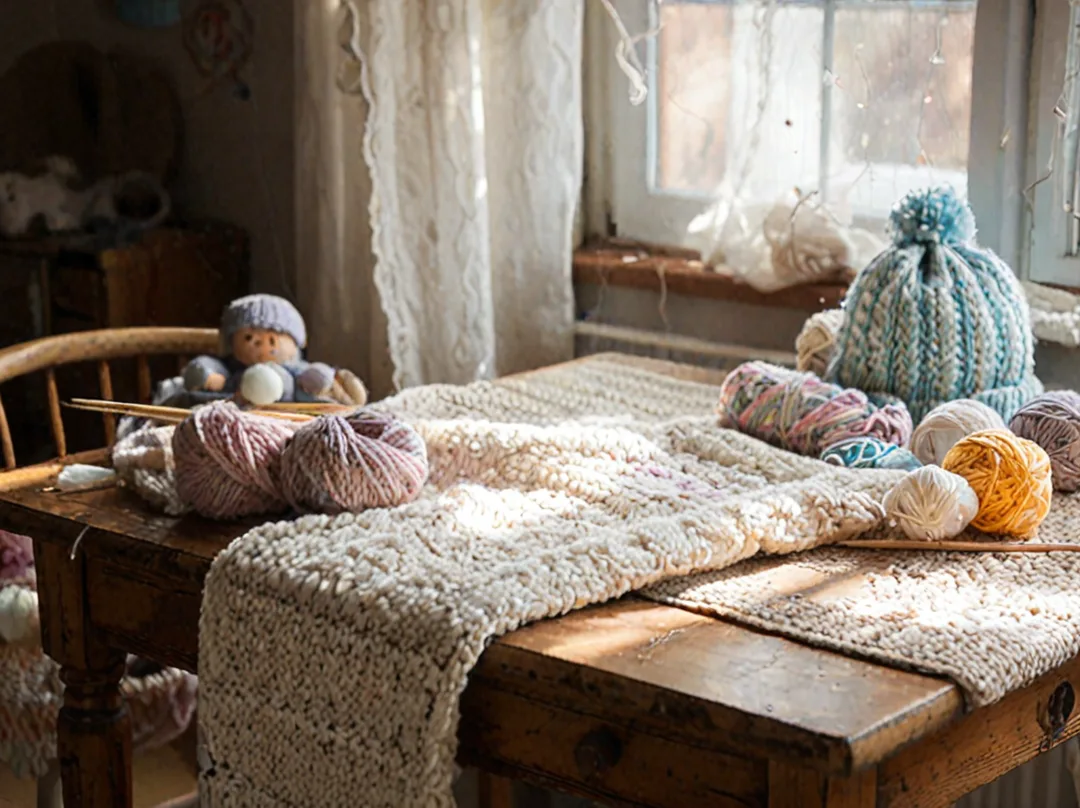
This method, both ancient and versatile, allows for the creation of pieces as fine as a mesh or as thick as a sweater, depending on the choice of fibers and stitch patterns. For a newborn knitting project, this adaptability is a major asset, allowing for endlessly customizable creations, from geometric patterns to delicate embroidery.
Layette essentials
- Cozy cardigans and sweaters
- Pants and bloomers
- Hats and booties
- Toys and plushies
A newborn knitting project can include a selection of essential items, often grouped under the term layette. Must-haves include blankets, designed to wrap babies in protective softness, as well as cardigans and sweaters, which are indispensable during the first few months when temperature regulation is crucial.
Pants and bloomers complete this budding wardrobe, while hats and booties provide protection against the cold and irritation. Knitted toys and plushies are also popular, offering both tactile comfort and playful stimulation for sensory development. Finally, accessories like babywearing wraps or loveys add a personal touch to this collection, which is often passed down from generation to generation.
Baby blankets
| Usage | Dimensions (cm) |
|---|---|
| Car seat | 60 x 60 |
| Stroller | 76 x 76 |
| Receiving/Display | 86 x 91 |
| Crib | 91 x 132 |
Baby blankets come in several formats adapted to specific uses. For car seat travel, a size of 60x60 cm is ideal, offering protection without cluttering the space. Stroller blankets, slightly larger at 76x76 cm, allow you to wrap the baby while making handling easier.
Receiving models, often larger (86x91 cm), are designed for ceremonies or keepsake photos, where comfort and aesthetics are the priority. Finally, crib blankets reach 91x132 cm, fully covering the mattress surface for a warm night's sleep. These standardized dimensions make choosing easier, but there is nothing stopping you from imagining custom creations, given the vast possibilities for personalization.
An heirloom or everyday use
Baby knitting can serve two distinct purposes: as a family heirloom or for everyday use. In the first case, the emphasis is on symbolism and durability, using noble fibers like alpaca or organic cotton, chosen for their strength and ability to last through the years. These pieces, often embroidered or adorned with traditional motifs, become sentimental keepsakes, passed from mother to daughter or given as birth gifts.
Conversely, a garment intended for regular use will prioritize easy-care materials, such as superwash wool or stretch cotton, designed to withstand frequent washing and repeated handling. This distinction also influences pattern choices: heirloom creations focus on timeless elegance, while utilitarian pieces opt for practical and adjustable designs to accommodate a baby's rapid growth.
Baby Knitting: Starting with Fiber Choice
First and foremost, choosing the right baby yarn is crucial to ensuring the infant's comfort and safety. The fibers used must be soft, hypoallergenic, and breathable to prevent skin irritation or allergic reactions. Yarn that is too thick or poorly treated can indeed cause itching or reactions on fragile skin. Prioritizing natural and certified materials remains the priority for creations tailored to the specific needs of little ones.
Choosing yarn for newborns
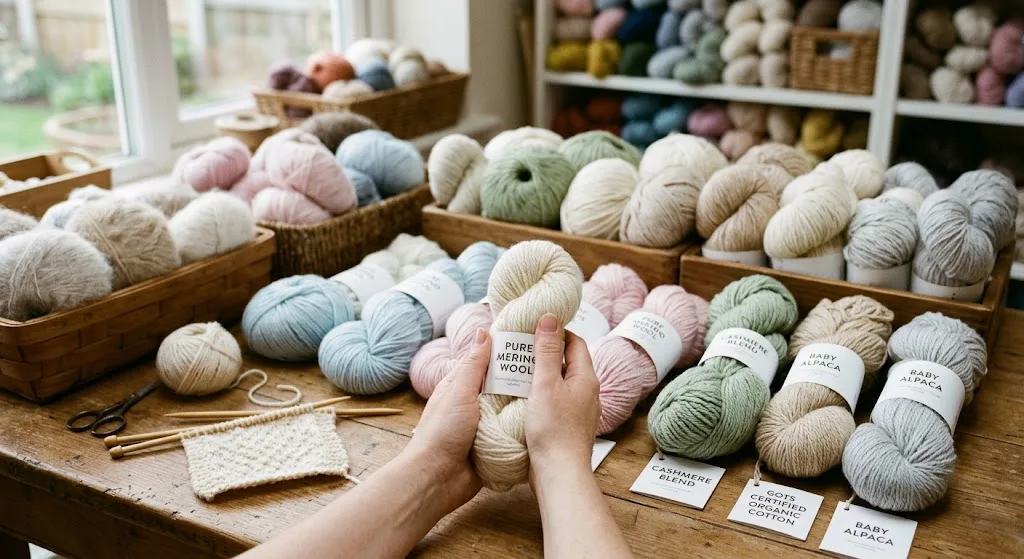
Finding the best newborn yarn involves looking for ultra-soft and lightweight fibers specifically designed for the first months. Among recognized references, Cascade Yarn's Baby Alpaca Lace stands out for its fineness and strength, making it ideal for small hats or bodysuits. Gueret de Fonty, for instance, offers a silky texture and great elasticity, perfect for fitted clothing. Finally, DROPS Baby Merino combines softness with ease of care, meeting the requirements of parents concerned about their child's well-being.
Materials and softness
To combine softness with practicality, cotton and superwash wool blends are often recommended. Cotton adds a lightweight, easy-to-wash touch, while superwash wool limits the risk of pilling after washing. These combinations are particularly suitable for sleep sacks or bodysuits, where comfort and durability are essential. It is advisable to check the label to ensure the fiber is free from harsh chemical treatments, thereby preserving the health of the baby's delicate skin.
Knitting for baby girls
Knitting for baby girls often trends toward delicate patterns and pastel colors, reflecting parental tastes while remaining timeless. Projects such as pom-pom hats or striped bodysuits are particularly popular, combining aesthetics with functionality. The fibers chosen for these creations should remain identical to those used for boys' clothing, with a preference for hypoallergenic and breathable materials. The key is adapting the pattern to the infant's shape, with adjustable sizes to allow for harmonious growth.
Succeeding at beginner baby knitting
Beginner baby knitting is an excellent entry point to start or perfect your skills, as it combines simplicity with utility. Unlike complex projects, infant clothing often favors repetitive patterns and small sizes, which are ideal for practicing stitch consistency. This type of project helps build confidence while creating unique, soft pieces tailored to the specific needs of toddlers.
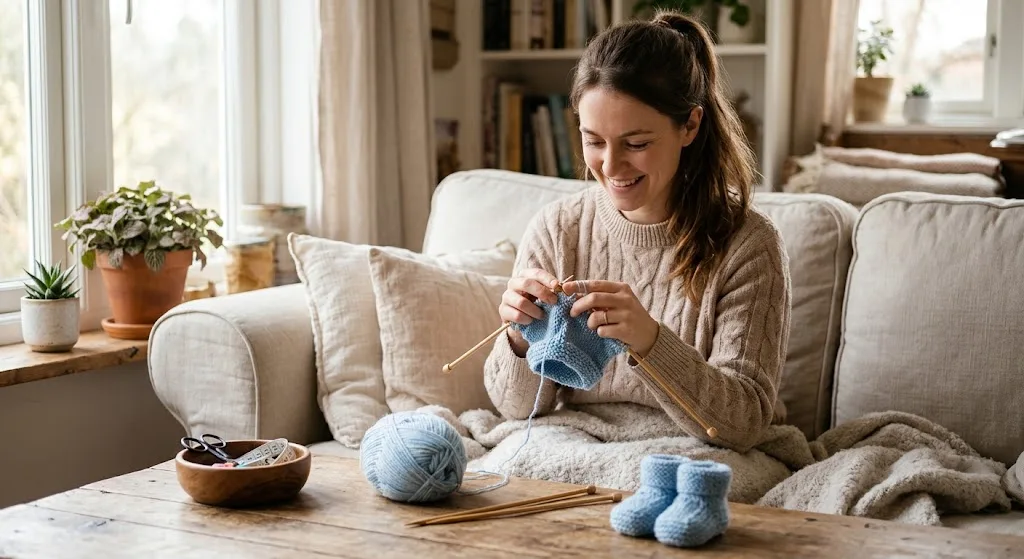
Whether you want to knit your first hat or a small cardigan, the accessibility of the patterns and the tolerance for imperfections make it an ideal playground to progress without pressure.
What is an easy knit for a baby?
If you are wondering, What is an easy knit for a baby?, the answers lie in clean, functional patterns like hats or small sleeveless vests. These projects require little material, limit seams, and are often worked in the round, avoiding complicated turning.
Socks or bibs are also perfect options for beginners, as they rely on basic techniques (tight stitches, simple increases) while providing an immediately useful result. The advantage? These creations are knitted quickly, keeping your motivation high.
What are the knitting measurements for a baby?
To avoid mistakes, what are the knitting measurements for a baby? The first rule is to choose a pattern adapted to the infant's age, as sizes vary significantly between a newborn (size 50–56 cm) and a 6-month-old baby (size 62–68 cm).
Patterns generally indicate these references, but it is advisable to allow for a 2 to 3 cm margin for shoulders and length to adjust for growth. Head circumference (for hats) and chest circumference (for cardigans) are the critical dimensions to check systematically, as they determine the comfort and fit of the knit.
Where can I find a free baby knitting pattern?
Many ask: Where can I find a free baby knitting pattern? Online resources are brimming with options, from specialized platforms like Ravelry or Pinterest, where thousands of creators share their patterns under open licenses, to knitting blogs (such as Tricot 365 or Laine et Compagnie) that offer detailed tutorials, often accompanied by videos to guide beginners.
Finally, local knitting groups or Facebook groups dedicated to knitting regularly exchange PDF files or charts, creating a supportive community for mutual help. A simple search with the keywords free baby knitting pattern is usually enough to find dozens of suggestions.
Inspiration and varied projects
Whether you are knitting for a girl or a boy, baby layette patterns easily adapt to preferred tastes and colors. For baby girl knitting, prioritize soft motifs like pastel stripes, discreet flowers, or minimalist embroidery, while for baby boy knitting, light blue, sage green, or simple geometric patterns remain timeless.
Standard sizes (3 to 12 months) cover most needs, but some patterns include adjustments for premature babies or larger babies, with precise measurement instructions. Accessories like hats or socks can also be personalized with details like pom-poms or contrasting borders without weighing down the project.
To save time or avoid errors, opt for a free baby knitting PDF or a ready-to-go kit, available on specialized platforms or knitting blogs for beginners. These resources often provide clear charts, associated video tutorials, and advice on choosing the right stitch or needle size.
Kits, meanwhile, generally include the necessary wool and accessories along with step-by-step instructions, making them ideal for urgent projects like a newborn gift. Some free patterns are even designed to be knitted in one piece, reducing the risk of complex assembly.
FAQ
What is an easy knit for a baby? Hats, booties, and small cardigans are ideal projects for beginners.
What are the knitting measurements for a baby? Sizes vary by age; for example, a stroller blanket measures approximately 76x76 cm.
At what age is it recommended to teach a child to knit? Learning depends on dexterity, but manual activities can be introduced in early childhood with age-appropriate tools.
Where can I find a free baby knitting pattern? Many specialized sites and knitting blogs offer free patterns available for PDF download.
What to knit for a baby? You can create a complete layette: blankets, cardigans, pants, hats, or toys.
Sources
See also